



Mastering the Wheel
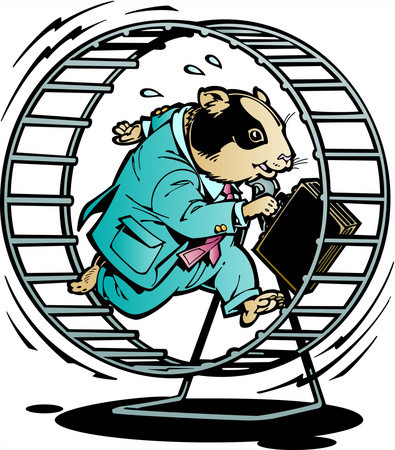


In this economy, those lucky enough to have a desk are probably chained to it. With more stress going around -- and less time to work on reducing it -- we asked a variety of experts for their most helpful tips.
NECK ROLLS
Look all the way over your shoulders -- left and then right. Then drop your chin to your chest.
Matt Smith, owner of 17 physical therapy clinics bearing his name across the valley, suggests performing this series of moves gently, once every hour or so or whenever tightness develops.
"The problem is that our head weighs 18 pounds," he says, "and unless we're sitting posturally perfect, that head is being pulled down by gravity, so the neck muscles are overly stressed."
SHOULDER SHRUGS
Elevate your shoulders to your ears, hold for five seconds and release. Then squeeze your shoulder blades together likewise. Repeat every hour or whenever tightness develops.
Because the upper trapezius muscle holds the arm to the body, Smith explains, it also holds lots of tension -- "especially if your arms are extended over a keyboard all day."
SLOW, DEEP BREATHING
Breathe in through the nose, hold for a silent count of four, then exhale through the mouth. In yoga, this is known as a "cleansing" breath.
"Sometimes it seems like you have 150 million thoughts, but it's only one thought at a time," says Alice Nasife, hypnotherapist and owner of A Stress Management Clinic. "And while you focus on your breathing, whatever you're thinking about is not in your mind anymore. So therefore, the stress passes."
While breathing, Nasife suggests, think positive statements, such as "I am calm," to counteract the negative ones that return.
Kathleen Grace Santor, yoga teacher and owner of Stress Management Center of Nevada, suggests typing "breathe" into your screen saver or, better -- if you can figure out how -- making a reminder pop up every 30 minutes or so.
PROGRESSIVE RELAXATION
Tense different muscle groups, wait five seconds, then relax them -- moving up or down the body to make sure you don't miss any. Developed by American physician Edmund Jacobson in the early '20s, this technique still is widely practiced and respected.
"It's neuromuscular feedback to the brain," Smith explains. "How do you get a tight muscle back to a relaxed state? You need to have the muscle tell the brain that the state that it's in is not good."
Muscle contraction also stimulates blood flow, which brings oxygen.
"Oxygenation is the key to healing," Smith says. "In therapy, we spend our time trying to reoxygenate tissues that have been sprained, strained or operated on."
STARE AT A PLEASANT PHOTOGRAPH
Place a photograph around your desk, or on your screen saver, of someplace that makes you feel good.
"Imagine you're there for 10 seconds and then move on with your work," Santor says.
BREAK OUT
Your desk is no place to spend your breaks and lunch.
"Obviously, the best thing you can do for your body is hit the gym," Smith says. "But if that's not going to happen, at least step outside and get some sunshine, get some vitamin D and clear your head."
PUT A LID ON THE COFFEE
The verdict keeps changing about small amounts of caffeine. Current studies suggest it may be a good thing -- helping concentration and even lowering the risk of diabetes and Alzheimer's.
But if stress is your problem, according to Dr. Stephen Miller of Internal Medicine Associates, stop after your second cup of the day.
"It can make (stress) worse," Miller says. "And after two cups, you risk rebounding from lack of it."
KILL YOUR BOSS
Not physically, of course, but imaginary crimes are not unlawful.
"Think about stabbing your boss three times and how good you feel after getting it out of your system," says Amy Pittle, who relies on a similar exercise to teach improv comedy classes at the Onyx Theatre.
"It helps get people out of their shells and into the comfort zone of playing a character," she says, "but it works in the office, too."
Pittle knows from personal experience. She once slaved for a boss who walked in every morning -- later than all his employees, of course -- yelled a profanity and then slammed his door.
"What made it fun was changing it up every day," she says. "Different weapons, different methods, and what time we did it."
Contact reporter Corey Levitan at clevitan@reviewjournal.com or 702-383-0456.


