Bleak numbers concern Gibbons



Nevada Gov. Jim Gibbons likes to trumpet the Silver State's high ranking on lists ranging from measures of population growth to tallies of visitors per resident.
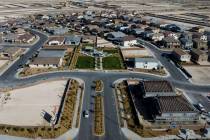
But there's one list the state tops that has Gibbons concerned: Nevada is No. 1 nationally in foreclosures.
Nevada's housing crunch is deepening enough that Gibbons has planned an economic summit Oct. 4 at the Sawyer Building to determine the scope of the problem and identify solutions. The powwow will include executives of the five biggest housing lenders in Nevada, Gibbons said.
"We owe it to our businesses, employees and working families to ensure their wealth is protected to the greatest extent possible," said Gibbons, who made his remarks Thursday at a breakfast meeting that the Nevada Development Authority held at the Four Seasons.
Gibbons shared some bleak housing statistics with the crowd of more than 300.
More than 5,000 Nevada households went into foreclosure in June, a 215 percent jump when compared with numbers from June 2006. And investors aren't the only people feeling the pinch: Defaults and foreclosures are "having a very real effect on working families," Gibbons said.
The torpid housing market is beginning to hold back the broader Nevada economy, Gibbons said.
He pointed to layoffs in real estate-related fields such as brokerage, title insurance and construction, and said the job loss was partly behind rising unemployment claims in the state. New unemployment claims through the state's Department of Employment, Training and Rehabilitation were up 34 percent in July when compared with July 2006.
Increasing joblessness and looming mortgage defaults have combined to curb consumer spending, he added. Taxable sales in Nevada dropped 0.3 percent in June when compared with the same month a year ago, and sales have failed to keep up with population growth for much of the past year. The sales slide is especially hurtful to the retail sector, which must sustain business enough to fill 4.4 million square feet of shop space under construction in Southern Nevada, Gibbons said.
The Federal Reserve's rate cut of half a percent on Tuesday will have only an indirect effect on current housing woes, and builders and lenders continue to seem "paralyzed" by uncertainty, Gibbons said.
But he said he was optimistic about the state's long-term economic prospects: Nevada has been at or near the top of the nation in population and employment growth for the better part of two decades. Las Vegas is No. 5 in the nation among cities of 500,000 or more for its median income, which reached $53,000 a year in 2006, according to the U.S. Census Bureau. Several resorts under construction on the Strip are among the biggest private-sector developments in U.S. history. And even before those hotel-casinos begin opening in 2008, Nevada is already bringing in more than 20 visitors per resident, compared with nine visitors per resident in California and five visitors per resident in Florida.
That high visitor volume enables the state to shift taxes away from Nevada citizens and toward tourists, Gibbons said. The state's corporate-tax burden is the fourth lowest in the nation, according to the Tax Foundation's Business Tax Climate Index, yet Nevada's tax collections per capita are in the middle of the states -- a phenomenon Gibbons attributed to a sales-tax boost from free-spending tourists.
The volume of construction along Las Vegas' resort corridor is proof that companies "flourish in low-tax environments," Gibbons said. Along with the housing downturn, efforts to raise taxes are among the biggest challenges the state's economy faces, he said, because higher levies could crimp economic expansion and diversification.
"Nevada's success is very much by design," Gibbons said. "It's built into our economic DNA. Nevada chooses to be a low-tax state."