Ivanpah solar plant off Interstate 15 to remain open
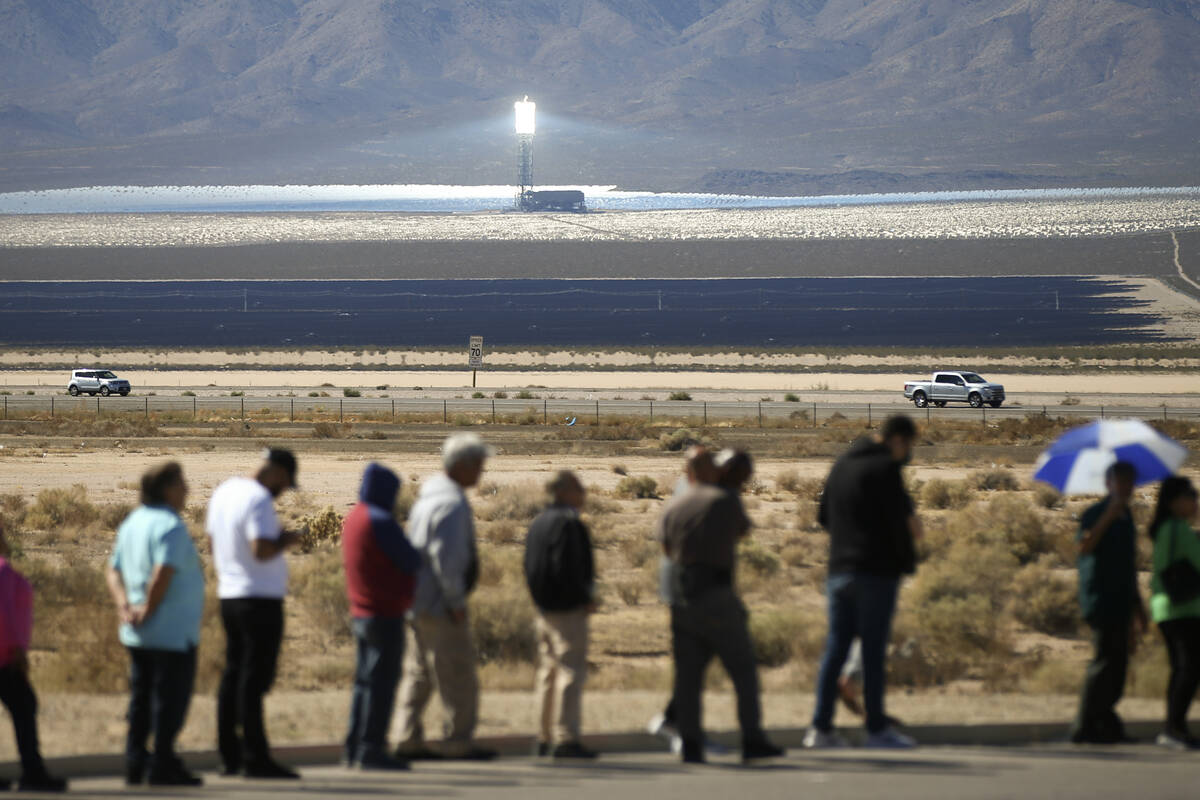
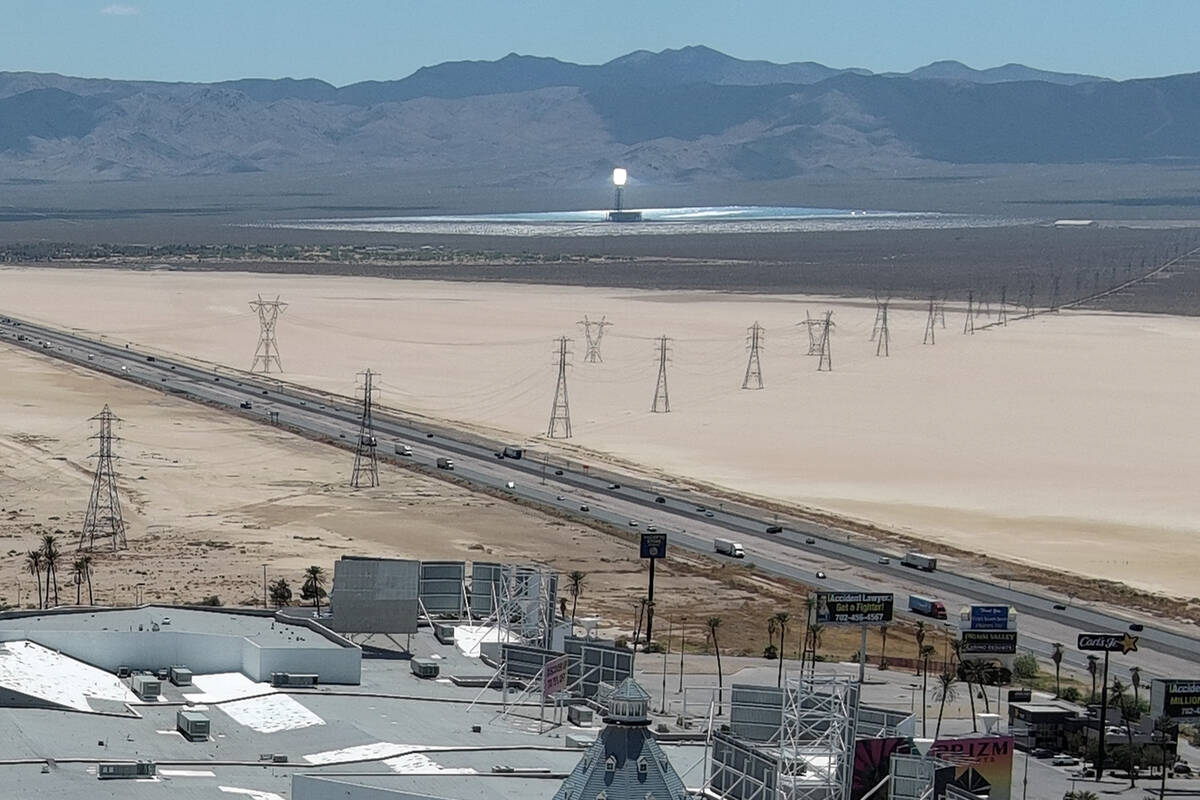




The Ivanpah solar plant, off the Interstate 15, just across the state line from Primm, will continue to operate after the California Public Utilities Commission denied Pacific Gas & Electric Company’s contract termination agreement with the plant’s owners Solar Partners.
During a regular agenda meeting on Thursday, the CPUC rejected a contract termination agreement between PG&E and Solar Partners without prejudice, effectively forcing two units of the plant to remain open, despite agreement from the two parties.
Despite support from the Department of Energy and an independent evaluator — which the CPUC is required to use — the commission still rejected the contract termination agreement citing shifting federal priorities and policy regarding renewables project development, as well as stranding sunk infrastructure costs.
“Uncertainty in renewables project development driven in part by changing federal policy may undermine a core assumption of current reliability assessments,” said the CPUC in its filing.
In January, PG&E announced it was terminating its power purchase agreement with Solar Partners, which is a joint operation from NRG, Google and Kelvin Energy, previously BrightSource, which would have closed Unit 1 and Unit 3 of Ivanpah.
The plant has become a notorious eyesore for travelers, as well as a notorious bird killer, acting as a “mega-trap” for wildlife, with birds flying to their deaths in the intensely focused light rays.
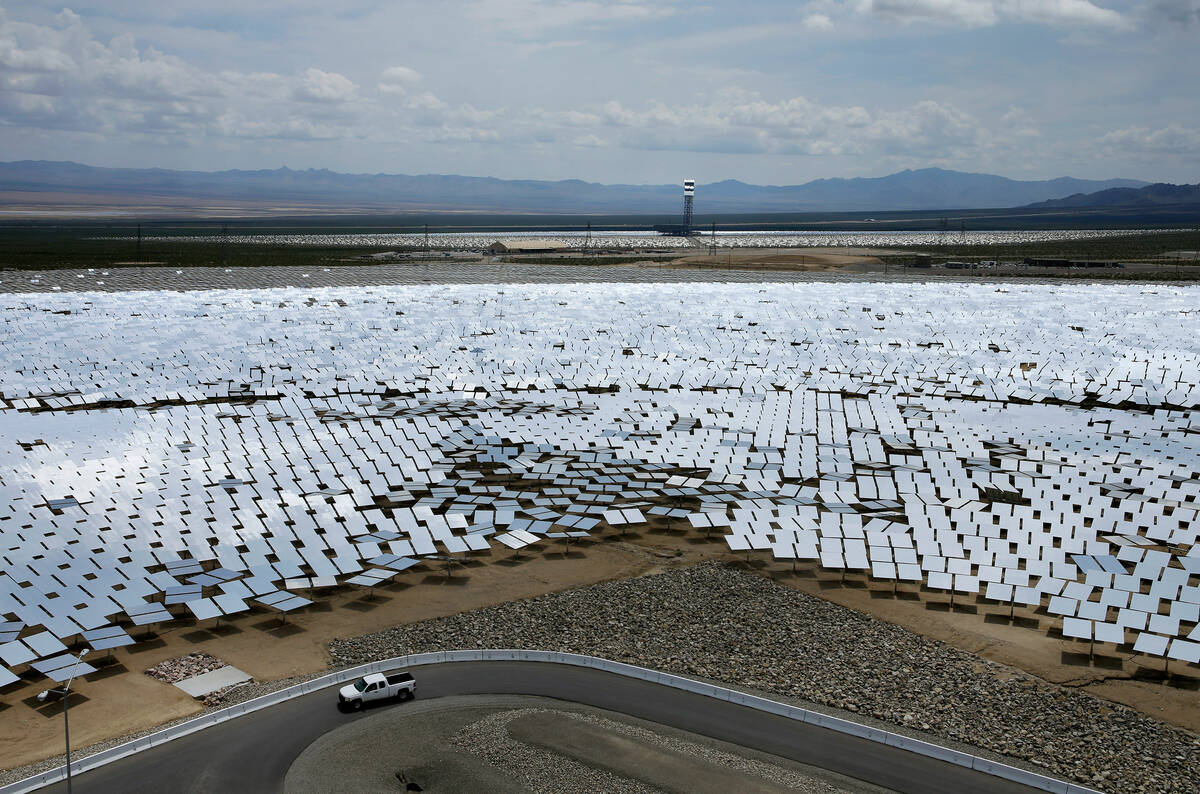
The solar plant differs from solar panels atop roofs, using concentrated thermal power plants. It uses a system of mirrors to reflect sunlight and generate thermal energy, which is then concentrated to power a steam engine.
PG&E contracted with NRG, who operates the plant, to provide energy to customers in 2009, and the agreement was planned to run until 2039, but Solar Partners offered PG&E an opportunity to terminate its Ivanpah solar power purchase agreements to save ratepayers money, PG&E said.
“Ending these agreements would have saved customers money compared to the cost of keeping them for the remainder of their terms,” said PG&E in a statement to the Las Vegas Review-Journal. “PG&E wants what our customers want—safe, reliable, clean and affordable energy service. We take our responsibility seriously and we continue to work hard to lower our prices.”
Plans to terminate the contract also received support from the U.S. Department of Energy, who had a $1.6 billion loan guarantee with the solar plant, despite not having paid the loan back in full.
“DOE asserts that the CTAs represent environmental benefits that include ‘decreased avian species exposure from concentrated solar power towers’ and reduced emissions from natural gas fired systems associated with the plant,” cited the CPUC in its filing from Thursday.
Ivanpah history
Ivanpah opened in San Bernardino County as the world’s largest concentrating solar power project in 2014. The opening of Ivanpah marked a milestone in the United States’ growing solar and renewable energy industry.
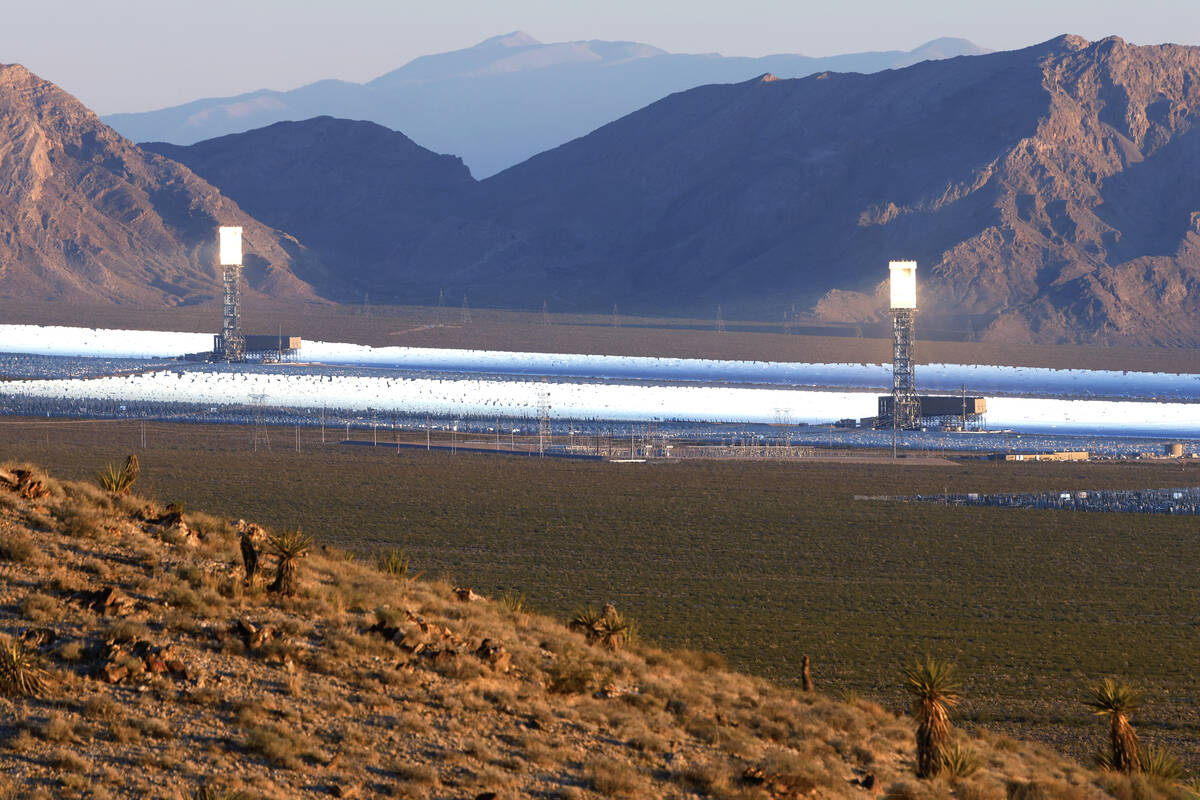
It spans 3,500 acres and is a 386-megawatt solar concentrating thermal power plant consisting of three individual units. With costs mounting to $2.2 billion, it also received a $1.6 billion loan from the DOE, a $300 million investment from NRG and even $168 million investment from Google, the rest coming from BrightSource, now Kelvin Energy.
It was heralded as a “marker for the United States’ emerging solar industry,” according to a report from The Associated Press at the opening. At the time, only 1 percent of the nation’s power output was from solar, as opposed to today’s 3.9 percent.
“We are going to be a global leader in solar generation,” said Rhone Resch, president of the Solar Energy Industries Association at the opening, AP reported. “(The opening of Ivanpah is) a dawn of a new era in power generation in the United States.”
Concentrated thermal power plants, or CSPs, use a system of mirrors to reflect sunlight and generate thermal energy, which is then concentrated to power a steam engine. Throughout the day, 350,000 computer-controlled mirrors track the sunlight and reflect it onto boilers atop 459-foot towers to generate AC.
Nowadays, photovoltaic solar has surpassed CSP and become the dominant choice for renewable, clean energy, being more cost effective and flexible. PVs use solar cells to convert direct sunlight into energy, a much simpler process and cheaper to build and for ratepayers: CSPs cost around $0.06-per-kilowatt-hour, whereas PVs are $0.03-per-kWh.
The site has been controversial even before its inception, with regulatory and legal issues regarding protecting animals and the impact on Mojave milkweed and other plants.
Federal wildlife officials said Ivanpah might act as a “mega-trap” for wildlife, with the bright light of the plant attracting insects, which in turn attract insect-eating birds that fly to their deaths in the intensely focused light rays.
So many birds have been victims of the plant’s concentrated sun rays that workers referred to them as “streamers,” for the smoke plume that comes from birds that ignite in midair. When federal wildlife investigators visited the plant around 10 years ago, they reported an average of one “streamer” every two minutes.
Contact Emerson Drewes at edrewes@reviewjournal.com. Follow @EmersonDrewes on X.