Judge to rule ‘expeditiously’ in Allegiant Air-pilots dispute
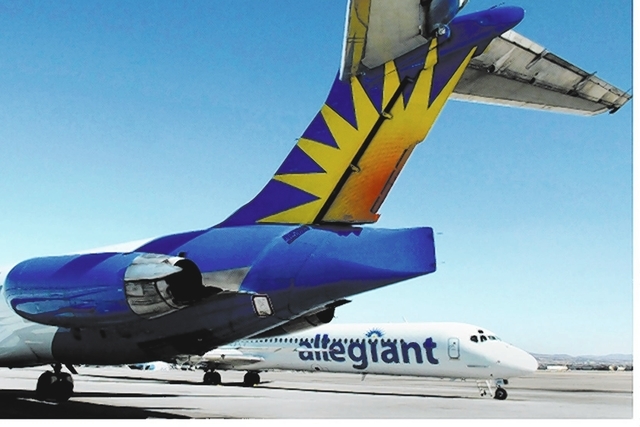





Allegiant Air, its pilots and passengers holding tickets on the airline’s upcoming flights will have to wait at least another day before they’ll know whether pilots will be allowed to walk off the job in a dispute over company work rules.
The airline and its pilots wrapped up three days of testimony in U.S. District Court on Thursday. At the hearing’s conclusion, Judge Andrew Gordon promised he’d “rule expeditiously, but not overnight.”
Leaders of the Airline Professionals Association Teamsters Local 1224 promised they wouldn’t strike before Gordon issues his ruling.
Gordon kept the two sides until after 6 p.m. in order to wrap up testimony. He’s been asked to rule on a request from the airline for an injunction prohibiting pilots from striking. On April 1, the union called a strike for midnight April 2 if the airline didn’t restore work rules that were in place prior to a switch in a computerized pilot scheduling system last fall. Pilot scheduling is the biggest issue in the work rules dispute.
In testimony in the occasionally contentious hearing Thursday, pilots said Allegiant removed pilot seniority as a priority for scheduling trips when it modified its scheduling system.
The accusation is a critical piece in the Las Vegas-based airline’s case to be granted the injunction.
Five pilots took the stand Thursday after Allegiant concluded its case in the morning.
The pilots contend that the switch in the trip-bidding system represents a change from a seniority-based preferential system to a line system that gives the pilots less say on when they fly. More importantly to the pilots, the move represents a departure from work rules that were in place last year, violating a ruling Gordon made in July. The union says that alleged violation from the status quo gives them the right to strike with little warning.
Testimony from Phoenix-based pilot Corey Berger illustrated the pilots’ argument. Berger said he requested last Christmas off when pilots bid for their December flying schedules. When the schedule was published, Berger found that a pilot with less seniority got the day off, but he didn’t.
But other testimony revealed that Allegiant’s scheduling system takes other factors into consideration on scheduling, including the priority level the pilot assigns to the request and regulatory rest rules limiting how many hours a pilot can fly in a given time frame.
The pilots contend that seniority should be the top factor in solving scheduling disputes, but Allegiant’s computer system is programmed to resolve conflicts in other ways.
Testimony got heated throughout the day and Gordon had to admonish both parties about sticking to arguments on the injunction and not raising matters from last year’s case or issues that are part of current collective bargaining negotiations for a contract.
At one point, Teamsters President Daniel Wells, a Boeing 747 pilot with Atlas Air and experienced with a number of pilot scheduling systems, called Allegiant’s preferential scheduling plan “a charade.” When testifying about the company’s efforts to explain to pilots how the system works, he said, “the airline can’t explain to the pilots how much they’re getting screwed.”
Contact reporter Richard N. Velotta at rvelotta@reviewjournal.com or 702-477-3893. Find @RickVelotta on Twitter.