



Tapping Internet called economic key
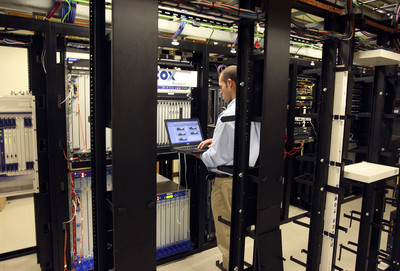


Like the national highway system before it, the country's high-speed Internet networks will determine which communities can tap into economic development, the president-elect of the Association of Public Safety Communications Officials said.
"We need to go out and reach these people who have never been connected to the Internet, because it's all about jobs of the future," said Dick Mirgon, the president-elect "This is just as important as America's highways. This is the next great technology that will allow America to grow economically."
Some areas will be left behind, like the towns that withered after highways bypassed them. Some towns will get improved links to high-speed Internet services that business and industry often considers essential for operations.
In a public meeting late Tuesday at the Charleston Heights Center, the Commerce Department and Agriculture Department heard from Mirgon and others interested in grants that will be made under the American Recovery and Reinvestment Act that President Barack Obama signed last month. The federal government has set aside $7.2 billion in federal grant money for improving the broadband Internet system in rural and urban areas.
While many rural areas are isolated because of limited or slow Internet service, some low-income urban residents also lack access to high-speed Internet services, industry, government and nonprofit group leaders said.
Others argued that Indian reservations, many of which still have limited telephone service, should be given high priority for broadband grants.
Several participants contended that government grant money should be used to build "the middle mile" of telecommunications lines, which link communities to giant Internet and telecommunications networks.
"I see this as a great opportunity for Nevada to be able to expand business in its rural communities," said Jeff Fontaine, executive director of the Nevada Association of Counties.
Steve Schorr, vice president of Cox Communications, said it's important to enable more people to have personal computers so they can communicate on the Internet.
"The problem is the hardware and getting the hardware to the individuals who want to use broadband services," Schorr said.
The cost of personal computers is falling, which will enable more low-income residents to gain access to the Internet, said Karen Twenhafel, a consultant for the National Tribal Communications Association.
"I believe it's a current issue, but I believe (the price) is coming down very quickly," she said.
Her association represents eight tribes that have their own phone companies, but she said 559 other tribes do not.
"(Some) 29 percent of Americans on tribal land have no access to the public communications network. There is no formal tracking of Internet access on tribal lands today," she said.
In Nevada, government and industry leaders don't even agree on whether 1,200 miles of fiber-optic lines that have been installed are being used. The lines are capable of carrying data, voice and video.
"We need to have an inventory of what's in place in our state," Fontaine said.
Government grant money may be used to map telecommunications networks, solving that problem, a federal official said.
In states like Nevada and Arizona, the biggest problem is getting right of way from federal government agencies, such as the Bureau of Land Management, said Galen Updike, an telecommunications leader in Arizona.
It took more than three years to get federal approval to install six miles of fiber optic lines along an existing highway, he said. "It was just a tremendously horrendous experience."
Nevada needs broadband services so doctors and nurses can provide medical services over the Internet to patients in rural areas, said Travis Cox, information technology director for Nevada Health Centers, which has 29 clinics around the state.
Bill Sagel, senior network analyst for the Metropolitan Police Department, urged the government to make funds available for public safety. Law enforcement agencies need high-speed Internet as a backup for commercial and public safety systems that can fail in emergencies like the Sept. 11, 2001, terrorist attacks, he said.
Ed Anderson, director of network services for the Nevada System of Higher Education, described how the Internet is used to provide instruction to people in remote areas.
Jim Stewart of the Utah Education Network complained that the federal allocation for broadband improvements is small compared the billions given to insurance giant AIG.
"If you took that money, you could hook up every home in America with (fiber-optic lines for telecommunications and the Internet)," Stewart said.
Contact reporter John G. Edwards at jedwards@reviewjournal.com or 702-383-0420.


