Legal and policy implications for private developers acquiring BLM lands



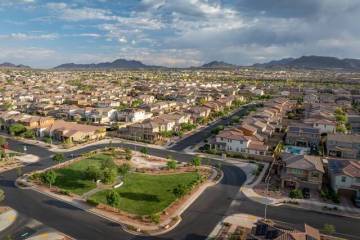
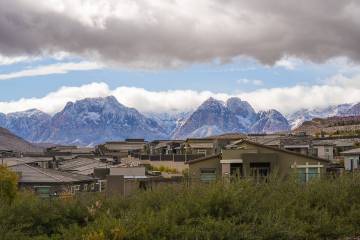


Anyone driving the length of Nevada must notice the stark contrast between its dense northern and southern population centers on the one hand and the vastness of seemingly untouched land in between on the other.
As companies increasingly look west for land to connect supply chains, construct corporate campuses and house large manufacturing facilities, Nevada probably emerges as a promising option. But as our natives know all too well, that “empty” land has many claimants: the federal government as its legal owner, Native Americans and citizens seeking recreation. Even the state of Nevada in statutory law has declared itself to have “a strong moral claim upon the public land retained by the federal government within Nevada’s borders.” (NRS 321.596).
Naturally, this pressure to expand pushes outward from the edge of its existing foothold. In Southern Nevada, we know this expansion area as the “disposal boundary,” i.e., a ring separating privately owned and state or locally administered property from the dominion of the Bureau of Land Management, the agency within the U.S. Department of the Interior responsible for administering federal lands.
This article discusses the implications of the disposal boundary for private developers interested in acquiring public lands, both in terms of the law as it exists today and in terms of pending federal legislation.
Governed by the Southern Nevada Public Land Management Act of 1998, as amended (SNPLMA), BLM-owned land within the disposal boundary may be sold or transferred to (a) private parties through a nomination process, which is described below, or (b) other governmental entities for certain public purposes, which sales may present opportunities for the private sector.
Private parties interested in an acquisition directly from the BLM must review BLM’s master title plat to ensure the land is within the disposal boundary and to identify existing encumbrances and reservations (e.g., earmarks for school sites).
Second, a private party should meet with the jurisdiction in whose boundaries the property lies to determine if the proposed use fits the jurisdiction’s land use goals, as a critical step includes garnering such jurisdiction’s nomination for the sale.
Once the jurisdiction agrees, the BLM will offer the land at one of two competitive, annual auctions, for an amount less than its current, appraised fair market value.
The BLM publishes notice of the sale and may include specific bidder qualifications to narrow the prospective purchaser pool, with the process taking around 18 months.
The acquiring party must then navigate (a) annexing into an incorporated city’s boundaries and out of unincorporated Clark County (if so desired) and (b) proceeding through the relevant jurisdiction’s zoning and entitlement process, which could require payment of fees to connect to public services. For example, in west Henderson, a Public Facilities Needs Assessment would apply and require a development agreement.
Governmental entities too may acquire BLM land from the disposal boundary but only for public purposes such as schools or affordable housing projects.
Public-private partnerships may arise for development of such deed-restricted areas. Furthermore, the Omnibus Public Land Management Act of 2009 (Public Law 111-11) created the “Limited Transition Area” (LTA), a 22595308.3 swath of vacant land within the city of Henderson set aside for largely nonresidential, economic development purposes. Through this tool, Henderson enticed Haas Automation to acquire land to develop its second manufacturing facility.
Upon consummation of an above-described sale, sale funds are returned to the BLM.
According to its own statistics published in the Round 18 Preliminary Recommendation Expenditure of the Special Account for the Southern Nevada Public Land Management Act, dated Feb. 26, 2021, in 2018 the agency sold 736.46 acres of land for a total of $96,305,640, and in 2019 it sold 814.84 acres of public land for $206,125,000.
The BLM deposits 85 percent of the land sale money into a special account to fund projects falling into certain expenditure categories. The remaining 15 percent is distributed to Nevada’s general education program (5 percent) and to the Southern Nevada Water Authority (10 percent) for water treatment and transmission facility infrastructure in Clark County, according to that same document.
The BLM then allocates special account funds to projects through a formal nomination and ranking process, two of which may be of interest to the private development community in particular: (1) acquisition of certain environmentally sensitive lands and interests; and (2) development of certain parks, trails and natural areas (PTNA).
Private owners may have remediation needs, wish to acquire such lands post-remediation or partner to construct PNTA amenities in fulfillment of development conditions. However, be aware that SNPLMA funding comes with conditions and restrictions in terms of amenity type and development and use timelines and could require prevailing wage for construction projects using governmental funding.
Today, SNPLMA remains an important tool for growth. Nevada emerged from 2020 third in the nation in population growth and at a crossroads as the public land bank dwindles and our leaders seek to continue providing public services, affordable housing, economic development incentives and high-quality recreational opportunities for Nevadans.
Accordingly, in 2021 the Nevada federal delegation introduced the Public Lands Bill — Southern Nevada Economic Development and Conservation Act, which proposes roughly 2 million acres be protected for conservation and recreation, including a 51,000-acre expansion of the Red Rock Canyon National Conservation Area, 41,255 acres to be held in trust for the Moapa Band of Paiutes and roughly 30,000 acres for affordable housing and business growth, including an expansion of the LTA.
The measure was introduced a few months ago, and the community should watch this legislation closely as it holds great implications for the future of our state.
Jamie Thalgott is a shareholder at Las Vegas-based Brownstein Hyatt Farber Schreck. Thalgott understands Nevada’s political climate and highly regulated gaming industry and their effect on complex land use and real estate transactions. Her practice focuses on providing counsel to high-profile developers, through the negotiation of development agreements and entitlement applications with local municipalities, and to market-leading casino and resort clients, through the negotiation of property acquisitions, dispositions, financings and leasing, as well as legal issues related to land use and property development.