



Some Las Vegans look for roommates to cut costs
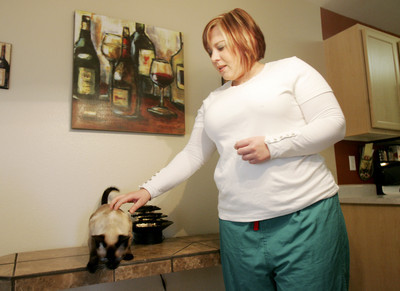


Dayna Adams is too old for this.
She should be living alone in her own home, enjoying the life that her management job afforded her, not living paycheck to paycheck, looking for a roommate to make the monthly rent.
To her, those are the bare minimum rules for a 47-year-old woman. But here she is, just scraping by. She was laid off from her travel agency job in July and had to take a nonmanagement job in the industry that pays $20,000 less.
And here she is, two weeks after her fiance moved out, posting an ad for a roommate on craigslist. The $1,200 rent for her three-bedroom house is killing her.
The bright spot?
"I know I'm not the only one in this situation," Adams says. "But it sucks."
Indeed, Adams isn't alone. Hundreds and possibly thousands of Las Vegans are in similar situations, facing layoffs, increasing mortgage payments and an uncertain future. And many are turning to roommates as a means of shoring up their finances.
A few years ago, when the housing market was scalding hot, locals took in roommates because housing was unaffordable, notes Debra March, executive director of the Lied Institute for Real Estate Studies at the University of Nevada, Las Vegas.
Now, even though housing is much cheaper -- recent reports placed the median price of existing homes at $155,000 and new homes at $233,000 in January -- it is still unaffordable because people are losing their jobs or their income is being slashed, March says.
In 2007, 13 percent of locals could afford housing in Las Vegas. Now, we're back to 2002 levels in terms of housing costs, March says, but unemployment is rising and it's affecting more than just those who lose their jobs.
"My roommate ended up moving back to Ohio last Friday," says Cassaundra Veenendaal, 25. "And I moved someone in Saturday."
She just signed a lease in January with a new roommate; two weeks later, he was laid off. Veenendaal immediately posted an ad on craigslist, looking for someone to move into her two-bedroom apartment.
She recently graduated with a bachelor's degree in nursing from Nevada State College and, though she has a job at a Henderson hospital, she also has about $60,000 worth of student loans. Her rent costs $1,200 a month, so a roommate paying $600 a month helps. A lot.
But that financial savings often comes at a cost, especially when relying on an anonymous, free Web site such as craigslist.
"You really don't know who's responding," Veenendaal says. "It's a little scary, moving someone in that you don't know. It's more of a fear of the unknown, you don't really know what's going to happen."
She seems to have lucked out with her new roommate, Ian Young, 26. He moved to Las Vegas from Orlando, Fla., in mid-February to take a job as an aquarist at Caesars Palace. After sleeping on a friend's floor for one night, he searched the craigslist room share posts and found Veenendaal. There was no shortage of people looking for someone like him, Young says.
He likes living with a roommate because he saves about 40 percent of his income and it provides him with an instant social life.
Though she didn't do a background check or ask for references, she trusts Young. He has a job, something that a lot of people don't have right now.
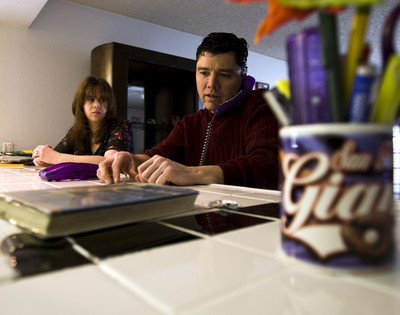
Dawn McGroarty, 35, and her fiance, Leif Whitmore, 42, are in the opposite situation. They're looking for a roommate to move into the house they bought last year, but they don't have jobs. Whitmore was laid off from his MGM Grand job in internal communications in December and McGroarty got her pink slip from her veterinary technician job in January. Both are on unemployment benefits. Their mortgage is $1,250.
"We toyed with the idea of taking a roommate about four months ago," McGroarty says. "Now we really need someone to come in and help."
Their only requirements are for someone who likes cats -- McGroarty has two -- and someone who doesn't smoke or do drugs. The roommate must have reliable credit and be able to come up with the $350 monthly rent, plus utilities. They haven't decided whether they will take in an unemployed tenant.
Adams feels like she has been fighting to stay on her feet for a while. She was diagnosed with multiple sclerosis in 2007, lost her job in July 2008, and stopped taking her medication because she no longer had insurance. Even though she found a new job within a month of losing her old one, Adams didn't have health insurance for three months and couldn't afford the $2,400 a month medication. She plans to resume taking the medicine soon.
Along with all of that turmoil, she's still getting over the breakup with her fiance. She says she could use a little peace.
That may take some time. So far, Adams has had only one person interested in the extra room and he gave her a bad vibe. Adams doesn't like to think about what she will do if she can't find a roommate and can no longer afford the rent on her own. One thing she does know is that there is very little help for her, a childless, single woman who rents.
It could be a while before locals start feeling any sense of normalcy, especially in their living situations, March says. First, the job market has to improve. It's difficult to predict when that might happen; the housing market may take years to recover, she adds.
In the meantime, March expects to see a shift in the way people participate in their community. Some who once thought they were well-established on their own are moving back in with parents, extended family and friends, changing the look of the average household. Homelessness could increase. Things will probably get worse before they get better, experts say.
"I don't think normal will look like what we've seen," March says. "Especially in Nevada, where people value their independence. This may be a time where we have to become that community that digs in together. We're all going to have to get into the sandbox together to solve this."
Contact reporter Sonya Padgett at spadgett@reviewjournal.com or 702-380-4564.


