



‘Rogue regimes’ require U.S. to have strong nuclear posture, expert says
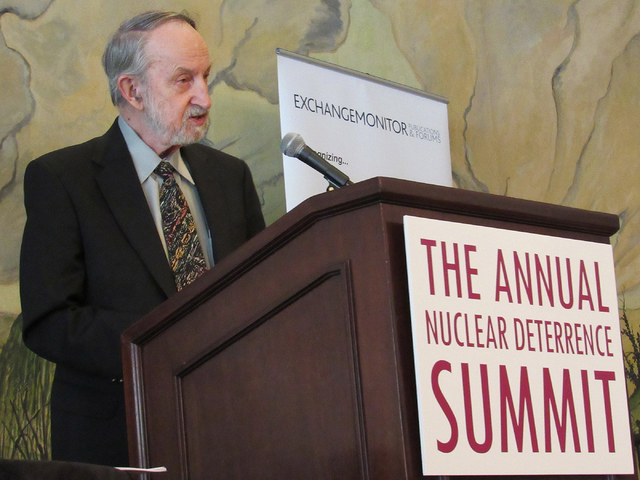


WASHINGTON — The world is a much different place now than it was 50 years ago when Troy Wade began work at the Nevada Test Site, and the USSR was the chief nuclear adversary of the United States.
But Wade, a nuclear weapons expert whose long career took him around the world, told an audience on Wednesday there is as much need now in a world of rogue regimes for the United States to maintain a strong nuclear posture.
“The end of the Cold War was achieved in no small part from our nuclear deterrence, and from the labor of the men and women in the nuclear weapons complex,” he said. “Today’s world is somewhat different from the day I walked onto Frenchman Flat, but it is still a volatile and dangerous place.”
“The USSR is gone now, and new and dangerous regimes have risen that now possess nuclear weapons,” Wade said. “These countries present a risk not just to the United States but to free people in all the world. The United States must remain diligent and steadfast in its opposition to nuclear proliferation.”
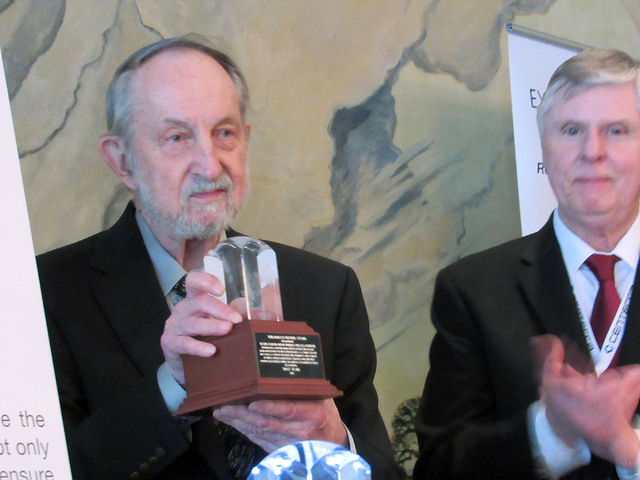
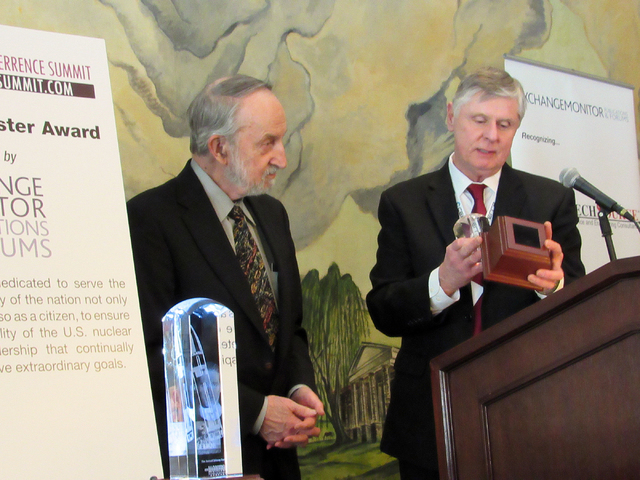
Wade, a Las Vegan since the late 1950s, delivered his message as he accepted recognition for his career and contributions to the U.S. nuclear program.
At a conference luncheon with more than 200 attendees, he was given the Johnny Foster Lifetime Achievement Award, named for the former director of the Lawrence Livermore Laboratory and director of defense research under Presidents Lyndon Johnson and Richard Nixon.
Wade received the award at the seventh annual Nuclear Deterrence Summit, a gathering of U.S. and international leaders, experts and industry executives in the field of nuclear deterrence.
Wade, 80, was a Colorado native with experience in mining when he began work in Nevada in 1958 as a mechanical engineer with a test site contractor. At the time, the government was shifting from atmospheric to underground testing.
Wade worked as a nuclear explosives expert at California’s Lawrence Livermore National Laboratory in the 1960s and later held a key staff position on the Atomic Energy Commission’s Nevada Operations Office in the early 1970s.
At the AEC, Wade led the effort to create the Nuclear Emergency Search Team for responding anywhere in the world to accidents involving radioactive materials.
At one point in his career, Wade was a nuclear test controller in Nevada. He said he “spent many a long night” making sure that underground test blasts would be carried out safely.
During the Reagan administration, Wade served as the Department of Energy’s defense programs chief, overseeing $8 billion budget and 60,000 employees at more than 15 facilities in 12 states where nuclear weapons were researched, developed, tested and produced.
Wade retired from the government in 1990 but remained active in the nuclear weapons field as a consultant. He is chairman-emeritus of the Nevada Alliance for Defense, Energy and Business, which represents more than 35 technology companies that support the test site, now known as the Nevada National Security Site, and help bring science and technology programs to the state.
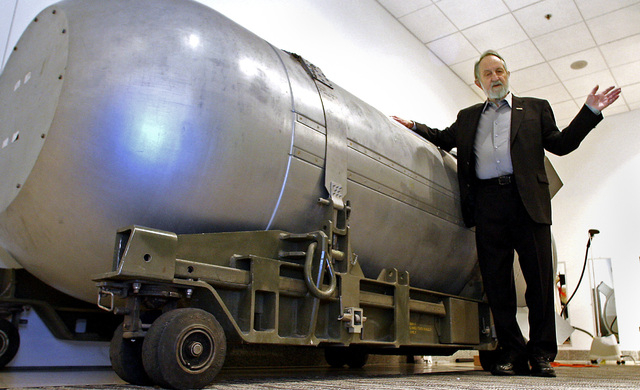
Wade has served as chairman of the Nevada Test Site Historical Foundation since its inception in 1998. In that role, he became the founder of the Smithsonian-affiliated Atomic Test Museum, which opened in 2005 in Las Vegas.
In his remarks Wednesday, Wade recalled experiences at nuclear installations in various parts of the world. Several in the United States don’t exist today, such as the Rocky Flats plant in Colorado and the Mound Laboratories site in Ohio.
“There are many others I remember and some I still can’t talk about,” he said.
Wade called his tenure at Department of Energy headquarters in the late 1980s as a “fascinating and exciting time.”
“But,” he said, “when I was in DC being grilled on the weapons budget, I often wished I was back at the test site.”


