Judge mulling decision on short-term rentals in Clark County
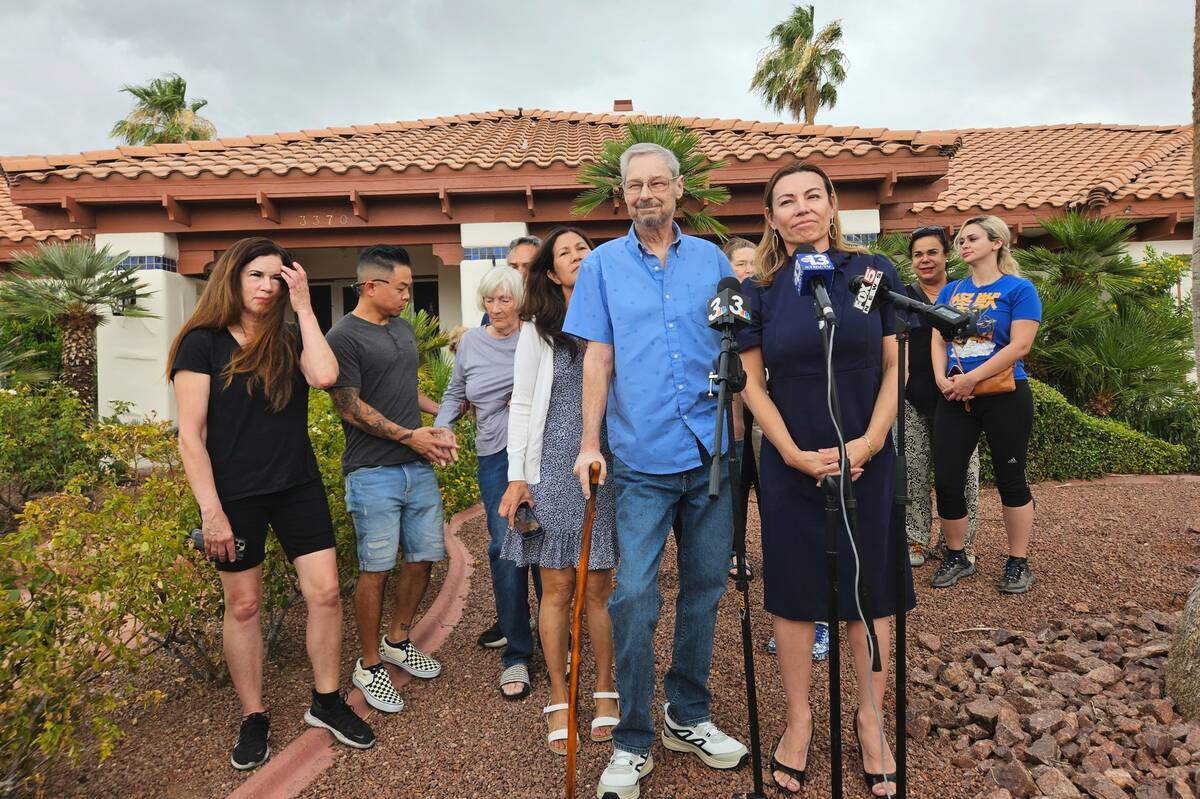





A U.S. District Court judge on Friday took under advisement testimony from attorneys representing Clark County property owners using their homes as short-term rentals through Airbnb.
Nevada District Court Judge Miranda Du said she would decide in a few days whether to curtail Clark County’s enforcement of its short-term rental ordinance.
Separately, Du denied the county’s motion to dismiss the lawsuit filed by the Greater Las Vegas Short-Term Rental Association and 15 individual plaintiffs, including San Francisco-based Airbnb. The association says it is representing 856 homeowners in the lawsuit.
She also granted a motion preventing the association from seeking damages against the state.
The association filed the lawsuit in June, claiming that the county did not provide a proper means to file for a rental license and punished residents who attempted to rent their properties through Airbnb with hefty fines and liens against their properties.
The 20-count claim accuses the county of violating the First, Third, Fourth, Fifth and 14th amendments.
Association optimistic
Mark Hutchison, lead attorney for the 1,200-member association, said he was optimistic about the outcome after the hearing.
“We’ll wait and see what the decision is coming from the judge, but I think we felt good about it,” he said. “I think that the judge understood the arguments. I think that she really understood the irreparable harm that happens.”
The association says there hasn’t been an effective licensing system in place in the county since Clark County commissioners approved a short-term rental ordinance in 2022.
Clark County had barred all short-term rentals before Assembly Bill 363 took effect that year.
The association alleges that the county’s licensing rules are too restrictive and divert from the intention of a 2021 Nevada law that allowed the business model.
Individual members have said the county’s short-term leasing rules are meant to favor the powerful and politically active resort industry.
Burdensome ordinance
In the original complaint, the plaintiffs argued that the county’s licensing ordinance is too burdensome and that it “arbitrarily bars most property owners from applying for a license,” essentially banning short-term rentals.
Licensing is capped at 1 percent of the unincorporated county’s housing stock. Other rules include minimum separation requirements between other short-term rentals and resorts.
A lottery process was implemented to issue initial licenses about 2½ years ago and the process hasn’t reopened, according to the lawsuit.
Clark County has issued 174 licenses, though it governs about 1 million residents and roughly 300,000 homes, the lawsuit said.
The county, represented by Deputy District Attorney Timothy Allen, said it is processing applications as quickly as it can with the limited resources it has.
Du issued a preliminary injunction in August, citing a federal provision that grants limited immunity for online platforms.
But Allen said the county’s ordinance enabled it to enforce laws against unlicensed short-term rentals, which included fines of $500 for the first offense and $1,000 for subsequent violations.
Association members say the large number residents who want to use their residences as investments has resulted in the assessment of hundreds of thousands of dollars in fines.
Association co-counsel David Zionts, who made the court presentation for the plaintiffs, said if fines aren’t paid within 50 days, a lien can be slapped on the property.
“Not only is it a lien against your property, now it’s going to roll over into your taxes, and it’s going to become a tax lien, which has priorities,” Hutchison said. “They’ve got to be paid first before anything else gets paid off. Your lender is going to see that and say, ‘I’m first on the property. I want my priority on the property,’ right? I’ll go ahead and pay that tax lien and then I’ll send you the bill, and if you don’t pay me with interest, under my contract with you, under our loan documents, I can foreclose on your property.”
Du directed attorneys for both sides to get together within 10 days to arrange a schedule for discovery on the case so that it can move forward faster.
Contact Richard N. Velotta at rvelotta@reviewjournal.com or 702-477-3893. Follow @RickVelotta on X.