Clark County bought warehouse for $11.8M, problems and all
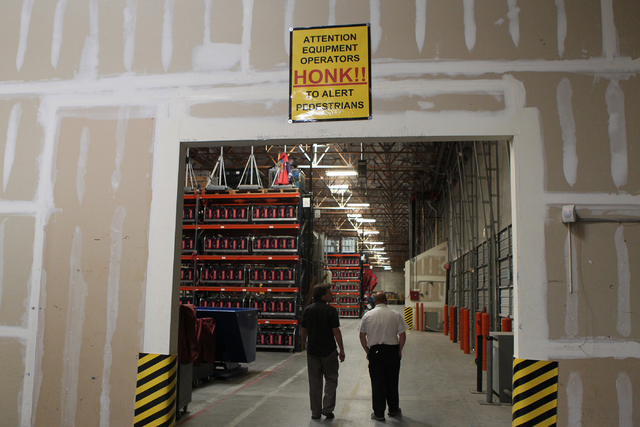

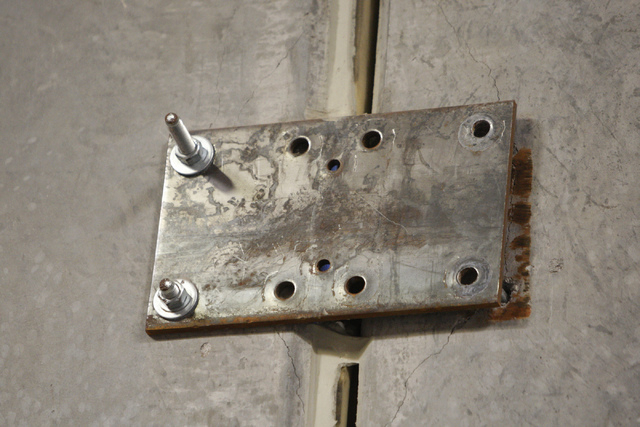
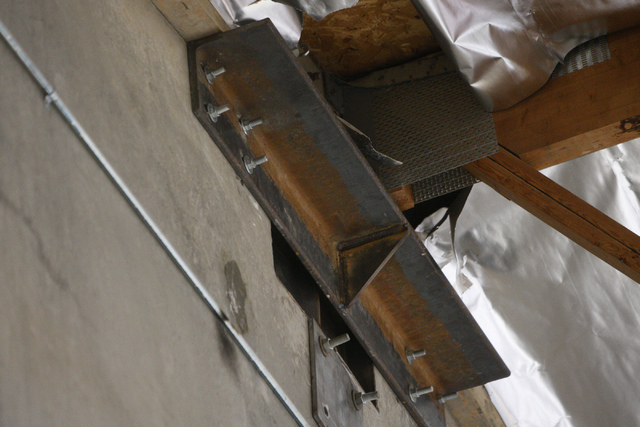
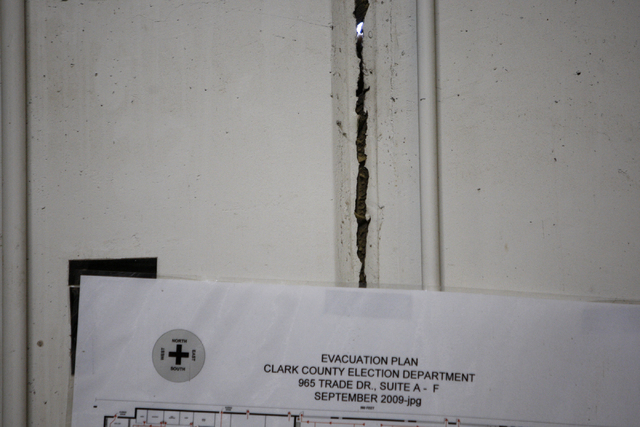
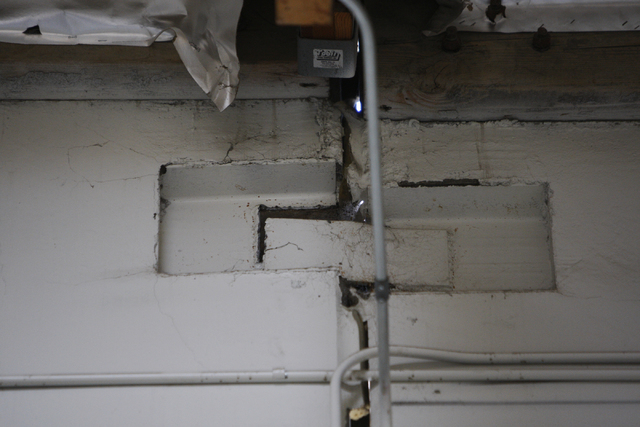
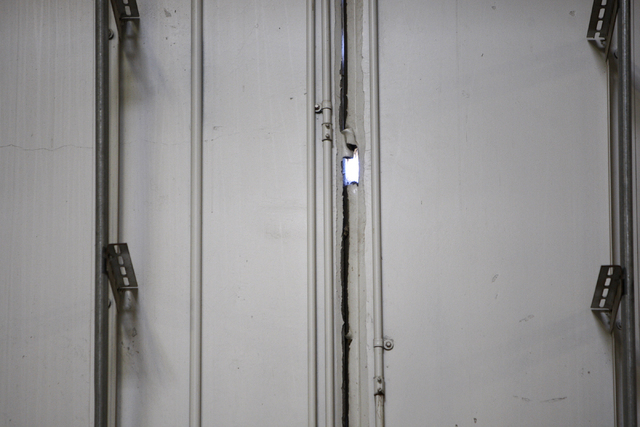
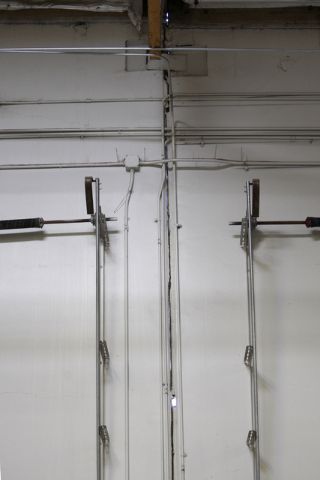

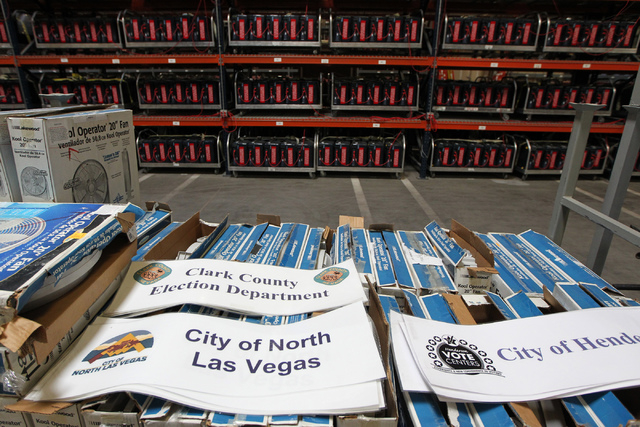
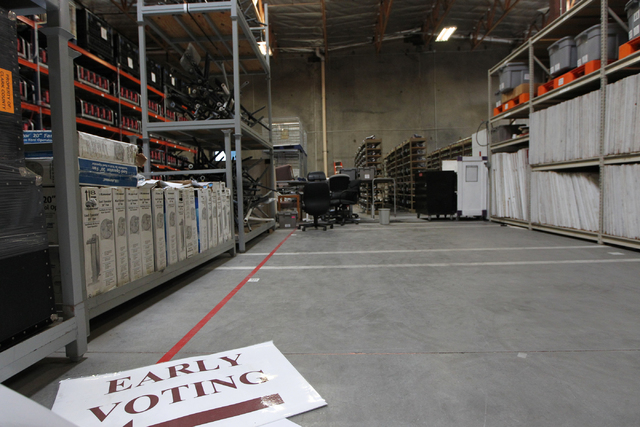
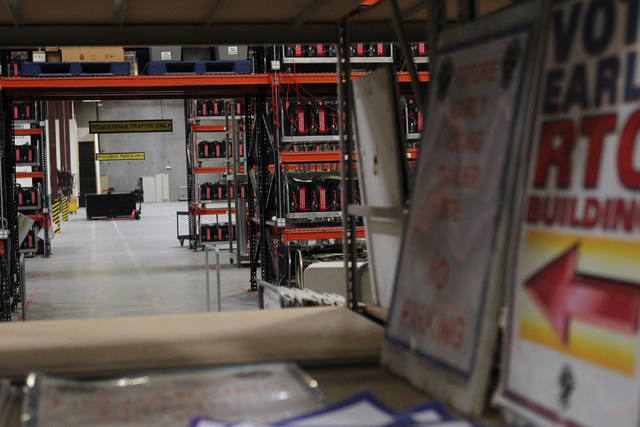
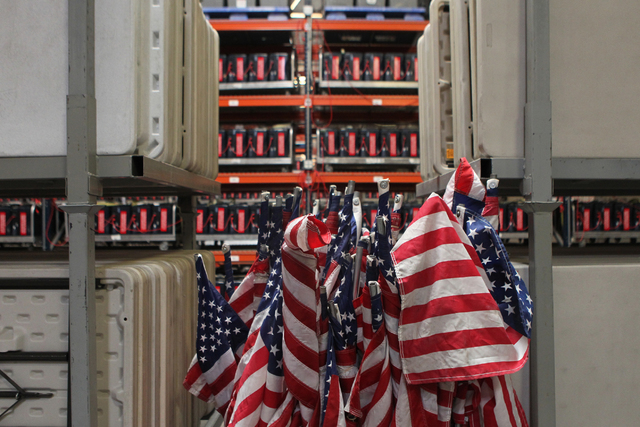
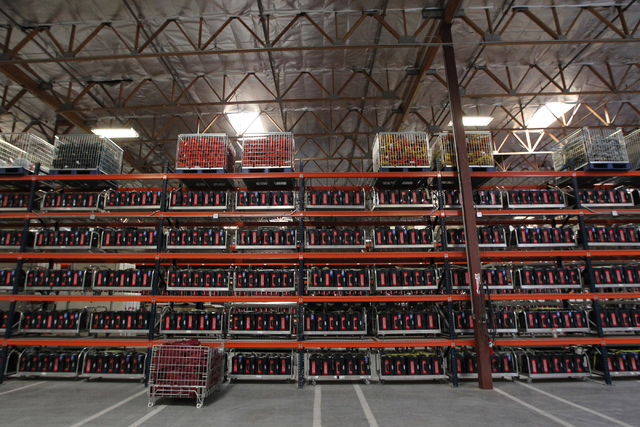





The Clark County elections warehouse has a history of problems that have required the attention of engineers for the better part of a decade.
Since 1997, the 19-year-old building in North Las Vegas has housed the county’s elections equipment, providing a storage spot for its 4,500 voting machines. In 2004, the earth heaved and an engineer’s services were needed to repair concrete panels that drifted apart, county records show.
The panels moved because of earth fissures near the foundation of the 112,000-square-foot building. The problem has only worsened, morphing into a potential $5 million to $7 million bill in repairs to trusses, the roof and drainage system.
Yet in spite of those problems, county officials decided in 2008 to buy the property, which it had been leasing, for $11.8 million.
County commissioners plan hear a report on the problem — and its potential price tag — at their meeting Tuesday. Their options are to pay more money to fix the warehouse, or abandon it and build a new warehouse next door.
An engineer in 2006 had instructed the county to keep an eye on the building for signs of settling. Yet there are no indications from public records that the county ever completed a detailed inspection of the 110,000-square-foot property’s overall structural soundness as part of its due diligence before buying the warehouse.
The warehouse is on a 6.58-acre parcel at 965 N. Trade Drive, off West Cheyenne Avenue and east of North Martin Luther King Boulevard. The county purchase included an adjacent 3.72-acre vacant lot to the south.
The county provided hundreds of pages of documents in response to a Review-Journal request for public records of the warehouse’s reports and inspections before and after the purchase.
The county purchased the property from CIP Hughes Cheyenne Flex Portfolio and CIP Hughes Cheyenne Extra Tierra, both Delaware limited liability corporations with a business address in Irvine, Calif., through CIP Real Estate.
Jerry Stueve, the county’s director of real property management, said he wasn’t able to answer questions about the purchasing process and whether the county did its due diligence in 2008 because he didn’t start working for the county until 2010. But Stueve said his department turned over all the records it has to the Review-Journal.
“At this point in time, I’m not worried about its history,” Stueve said. “I’m focused on going forward.”
Randy Tarr, a civil engineer who recommended the building purchase to commissioners for a vote in November 2008, was director of real property management at the time. Tarr, who had been on the job since that January, was promoted to an assistant county manager in 2010.
Tarr didn’t respond to queries from the Review-Journal about his recommendation and the county’s process of vetting the property in light of the warehouse’s well-documented history of problems by 2008.
HISTORY OF PROBLEMS
County staff first spotted damage in a section of one wall in 2004, and an outside engineer assessed the problems.
An Aug. 13, 2004, email from a property manager to county staff and an engineering firm said: “The ground appears to have heaved and the seam between two panels has widened.”
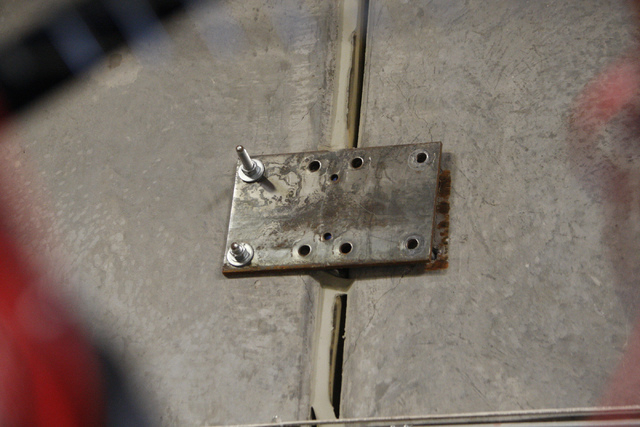
The panels received repairs, which included putting a steel plate over them to stop the separation.
Concerns persisted about the building settling even more.
On Nov. 13, 2006, a county staffer with Real Property Management and a structural engineer met to inspect the building.
The county was concerned about “visual movement” in one of the tilt-up panels of the building’s north side, records show. There was also ground settlement in the parking lot. By then, a steel ledger angle tied two of the panels together as a repair.
The engineer indicated the repair was adequate, but advised staff to keep an eye on it, given the building’s history.
“We do, however, suggest that this panel be monitored for movement mainly due to the past history of settlement outside of the building,” the engineer’s Jan. 8, 2007, memo to the county says.
In July 2007, the county submitted an offer to purchase the property, which was appraised by a third party for $11.8 million.
More problems developed after the purchase in 2008.
A structural engineer was called out again in 2011 after building cracks were spotted. But those problems were deemed “non-structural” and cosmetic fixes were ordered.
History repeated itself last fall. Elections staffers noticed cracks in the concrete slab and walls. Once again, engineers were called out to investigate.
This time, they discovered more serious problems — the building had moved and settled, highlighting its proximity to fissures and fault lines.
Their inspection flagged problems with 29 trusses that need additional support, and a separated building.
The March 12 report from Lochsa Engineering says the building “has been experiencing settlement for an unknown period of time and settlement continues at this time.”
It recommended immediately repairing the roof trusses and diverting stormwater on the roof away from fissures. That’s because water opens fissures wider and hastens building settling.
The full $5 million to $7 million estimated cost would include a complex process that exposes and repairs the fissures, extensive regrading to keep water away from the building, reinforcing the trusses, and repaving the parking lot.
EXPLORING OPTIONS
It’s unclear what the county will end up doing with the warehouse.
The final costs are uncertain because officials are still exploring options for a long-term fix or a new facility, which could be built on an adjacent parcel.
The county Real Property Management Department has 60 days to complete a study, which is due to be finished in June.
Commissioners asked for that study on April 7 after a presentation. At the time, Commissioner Lawrence Weekly — the warehouse is in his district — said he doesn’t want a blighted building sitting empty in his district if the county leaves it.
In the short term, about $200,000 will be spent on limited repairs to keep the building safe and usable, Stueve said.
“All we’re doing right now is the bare minimum to be able to keep people in the building,” he said.
Stueve plans Tuesday to update county commissioners about the progress. Purchase orders so far total nearly $200,000 and cover construction, inspections and monitoring services, according to commission meeting agenda materials.
‘THOROUGHLY FAMILIAR’
The county’s lack of a structural inspection in advance of its 2008 purchase strays from a standard practice the private sector follows when making decisions about whether to purchase a warehouse.
That due-diligence process includes obtaining a property condition report on the property from a licensed general contractor or inspection company, said Dan Doherty, an industry property specialist with Colliers International.
The report will include inspections of the structure, including the plumbing, mechanical and electrical systems, the foundation and the roof, said Doherty, an expert in the field. The inspection can flag problems that aren’t immediately obvious.
No such report exists in county records.
“In my world, it’s absolutely routine,” said Doherty, adding he’s never had a client buy property without one. “There’s things to the novice eye that can’t be seen.”
Doherty said the $11.8 million price in 2008 sounds reasonable for the time.
Records show the county followed other standard aspects of reviewing a building before the purchase, including an environmental assessment and survey. Both are in the county’s purchase agreement, which doesn’t say anything about a property condition report.
The agreement also says the county, as a tenant, “is thoroughly familiar with the condition” of the property.
Contact Ben Botkin at bbotkin@reviewjournal.com or 702-405-9781. Find him on Twitter: @BenBotkin1