Ensign votes against earmarks he inserted
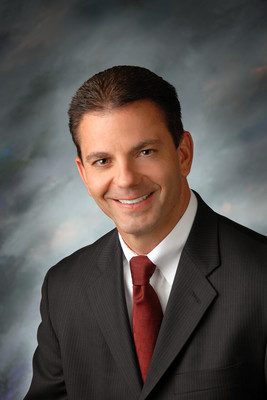


Sen. John Ensign, R-Nev., successfully inserted $12.3 million for Nevada into a 2008 transportation and housing spending bill last week. Then he voted against it.
Ensign's earmarks, some of which he shared with Sen. Harry Reid, D-Nev., included $1 million for an Interstate 80 interchange at Fernley, $3 million to widen the Blue Diamond Highway and $3.8 million for various interchanges on Interstate 15 and the Las Vegas Beltway.
He also disclosed $1 million for an adult day care center at Nathan Adelson Hospice in Henderson.
But despite the earmarks, Ensign ended up voting against the bill on final passage. He was one of only seven senators on the short end of an 88-7 vote.
The Nevada Democratic Party took a swipe, saying votes against state transportation dollars soon would put Ensign on the "road to irrelevance."
Ensign spokesman Don Tatro explained Ensign in the end agreed with President Bush that the $104.6 billion bill was too expensive. Bush has threatened a veto.
But if cost was a concern, what about those earmarks?
Ensign "supported the transportation spending, but he questioned the huge spending on public housing and Amtrak," Tatro said. "That's where the increase came from."
The bill was $4.4 billion over the president's request. According to a Senate Appropriations Committee summary, housing programs came in at $3.1 billion more than Bush wanted. Amtrak was funded $600 million above the White House request.
Also, airport grants were $765 million above budget and highway programs came in $631 million more than the president's request, the committee said.
VOTE FOR ANCHOVY
And Nevada's electoral votes go to ... extra cheese?
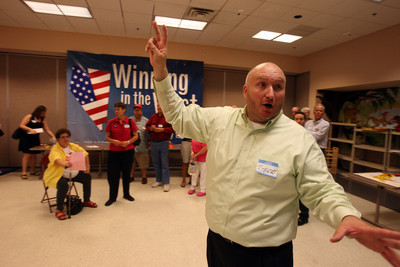
As they gear up for the confusing process of a large-scale presidential nominating caucus, Nevada's Democrats have been conducting "mockuses," or mock caucuses, around the state to demonstrate how they work.
Participants, instead of choosing a presidential candidate, are usually asked to choose a pizza topping. Fans of each topping gather in groups; some then must disband and reassemble based on the formula for viability -- that is, whether their choice has the number of votes needed to earn a delegate.
Could the pizza wars be an indication of Nevadans' political leanings? State Democratic Party Chairwoman Jill Derby was asked on a conference call with reporters last week whether there's been any trend in the topping contests.
She said she didn't know, but in the mockus she'd done, "I was doing anchovy, and it lost."
The party's deputy executive director, Kirsten Searer, has traveled the state helping conduct mockuses for some months now. She said no one has been keeping track of the pizza winners but, "We have pretty diverse taste here in Nevada."
Like Derby, Searer said, "I also always mockus for anchovy. We were viable in Virginia City -- go anchovy!"
Party Executive Director Travis Brock said Nevadans are also independent-minded. "I always go for pepperoni, but it doesn't dominate as you might expect," he said.
STRATEGIC LOGIC
There's a strategic logic to mockusing for anchovy, it turns out. As the Dennis Kucinich of pizza toppings, anchovy rarely has enough votes to earn a delegate, forcing its devotees to disband and go to their second choice -- as all the other toppings' camps compete for their support. That demonstrates the most exciting and the most perplexing part of caucusing.
(Incidentally, in a mockus attended by the Review-Journal in Las Vegas last month, instead of pizza toppings, attendees chose types of candy. Delegates were awarded to Snickers, Hershey bars, Reese's Pieces and Starburst, but not Mr. Goodbar.)
Derby said the mockuses have been a success. "Our feedback about the mockuses is that people really enjoy them and they really get a sense of how a caucus works from participating in them," she said.
It's no secret that prosecutor Robert Daskas, who last week announced he's formally entered the race to unseat Rep. Jon Porter, R-Nev., was relentlessly sweet-talked by the Democratic Congressional Campaign Committee before he agreed to enter his first political contest.
On Friday, sources said, the committee's chairman, Rep. Chris Van Hollen of Maryland, was in town to drum up support for Daskas' bid, mainly among labor leaders. It's not the first time Van Hollen has traveled to Nevada to talk to and about Daskas, who is taking on someone the committee sees as one of the nation's most vulnerable Republicans.
Daskas' candidacy also has the backing of Sen. Harry Reid, D-Nev., and Rep. Shelley Berkley, D-Nev.
FEELING LEFT OUT
This love fest has left another declared Democratic candidate for the 3rd Congressional District, Andrew Martin, feeling a bit left out. He issued a statement last week decrying Daskas' apparent status as "the hand-picked choice of the Washington, D.C., Democratic Party establishment."
"I believe the good people of Clark County have a tradition of making up their own minds and seeking out independent minded candidates over Washington party insiders," Martin added.
A spokeswoman for the committee said it generally tries not to get involved in primaries. "It's up to the voters in Nevada's 3rd District to decide who represents them in Congress," Jennifer Crider said. However, she noted, "The work Robert has done and his support from the local community is very impressive."
She noted that the committee's activities here have focused on bashing Porter, including television ads criticizing his position on the war.
Martin, an accountant who moved to Nevada from Washington in 2005, had raised almost $40,000 as of the end of June but could suffer from the carpetbagger rap that has afflicted Porter's opponents in the past.
According to the Web site of Beekman Place, a townhouse community in Washington, Martin serves as its president.
Martin's campaign manager, Joe Bifano, said Martin has submitted his resignation from the post. "He's bought a home here," Bifano said. "Nevada is his home now."
Pledge risk
By pledging fealty to Nevada, Iowa, New Hampshire and South Carolina, the Democratic presidential candidates may have risked alienating Arab Americans.
Candidates were invited to a forum put on in Michigan by the Arab American Institute next month but "have pulled back after expressing initial interest in directly addressing the community, fearing that their participation ... might put them at odds with the 'four-state pledge,'" a news release from the institute stated last week.
Michigan and Florida are the rogue primary states targeted by the pledge that all the major Democratic candidates have signed, agreeing not to campaign in states other than the chosen four that have scheduled early contests.
The institute's president, James Zogby, said, "We have appealed to the party leaders in the four early states, making the case that our meeting is national in scope and that it provides the only forum where Arab Americans can hear directly from the candidates on national issues of importance to our community."
Under party rules, it's not clear whether participating in a forum or debate falls under the definition of "campaigning."
Nevada Democratic Party officials said the four states are conferring with the Democratic National Committee to decide whether to grant the candidates a waiver to attend the event.
Contact political reporter Molly Ball at 387-2919 or MBall@reviewjournal.com.