Las Vegas police, driver in fatal crash settle for $120,000



The Metropolitan Police Department has agreed to pay $120,000 to Calvin Darling, who was accused of drunken driving after last year's fatal crash with a speeding Las Vegas police cruiser.
The settlement must be approved Monday morning by the agency's Fiscal Affairs Committee to become official. Neither the Police Department nor Darling's lawyer would discuss the proposed settlement until it is approved.
Darling's claim against the police stems from a May 7, 2009, crash on Flamingo Road near Tenaya Way.
Darling, then 45, was headed home after work early that morning when he tried to turn left in his pickup from Flamingo onto Ravenwood Drive.
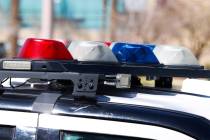
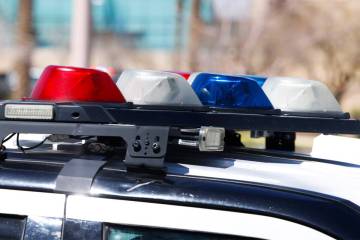
Coming toward him, Las Vegas police officer James Manor was traveling more than 100 mph down Flamingo in response to a domestic violence call. Manor's cruiser plowed into Darling's truck, killing the 28-year-old officer.
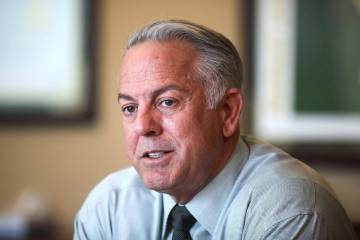
Darling was arrested on charges of drunken driving and failing to yield to an emergency vehicle. At a news conference that day, Sheriff Doug Gillespie said Manor was driving with lights and sirens activated.
Darling, who told police he had three or four beers before driving home, had bloodshot eyes and smelled of alcohol, according to his arrest report. He also failed a horizontal gaze nystagmus field sobriety test, which determines intoxication based on involuntary eye movements, the report said.
Police released Darling the next day, after a blood test showed his blood-alcohol content was 0.035 percent, less than half the legal limit of 0.08 percent.
Two weeks later, Gillespie had another news conference to say Manor's car was speeding at 109 mph in a 45 mph zone with no lights or siren just before the crash. Manor was not wearing a seat belt.
The sheriff called the speed "excessive and unsafe."
"Any reasonable person would have been unable to determine the police cruiser was traveling in excess of 100 mph as it approached the intersection and would have felt sufficient time existed to make the left turn prior to the arrival of the officer's car," the department said in a news release.
All charges against Darling were dropped.
At a news conference after being cleared, Darling said police treated him fairly.
"It was a highly charged incident," he said. "I think it could have been handled a little differently, but all in all, I think everybody did what they thought they had to do."
At the same news conference, Darling's lawyer, Sean Sullivan, seemed more upset than his client.
"I think some officers were fired up. I know if my brother was dead in the car, I would be looking for somebody for cause or blame," Sullivan said. "Do I think that's right, that Calvin was treated that way? No. Do I see a reason for it? Yes."
Manor was the first of three Las Vegas police officers killed in car crashes in a span of seven months.
After Manor's death, Gillespie ordered a review of the department's driving policy.
Unveiled in December, the new policy restricts police speeds to 20 mph over posted speed limits except in vehicle pursuits, boosts driver training for newer officers and re-emphasizes the requirement to wear seat belts in all but the rarest of circumstances.
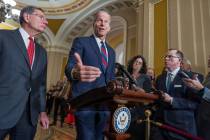
"In all of these training courses, it will be made clear that the Metro driving policy emphasizes that emergency vehicles do not have absolute right-of-way, and department members will operate police vehicles reasonably and always with due regard for the rights and safety of others," Gillespie said at a news conference on the new policy.
Contact reporter Brian Haynes at bhaynes@review
journal.com or 702-383-0281.