



No flies on this crime solver
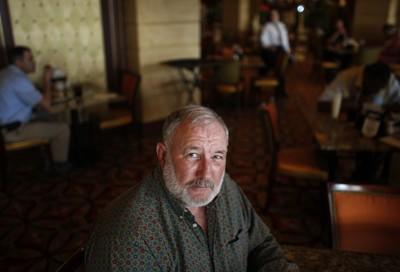


With a smile on his face and a twinkle in his eye, Dr. Neal Haskell excitedly described how he once picked maggots from the teeth of a corpse so putrid the smell nearly knocked him out.
Haskell should be forgiven for taking glee in such a grisly story. Creepy crawlies and dead bodies are, after all, his job and passion.
Haskell, 61, is one of about 15 certified forensic entomologists in North America who studies insects as part of criminal investigations. Based in Indiana, he was in Las Vegas last week to testify as an expert in the murder trial of 32-year-old Michael Hulse, who was on trial in connection with the slaying of a woman who was found stuffed in the trunk of a Lexus. By the time the body was found, it was so badly decomposed that it had begun to liquefy.
That's where Haskell comes in. Dead bodies attract all sorts of insects, and their presence acts as a sort of clock. Blowflies that lay eggs in the body's soft tissue are often the first insects on a body. Other insects, like beetles, feast on older, drier tissue. By examining how insects "colonize" corpses, Haskell can determine an approximate time of death.
Don't feel like a wimp if this makes you squeamish. Forensic entomology is considered disgusting even within the scientific community. Popular Science's 10 worst jobs in science list ranked forensic entomology as the ninth most reviled occupation. It rated worse than "whale feces researcher."
Forensic entomology is often associated with dating bodies, but the field has grown in the past decade as the study of forensics has evolved, researchers say.
It's used in a variety of cases now, from neglect cases to car accident investigations to civil suits involving bug-infested candy bars. In one case, Haskell said he examined a case in which maggots were found in the flesh of elderly residents who were neglected at a nursing home.
Dr. Richard Merritt, who is with Michigan State University's Department of Entomology, has done his share of homicide cases. But he also works with the Hershey's chocolate company identifying insects, often moths, that are found in candy bars, he said. In these cases, he said the distributor is usually at fault for leaving candy bars on store shelves for too long.
Merritt said the job isn't for everyone.
The reaction, he said, is either, "That's disgusting," or, "Oh, my God, that's so interesting."
There's usually no in between, he said.
Forensic entomologists have testified in a handful of cases in Las Vegas. In one of the most well-known cases, Haskell testified in the trial of Brookey Lee West, convicted of killing her 68-year-old mother and stuffing the body in a garbage can.
Haskell told the jury that the larvae and cocoons found on the victim were coffin flies, which are known for landing on bodies at later stages of decomposition. He didn't find any blowflies, which led him to believe that West stuffed the body in the garbage can immediately after death or while her mother was still alive.
Haskell lives in Indiana and teaches at Saint Joseph's College in Rensselaer, about 100 miles northeast of Indianapolis. He said he came to forensic entomology almost by accident. Originally a soybean and corn farmer, he had a degree in entomology from Purdue but worked as a farmer and volunteered with the local sheriff's office.
One day, he was called to collect bug samples from a corpse at the morgue and found his calling. Haskell is on his third marriage and has two grown children of his own. His son, who has a graphic design degree, helps him with his forensic entomology work; his daughter is a prosecutor.
He said his son attended his first autopsy at 12 and his daughter, when she was 10, went with him to the University of Tennessee Body Farm, where law enforcement agencies and others study body decomposition.
"I had a pathologist say 'You're really screwing your kids up by letting them do this.' I said 'Naw, I don't think so.' Well, my daughter now is an attorney, so she's screwed up," he joked.
But Haskell said there are some rough aspects of the job that go beyond the gore. Cases of children being killed are especially difficult. But his knowledge that he helps discover the truth in puzzling crimes keeps him going.
"We want to get the bad guy. We want to make sure we get the right person," he said. "We are speaking for the dead."
Contact reporter David Kihara at dkihara @reviewjournal.com or (702) 380-1039.


