



POLITICAL LIMELIGHT
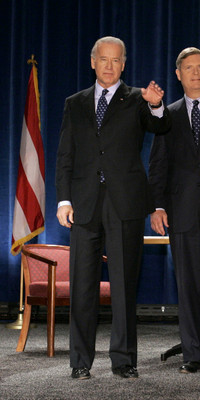
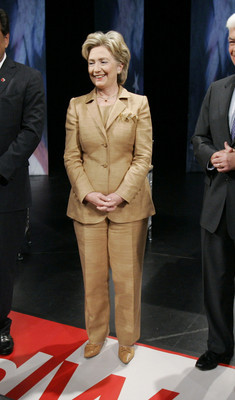
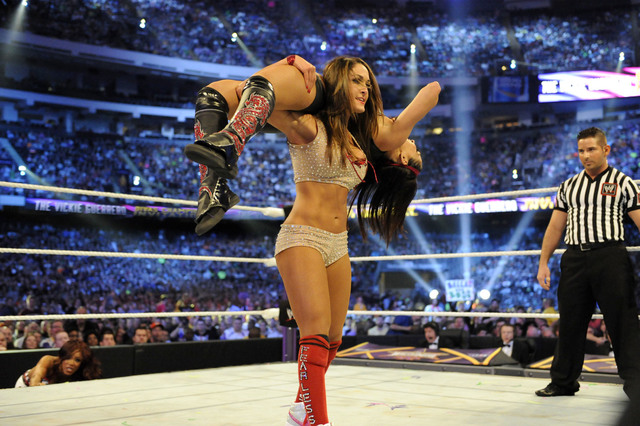
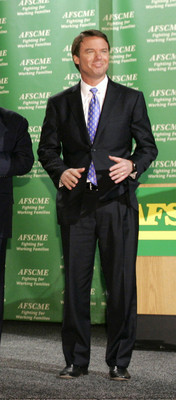
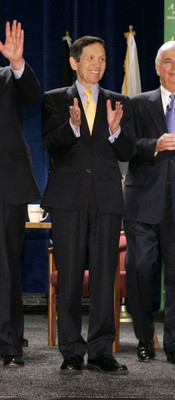
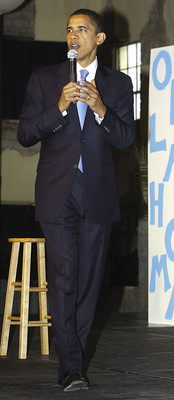
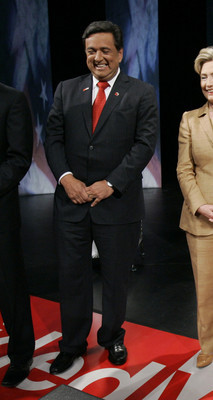
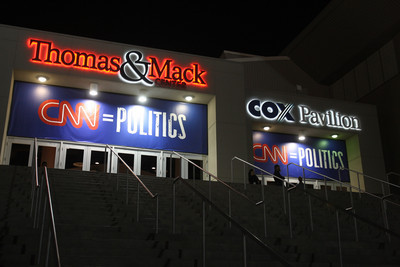


It's fight night in Las Vegas.
The jabs will fly. The contenders will duck and weave. They hope they land their punches and don't leave with too many bruises.
The action begins at 5 p.m., when the Democratic presidential candidates gather at the University of Nevada, Las Vegas, for a nationally televised debate that thrusts Nevada into the political spotlight more than ever before.
"The whole world will be watching Vegas Thursday night," said CNN's Wolf Blitzer, the moderator of tonight's debate. The network's reach extends to 240 countries and territories worldwide.
Tension is in the air as the race for the nomination comes down to the wire.
The candidates' criticisms of each other have intensified, and their rhetoric has ratcheted up. The millions of political junkies who'll tune in tonight are expecting big drama.
"It's coming at a critical moment in the run-up to the January contest," said political expert Larry Sabato, director of the Center for Politics at the University of Virginia. "The candidates are primed to attack, and they need to. If they're ever going to make their case for themselves and against their opponents, it's now."
Las Vegas is guaranteed to be more than just a backdrop for this national event.
Blitzer and panel members Campbell Brown and John Roberts, also of CNN, plan to include questions about Western concerns, and in the second hour of the debate, all of the questions will be asked by locals.
A handpicked pool of about 100 undecided Nevada Democrats will occupy a special section of the audience, where CNN's Suzanne Malveaux will call on them to put their concerns directly to the candidates.
With hundreds of members of the national and international media descending on Las Vegas for the debate, Nevada's new prominence in the political process also will be on display.
Nevada Democrats and Republicans are scheduled to have presidential nominating caucuses on Jan. 19, before most other states will have voted. In previous elections, Nevada partisans weighed in too late in the nominating process to have much effect on the results.
Democrats in particular hope to gain an advantage in the West with the early contest, which they say will give a bigger voice to Hispanics and union members, who aren't well represented in the traditional early states of Iowa and New Hampshire.
Senate Majority Leader Harry Reid, D-Nev., argues that winning over Western voters will be the key to the 2008 election.
"If you want to win the presidency next year, you have to win the West," he said in a conference call this week, pointing out that in addition to the Nevada caucus, the Democratic National Convention will be in Denver in August.
"Our state will be the first test of (the candidates in) the West, the first test of real diversity," Reid said. "I love Iowa. I love New Hampshire. But Iowa has few people and no diversity. New Hampshire has no people and no diversity. ... We want people coming to the state of Nevada to understand that we have what America's all about."
Underscoring that they are making a big play for Nevada, all of the Democratic candidates will head from the debate to Paris Las Vegas, where the Clark County Democratic Party is having a sold-out fundraising dinner.
The eight candidates will each have seven minutes to address the hundreds of party activists, most of whom will be precinct captains in the January caucuses. While the debate is aimed at a national audience, the Jefferson Jackson dinner plays to a local one and could be the candidates' best chance to win over caucus voters in the county that is home to three-quarters of the state's Democrats.
How the dinner audience responds to the candidates' messages will be scrutinized for clues to how they're being received by this key constituency, Sabato said.
And because the candidates will be fresh from the debate stage, there could be some fireworks as they bring with them leftover energy and tension.
The debate and the Nevada contest are both seen as Sen. Hillary Clinton, D-N.Y., versus everyone else.
A new Nevada poll released Wednesday reinforced that Clinton enjoys a vast lead in the Silver State. Clinton had the support of 51 percent of likely Democratic caucus-goers in the survey, conducted between Friday and Tuesday for CNN by Opinion Research Corp.
Sen. Barack Obama of Illinois trailed with 23 percent, while former Sen. John Edwards of North Carolina had 11 percent. No other candidate had more than 5 percent of the vote in the poll of 389 voters, which carried a margin of error of plus or minus 5 percentage points.
Clinton has led every Nevada poll by double digits. Polls in Iowa and New Hampshire have been closer. Blitzer said the race should by no means be seen as a foregone conclusion.
"You never know," he said, pointing out that former Vermont Gov. Howard Dean had a seemingly insurmountable lead in polls just weeks before the 2004 Iowa caucuses, where he was toppled by Sen. John Kerry of Massachusetts. "Poll-wise, it's hard to know who's going to show up, and people make up their minds near the end.
"This is not a done deal yet by any means. This is still a serious campaign. The issues are really significant. There are significant differences between the Democrats, and differences between the Democratic field and the Republican field."
Tonight's debate could well be a linchpin for the race, Sabato said. A debate in Philadelphia two weeks ago was the first of a dozen such events to really get interesting, with the other candidates, especially Edwards, sharpening their criticisms of a previously unshakable Clinton.
The Philadelphia event was an object lesson in the power of debates to alter the dynamics of the race.
"It was tone-changing," Sabato said. As such, it set expectations for tonight higher than ever before.
"If the last one had been boring like all the others, people would still be wondering, 'Are we finally going to see some fireworks?' " he said. "Now that the race is finally broken open to a degree, people are really tuning in and getting excited."
The question for tonight will be whether Clinton, who has acknowledged Philadelphia wasn't her best performance, will "strike back," or whether her main challengers, Obama and Edwards, can "continue their momentum" and turn it into increased support.
Clinton, Sabato said, will be fighting the perception that she splits hairs and dodges questions rather than giving straight answers.
"Hillary Clinton needs to take strong, definitive stands," Sabato said. "Any waffling is not going to fly."
Contact reporter Molly Ball at mball@reviewjournal.com or (702) 387-2919.
When: Today, 5 to 7 p.m. Where: Cox Pavilion, UNLV Can I go? No. Tickets are no longer available How to watch: Live on CNN, Cox Cable channel 20 RELATED STORIES: Candidate plans to answer debate queries via Internet Carpooling to debate might be way to go KIDS PRESS CORPS


