Shelter’s rebound in works

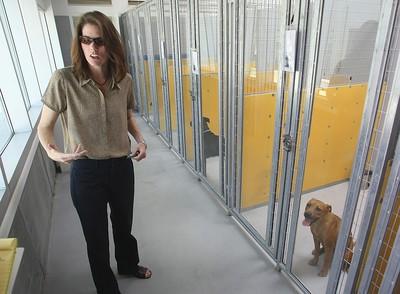





Chris Robinson, the new executive director of the long-troubled Lied Animal Shelter, has been working to restore public trust in the regional pound after it received national attention in February for a disease outbreak that forced the euthanizing of 1,000 animals.
She admits it will be an uphill battle.
"Only action restores faith," said Robinson, who began in April. "Action coupled with time."
A detailed and disturbing report on the shelter recently released by the Humane Society of the United States hasn't made Robinson's job any easier.
While visiting earlier this year, a team from the Humane Society declared an emergency at the North Mojave Road shelter after discovering an outbreak of parvovirus and distemper in dogs and panleukopenia in cats, caused at least in part by overcrowding and the failure to euthanize sick animals in a timely manner.
Lied's former director resigned and the shelter adopted Humane Society recommendations to keep fewer animals to prevent another outbreak.
But a report on the Humane Society's February visit revealed that conditions at the shelter were worse than previously disclosed. The report also included specific, sometimes gruesome details that outraged local advocates for animals.
"When you look at how these animals suffered, I considered those who were euthanized lucky," said Gina Greisen, an activist on animal care issues.
The report states that Humane Society team members had rarely come across shelters "operating with so many severe problems in management and animal care" as Lied. It cited breakdowns in "almost every aspect of prudent disease control, including a lack of appropriate vaccination, sanitation, isolation/segregation of sick and vulnerable animals and unacceptable levels of overcrowding."
Sick animals were ignored and left to die in their cages, according to the report. Dogs were starving in overcrowded runs. Incoming dogs were housed in the same runs in which sick and dying dogs were held. Animals were not being vaccinated upon intake. Staffers were not provided with supplies necessary to adequately and safely clean animal cages.
One of the more disturbing sections of the report details insensitive euthanasia methods at the shelter.
Among the findings:
• Dogs awaiting euthanasia were walked past dead dogs lying on the ground, through blood and feces of previously euthanized animals.
• Animals were roughly handled, not comforted or petted during the process.
• On two occasions, after shelter staff had determined than an animal was dead after being euthanized, the Humane Society checked the animal and found it still had a heartbeat.
• Staff listened to a radio, answered their cell phones and chatted with other staff members during euthanasia sessions. Staff members used a stethoscope to listen for animals' heartbeats while music was loudly playing.
• The Humane Society team observed "a marked lack of compassion towards the animals being euthanized and a process that clearly did not address or demonstrate concern for the behavioral and physiological needs or reactions of the animals."
Robinson said every "animal care" aspect included in the 216-page report has been addressed.
The Humane Society official who led the six-member team of vets and other experts who reviewed Lied in February said she was pleased with changes the shelter has made.
"I believe they are moving forward," said Kim Intino, director of animal sheltering issues for the organization. "They realized what the issues were, and I am pleased with the evidence of change."
Intino said the Humane Society's contact with Lied has been especially intense.
"This was a more extreme situation than almost any facility we had dealt with," she said. "The follow-up you've seen happen was not customary."
Robinson said much has been done since the February visit.
"There is training at all levels," she said during a tour of the shelter last month. "The place is clean. We have assigned a full-time vet for shelter care."
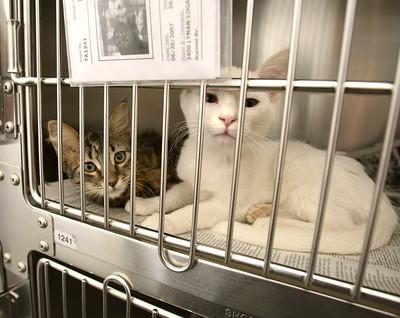
Animals are now vaccinated upon intake, she said. They are stored in individual shelter cages, unless they were brought in with litter-mates or were bonded with other animals. Sick animals are quarantined. The shelter is clean.
Previously, the shelter kept animals alive indefinitely. Now, the animals' health and behavior are evaluated on an ongoing basis, and a shelter veterinarian has the final say on which animals should be euthanized for health reasons.
The shelter also has begun euthanizing some healthy animals after 72 hours to avoid overcrowding.
"There is a new culture, a new philosophy and way of doing business," said Robinson, a former assistant county manager.
About 1,800 dogs and cats were being housed at the shelter when the Humane Society visited in February. About 1,000 animals are at the shelter now, Robinson said.
Although local advocates for animals agreed that conditions at the shelter have improved, they said someone should be held responsible for the conditions detailed in the Humane Society report.
Greisen said that until she read the report, she had believed shelter administrators had been operating with the best of intentions, hoping to save every animal they could.
Now she wants those responsible to face prosecution.
"It wasn't ignorance," she said. "It wasn't like they didn't know. They did it on purpose."
The report states that rampant disease and overcrowding at the shelter "arose not by accident or out of ignorance, but as a result of a systematic policy that prohibited the euthanasia of surplus healthy and, in numerous cases, sick animals."
Records and staff interviews revealed that the general conditions witnessed by the Humane Society team were "not a momentary lapse in quality operations but reflected a series of fundamental management problems that had been in evidence over time," according to the report.
The Humane Society team "concluded that management and animal care problems at (the shelter) resulted in the suffering of thousands of animals."
Activists have long complained about a lack of responsiveness to their concerns by the Animal Foundation, which contracts with Las Vegas, North Las Vegas and Clark County to provide shelter services. An October 2001 city of Las Vegas audit found Animal Foundation management controls were inadequate, poorly trained employees had illegal access to controlled substances, and thousands of dollars had been stolen.
Lax accounting and improper practices also led to animals being lost, stolen or unnecessarily euthanized, the audit said. Despite those findings, and ongoing complaints by activists, problems continued.
Joe Boteilho, Clark County animal control's chief of code enforcement, said that he had voiced concerns about conditions at the shelter before the Humane Society's intervention and that Lied officials had been working to address problems.
The difficulty, he said, was that the shelter wanted to operate as a "no-kill sanctuary" instead of a municipal animal shelter.
"They were truly trying to find homes for as many as possible," Boteilho said. "What we wanted to do was strike a good balance between maintaining them (animals) humanely and giving them as much time as possible."
Las Vegas City Councilman Gary Reese said he was so angry when he first heard of conditions that forced the shelter to destroy so many animals that he "wanted to set fire and burn everything."
But he now wants to focus on the future.
"This is the kind of problem you can't fix by the snap of a finger," he said. "I just hope that from this day forward we can all work on the same page for the betterment of the animals."
A Humane Society team has made several follow-up visits to the shelter, Intino said, and remains in regular contact with shelter administrators.
"We will always be here, whether they have questions or we contact them with something we think will be helpful," she said. "We consider them clients for life."
Intino said regular contact should help ensure that the shelter won't again see the kind of conditions it did in February.
"The challenge is going to be maintaining the changes," she said. "We will continually be in touch to see how they are doing."
Reese said he also plans to keep an eye on the shelter.
Robinson, too, is focusing on the future.
"I'm feeling really good about the progress we've made," she said. "I invite the public to come down and check it out for themselves. I encourage the public to keep a watchful eye."
Robinson pointed out that, as a private nonprofit agency, the shelter did not have to share the Humane Society report with the public.
"I've always believed in sharing information," she said.
Robinson said the animals at the shelter are now healthy, and very few adopted animals are coming back in need of medical care.
She plans to post the Humane Society's report on Lied's Web site, which is at www.liedanimalshelter.org.
LIED ANIMAL SHELTER PROBLEMS NOTHING NEW
Problems at the Lied Animal Shelter extended beyond questionable animal care policies, according to a recently released report.
The report from the Humane Society of the United States' found that the Animal Foundation, which operates the shelter, has not prepared an annual budget for the past couple of years, has not produced audited financial statements in a timely manner and has operated at a significant deficit for the past several years.
The report describes the organization's past financial decision-making as "a haphazard approach to making ends meet."
"That's not OK," said Lied's new executive director, Chris Robinson, who was hired to help sort out the shelter's myriad management and financial problems. "We are running a business. We need a break-even budget."
The Animal Foundation's board of directors has not adopted a formal budget in two years, Robinson said.
That doesn't mean board members of the private nonprofit didn't know the organization's financial situation, however.
"We've had detailed accounts of the money that goes in and out," she said. Robinson plans to present a formal budget to the board for approval in August.
"I wouldn't do the job without a budget," said Dale Wynn, the board's new chairman. "The organization must be run like a business, or it cannot succeed."
In 2006, the foundation's expenses were about $5.5 million, while its revenue was $4.9 million, according to the report.
The report said little is known about how money has been earned or allocated by the organization because of the lack of annual budgets.
Wynn said all of Animal Foundation's problems are being addressed.
"We all see that there have been things in the past that should have been done differently," she said. "We have new leadership and we are headed in the right direction."
LYNNETTE CURTIS/REVIEW-JOURNAL