2012 PRIMARY ELECTION: 4TH CONGRESSIONAL DISTRICT
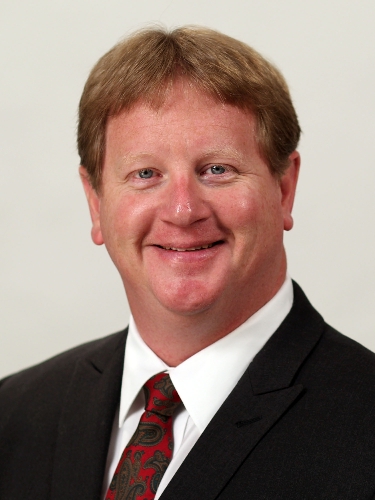
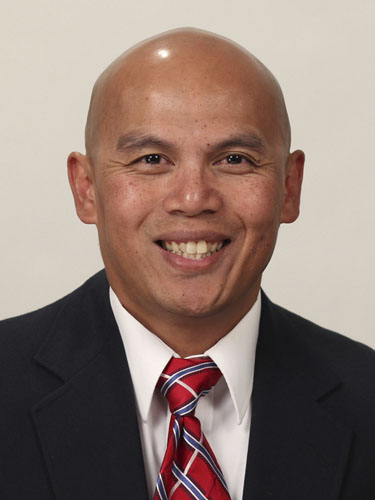




Republican voters will have plenty of choices in the highly competitive GOP primary race for Nevada's new congressional district: nine candidates, including a few familiar names.
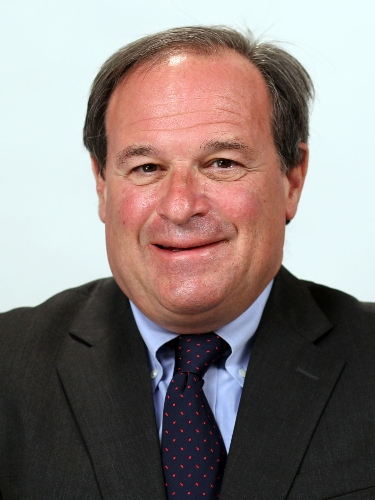
Danny Tarkanian is the best-known contender, thanks to his days of playing basketball for his father, famed coach Jerry Tarkanian, at the University of Nevada, Las Vegas. He also has lost three elections, which gives him a base of support to expand but also a losing streak to overcome.
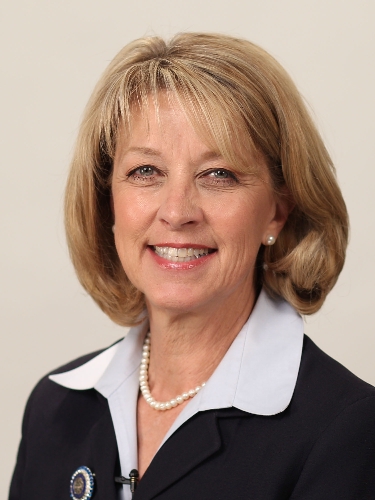
Nevada Sen. Barbara Cegavske, R-Las Vegas, has a reputation as one of the most conservative senators in the state, having voted against several major tax hike packages in the past decade.
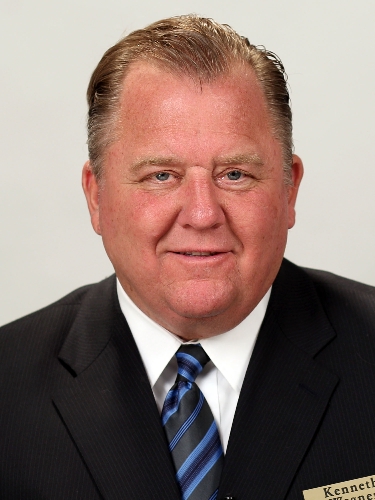
Ken Wegner is a well-known quantity, too. The three-time GOP congressional nominee lost three times in a row to U.S. Rep. Shelley Berkley, D-Nev., in a heavily Democratic district. He took one-third of the vote in 2010, however, with nearly 59,000 Nevadans checking his name on the ballot.
Dan Schwartz, a political newcomer, has spent $100,000 of his own money to help pay for a TV ad campaign to raise his profile in a GOP contest where it won't take many votes to win.
The five remaining Republicans in the field are battling for recognition ahead of the June 12 primary election, which seems certain to splinter the electorate. With fewer than 90,000 Republicans in the district and turnout expected around 30 percent, the victor may need only about 10,000 votes to win.
The winner of the GOP primary will face Nevada Senate Majority Leader Steven Horsford, D-Las Vegas, in the Nov. 6 general election. He has no Democratic primary competition.
The new 4th Congressional District favors Democrats because the party has a big advantage in registered voters over Republicans: 44 percent to 35 percent. Also, Horsford has plenty of money and solid party backing. He had $464,000 cash in his campaign coffers at the end of March.
However, the GOP thinks it has a shot at the new U.S. House seat for several reasons. It has no incumbent. It includes large swaths of conservative rural Nevada - all of White Pine, Nye, Lincoln, Mineral and Esmeralda and part of Lyon County - along with urban northern Clark County.
And independents, who account for one out of every six voters, also are up for grabs. They leaned Republican two years ago. GOP Gov. Brian Sandoval, for example, won the voters within the district by several percentage points over his Democratic opponent in the 2010 gubernatorial race.
Here's a look at the candidates:
DANNY TARKANIAN
Tarkanian has a head start based on name recognition alone, something that pushed him to the front of the pack in his previous races. Politics is in the blood; his mother is Las Vegas City Councilwoman Lois Tarkanian, a Democrat, unlike her Republican son.
He also has done well on the money front, raising $344,000 in the first three months of 2012, leaving him with $294,000 cash on hand, although he has leftover 2010 campaign debt to pay.
At the ballot box, Tarkanian has fallen short three times. He lost a state Senate race in 2004, the Nevada secretary of state contest in 2006 and a U.S. Senate race in 2010 when he didn't make it out of the primary (U.S. Sen. Harry Reid, D-Nev., won re-election against Republican Sharron Angle).
Before jumping into the 2012 House race, Tarkanian said he realized the congressional run may be his last election if he doesn't win. Running as a political outsider, he enjoys a strong following from conservative members of the tea party movement, whom he courted two years ago.
"I certainly have not had the support of the party establishment," Tarkanian said "My message is I'm trying to find solutions to the serious problems we're facing in the economy and the housing market."
One of his ideas, for example, is to help Southern Nevada's thousands of foreclosed homeowners buy new houses by giving them a "credit holiday." That way, they can qualify for new loans based on their incomes and other assets instead of being disqualified because of a poor credit score.
BARBARA CEGAVSKE
The state senator and former Nevada assemblywoman since 1996 has one of the most conservative voting records in the Legislature. She voted against two of the largest tax hike packages in state history - in 2003 and 2009 - and voted "no" in 2011 to extending $620 million in taxes that were supposed to sunset after two years. She argued for state budget belt-tightening instead.
In Congress, Cegavske said she would push for a constitutional amendment to require a balanced federal budget in order to cut runaway government spending and record debt and deficits.
"There's a lot of wasteful government spending," Cegavske said. "There are also a lot of job-killing regulations that are harmful to creating new jobs."
Cegavske believes she's the only Republican running who can beat Horsford, whose voting record is nearly the opposite of hers. GOP U.S. Reps. Joe Heck and Mark Amodei have endorsed Cegavske, who also is backed by conservative groups such as the National Rifle Association.
She has a record of beating Democrats despite a GOP voter registration disadvantage and being out-spent, according to her campaign. She had only $75,000 in cash on hand at the end of March.
"I've been out-spent, but never out-worked," Cegavske said.
KENNETH A. WEGNER
Wegner, an Army veteran injured in the first U.S. Gulf War with Iraq, is a favorite candidate of the Las Vegas Valley's tens of thousands of members of the military and retirees like him.
He refuses to take any donations from lobbyists and instead holds barbecue fundraisers in his backyard "with a bunch of my friends from all over the state" who also volunteer on his campaigns.
The do-it-yourself candidate said if elected he would push to drastically cut U.S. foreign aid, require the government to give military contracts to American companies so bullets and boots are U.S.-made, and eliminate the federal gasoline tax to help reduce the rising cost of gas.
"We can't keep giving billions of dollars away to foreign countries. It's killing us," he said.
DAN SCHWARTZ
A former international businessman and publisher, Schwartz moved into the district late last year, buying a house in Mesquite, as he began running for the House seat in earnest.
Little known in Nevada, Schwartz was the first candidate to begin airing TV ads to tout himself as a conservative who wants to get back to the basics of governing as laid out in a book he recently wrote, "Principles of the American Republic." It promotes more local control and free markets.
"We have a president that has a different world view," Schwartz said of President Barack Obama. "His model seems to be a European social state where government really mandates everything. We need to decentralize our government. We need to return power and money to the local government."
KIRAN HILL
Hill said he got involved in politics as part of the 2009 tea party movement. He opposed government bailouts of banks and other industries. He only recently moved to Southern Nevada from Reno, his base since the 1990s, when he graduated from the University of Nevada, Reno.
"Both parties basically sold out the voters and voted for the bailouts," Hill said. "They keep voting to increase the debt limit and increase tax and increase spending. I think that has to stop."
A State Department translator who has worked in Iraq, Hill said he's worried about whether the Middle Eastern country will emerge as a democracy. And he doesn't see the U.S. heading in a good direction in Afghanistan, saying the U.S. can't impose a central government on the country.
"I think it's less winnable than Vietnam," he said, suggesting the U.S. should withdraw.
MIKE DELAROSA
Born in Manila in the Philippines, Delarosa has been a U.S. citizen for 30 years and served in the U.S. Air Force. He lives in Pahrump, where's he's home schooling his three children.
He said he believes in small, limited federal government. He would like to eliminate federal income, corporate and Social Security taxes and replace them with a valued-added tax of 10 percent. It works much like a sales tax, with buyers paying the levy based on the purchase price of goods and services.
"Everybody would get their money back and there would be more power to the people," he said.
DIANA ANDERSON
Anderson said she's not a "traditional Republican" and is making her first run at office because she thinks more women should be serving in elected posts.
She said she wants to protect a woman's right to have an abortion. And she wants to get American troops out of the Middle East, including withdrawing from war zones. Her son served in Iraq twice as part of a patrolling Army infantry unit, she said.
"I'm just a concerned taxpayer," said Anderson, who started a Twitter account to campaign, although it has only a couple of followers. "I would do my best."
SID ZELLER
Zeller, who lives in Reno, last year briefly ran for the Northern Nevada congressional seat in a special election to replace Dean Heller, who was appointed U.S. senator. A judge allowed the Republican Party to pick only one nominee, however, and U.S. Rep. Mark Amodei won the seat.
A former Marine intelligence officer, Zeller works in California at the U.S. Marine Corps Mountain Warfare Training Center. But he said his schedule allows him to work several weeks at a time and then have several weeks off to campaign. Still, he's barely known in Southern Nevada.
Zeller said Republicans are "missing the boat" on green energy projects, especially in Nevada, and he favors government tax breaks, credits and loans for the industry along the lines of Democrats.
"Continuing to approve tax breaks for oil companies is ridiculous," Zeller said.
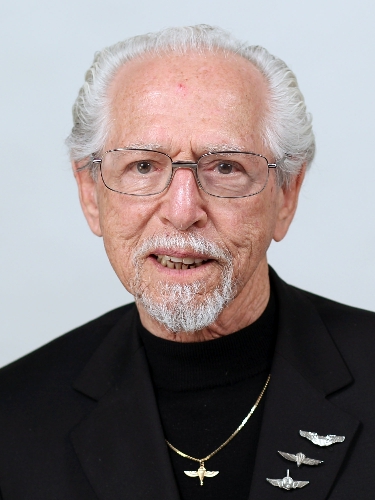
ROBERT X. LEEDS
Leeds, 85, was a teenager when the Japanese bombed Pearl Harbor on Dec. 7, 1941, dragging the United States into World War II and drawing the young man into the military. At age 17, he said, he enlisted in the U.S.Air Force and then joined the Merchant Marines, traveling the world.
Leeds describes himself as "an American knight-errant" and has written a book about his various military exploits over the decades. Now, he said he's making his first run for political office because he's worried about the unchecked government spending, including on Congress itself.
One of his ideas is to require members of Congress to serve from their home states where the voters live instead of spending billions of dollars to work together on Capitol Hill.
"We've got computers and something called a telephone. They can work from home," he said.
Contact Laura Myers at lmyers@reviewjournal.com or 702-387-2919. Follow @lmyerslvrj on Twitter.
U.S. HOUSE DUTIES, PAY
Members of the U.S. House of Representatives are elected to two-year terms in the lower house of Congress. Their main duties involve passing laws, allocating spending, reviewing the performance of federal agencies and protecting the interests of their states. They are paid $174,000 per year.
LAS VEGAS REVIEW-JOURNAL