MKX proves less is more


Normally, a redesigned vehicle is all about what's on the outside and maybe what's under the hood or under the floor.
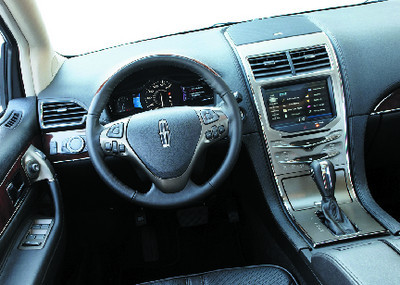
On this basis alone, there's plenty going on with the 2011 Lincoln MKX, but the real story has to do with what's on the inside and how this beautiful machine integrates something called "simplexity." Peer through the window and there are hardly any buttons. How does this thing work?
Worried? Don't be.
Lincoln's Ford-Edge-based tall quasi-sport ute has been available since the 2007 model year, which is apparently long enough for it to be awarded a major stem-to-stern refit plus a major techno-feature upgrade.
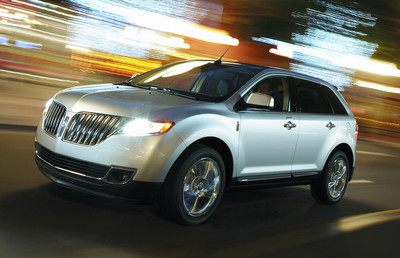
Before you get inside to see what all the fuss is about, you'll notice a new grille that appears nearly identical to the one employed on Lincoln's new-for-2010 seven-passenger MKT carryall. This all-in-the-family design signals the demise of the current retro-styled grille that likely deserves a place in the Museum of Modern Art for its intrinsic and exquisite beauty.
The makeover extends past mere looks as Ford's premium division also reduced the noise invading the cabin by using improved acoustic materials, a sound-absorbing headliner, thicker windshield glass and "baked-on" foam baffles in the fenders and door pillars.
On-road capability has been upgraded with bigger brakes, retuned shock absorbers and stabilizer bars that are designed to produce flatter cornering. Standard equipment includes trailer sway control and Hill Start Assist, which prevents the vehicle from rolling backward on a steep grade.
There's also a new 305-horsepower 3.7-liter V-6 that replaces the 265-horsepower 3.5-liter unit found in the 2010 MKX. That's fine, but the MKX could really use Ford's new 355-horsepower turbocharged V-6 to provide a proper level of distinction from the closely related Edge.
Lincoln hasn't confirmed the estimated fuel-consumption figures of the 3.7, but says it should match the 18-mpg city and 25-mpg highway values obtained with the smaller 3.5.
The engine drives the front wheels via a six-speed automatic transmission with manual shift controls. All-wheel-drive is optional.
And now it's time to go inside.
Ford engineers managed to replace most of the traditional switchgear -- even some gauges from the dashboard and control panel -- with "MyLincoln Touch driver connect technology." This standard system has three separate LCD touch-sensitive screens: two programmable 4.2-inch (diagonal) versions positioned on either side of the speedometer and an 8-inch unit located in the center stack.
Together with a game-controller-style "smart" button on the steering wheel, MyLincoln Touch manages what Ford's engineers refer to as -- here comes that word -- "simplexity," or the use of a variety of climate, communications, navigation, infotainment and other vehicle functions in a way that's intuitive. The plan, it would seem, is to be able to work the MKX's systems without having to crack open the dreaded user manual.
To help out MyLincoln has color-coded touch-sensitive controls of a type that are currently used in cellular telephones and TV remotes. There are also touch-based slider-type controls that activate the audio volume and ventilation fan speed. Cabin-temperature settings can be programmed into the system, according to each of the vehicle's two keyless ignition fobs.
As for music access, the optional Apple iTunes Tagging feature gives you the ability to save up to 100 music selections from the iTunes store and buy them for your iPod or iPhone.
There's a wealth of other features in the MKX, along with a significant options manifest. The Blind Spot Information System with Cross Traffic Alert detects vehicles beyond the reflective range of the outside mirrors as well as those approaching from either side when backing the MKX out of a parking spot. Then there's an adaptive cruise control that maintains a set distance from the vehicle ahead and will cinch up the seatbelts and prep the brakes for a sudden stop if a crash appears imminent.
The MKX and its breakthrough operating system will appeal to upwardly mobile individuals requiring a stylish, powerful and practical automobile that also functions as an extension of their gadget-based lifestyle. At least that's the general idea. It will be up to buyers, many of whom are older and perhaps intimidated by technology, to decide what "simplexity" really means.
Let the training begin.