Sandoval issues proclamation, calls special session for Tesla deal
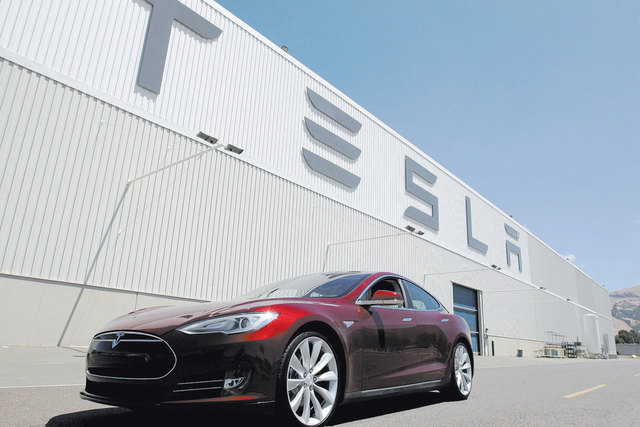
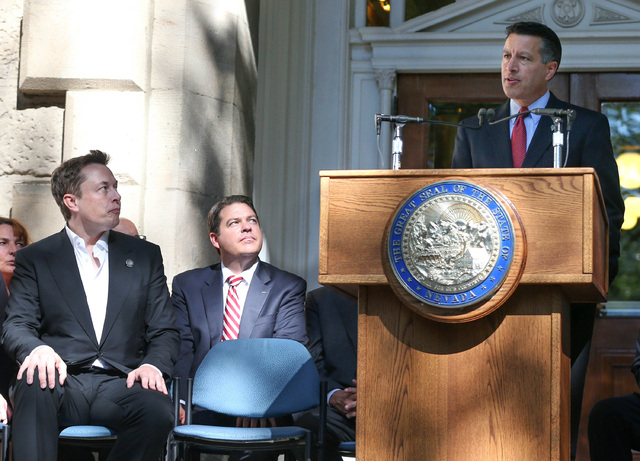
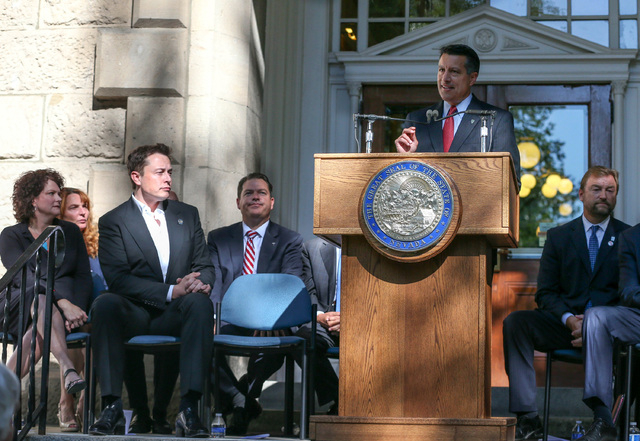
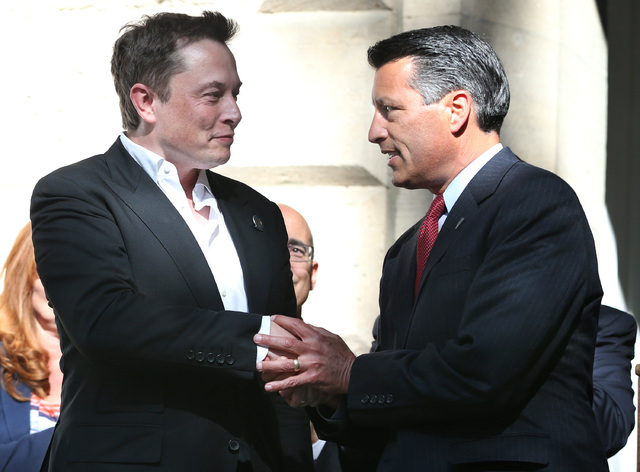
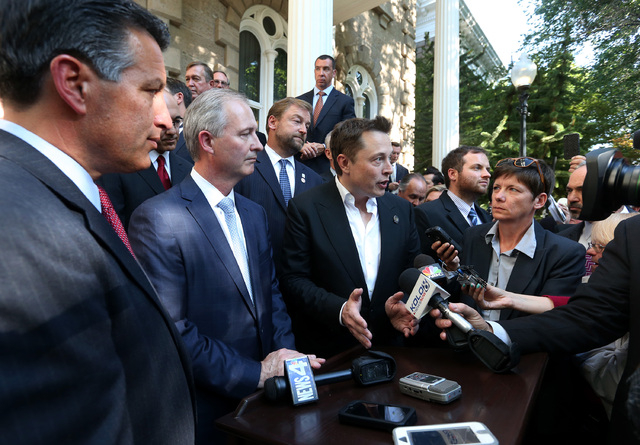



Gov. Brian Sandoval late Tuesday issued a proclamation calling a special legislative session to approve the deal he negotiated with electric car maker Tesla to build a $5 billion battery factory in Northern Nevada.
The special session is set to begin at noon on Wednesday and could last from one to several days, depending on whether the Democratic-led state Senate and Assembly have a lot of questions about the deal or want to amend it.
Sandoval’s proclamation didn’t appear to limit the topic to the Tesla deal. But the proclamation said the Legislature also could consider “any other topic” brought before it by the governor, leaving open the possibility of him including other economic deals during the session. Most observers expect the session to last several days.
“I think they’d like to finish late (today) if possible, but it is impossible to say until they start hearing bills,” said Lorne Malkiewich, the former director of the Legislative Counsel Bureau who plans to attend the special session as an observer. “It doesn’t take more than a day just to pass them, but if there are problems, it can go another day or two.”
The Tesla deal probably will be spread out over five separate pieces of legislation since there’s a “single subject” rule, said Malkiewich. Also, there will be separate bills simply to lay out legislative allowances. The cost of the special session will be about $60,000 for the first day and $25,000 for any subsequent days, according to estimates from the Legislative Counsel Bureau. It will be paid out of the Legislative Fund, which will be replenished on the first day of the regular session.
The five bills could fall into these categories, according to Malkiewich:
■ TAX BREAKS: This would provide state and local tax breaks, including for sales and property taxes for 20 years. Also, Tesla won’t have to pay the modified business taxes, or the payroll tax per employee, for 10 years. The tax abatements and could add up to $1.1 billion, depending on how much construction material Tesla buys, for example.
■ TAX CREDITS: These are valued at $195 million and would come from tax credits for items such as the insurance premium tax and modified business tax. Sandoval said he would fund the tax credits by cutting the Nevada film tax credit program by $70 million, leaving it $10 million. Also, the deal includes giving Tesla $25 million a year from a home office tax credit program designed for insurance companies. Expect lots of debate about these funding sources.
■ SUNSET TAX: A separate bill would sunset the home office tax credit on Jan. 1, 2016, which could upset insurance companies. Tesla would get the tax credit, instead, for five years under the deal.
■ CAR SALES: This would give Tesla the ability to directly sell its cars in Nevada without a franchise agreement.
■ ECONOMIC DEVELOPMENT ELECTRIC RATE RIDER PROGRAM: This program would need to be amended to account for the Tesla deal. The program was created in 2013 by Assembly Bill 239, which unanimously passed the Nevada Legislature. The bill was sponsored by Assembly Speaker Marilyn Kirkpatrick, D-North Las Vegas, who is considered a tax expert. The program allows the governor’s office of economic development to offer energy incentives to manufacturing and energy companies. It’s a performance-based program, requiring companies to repay electric rate cuts if they don’t build or hire as promised.
“Overall, this bill encourages economic development and new jobs in Nevada by revising energy abatements, streamlining permitting and creating the Economic Development Electric Rate Rider Program,” Kirkpatrick said while testifying April 1, 2013, before the Assembly Commerce and Labor Committee. “Manufacturers say they will not come to the state because our energy costs are too high. This is a five-year pilot program to see if they really will come if we lower the rates.”
As part of the Tesla deal, the company would get a discount on its energy bill for up to 25 megawatts of power over six years. The discount is worth $8 million.
The incentives are performance-based, requiring a $3.5 billion investment or the state would be able to “claw back” the giveaways, according to the governor’s office.
There will also be a commitment to hire Nevadans and veterans for the gigafactory jobs, some 6,500 permanent ones if the factory is built out. Another 3,000 construction workers a year would be needed for three years of building.
This local jobs first element is something Democrats are insisting on, said Sen. Debbie Smith, D-Sparks.
Democrats are expected to raise lots of questions about the tax credit funding sources, which would end the program for the insurance industry. Also, they want some way to verify Tesla is coming through on its end of the deal, perhaps by requiring public reporting to the Legislature, according to Smith.
“We don’t know what works unless we do that,” Smith said. “We haven’t been down this exact path before, and we really owe it to our constituents.”
Smith, who chairs the Senate Finance Committee, was holding a tele-townhall with her constituents Tuesday evening to get their thoughts on Tesla. She said her top concern is the impact the influx of employees could have on the Washoe County school system, which already needs three more schools to accommodate its students.
The special session will likely take more than one day to resolve all the issues and answer questions, Smith predicted.
“We have to have adequate input and make decisions about these bills. I don’t think we can do it in one day,” she said.
Under existing law, Tesla would get a one-time $12,500 transferable tax credit per permanent full-time job on the site for up to 6,000 jobs worth $75 million. The Tesla factory jobs are expected to pay $27 an hour on average.
Also under current law, Tesla would get an investment credit worth 5 percent of the first $2 billion of investment and 2.8 percent for the next $2.5 billion in investment for a total value of $120 million.
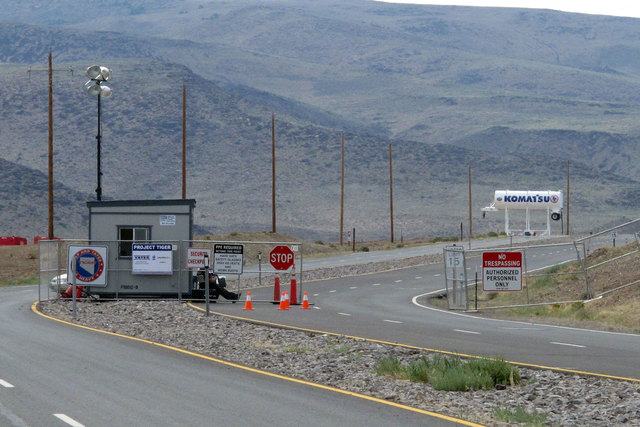
As part of the deal, the state also would purchase the right of way needed to link Interstate 80 and U.S. Highway 50 to the south, encompassing the factory, at a cost of $43 million. This link would help Lyon County, with the highest unemployment rate in the state, participate in the jobs at the facility at the Tahoe-Reno Industrial Center in Storey County, east of Reno where the plant will be located. Actual construction of the road would be an added cost.
For its part, Tesla would commit $7.5 million a year for five years to the state public education system as a way to help offset the impact of the workers on the local school districts. The company would also provide $1 million to UNLV for battery research.
The governor’s economic development office said the $5 billion gigafactory will have an estimated $100 billion economic impact over 20 years, with $40 billion directly tied to the battery plant.
Over 20 years, because of the direct and indirect job creation, state and local tax collections are expected to total $1.9 billion after the abatements and incentives, offsetting the giveaways to bring Tesla to Nevada, the agency reported.
Review-Journal Capital Bureau reporter Sean Whaley contributed to this report. Contact Laura Myers at lmyers@reviewjournal.com or 702 387-2919. Find her on Twitter: @lmyerslvrj.

WEBCASTS
Watch live as the Nevada Legislature convenes in special session at noon:
Senate session
Assembly session