F1’s Las Vegas Grand Prix Flamingo bridge could be thing of the past with race extension
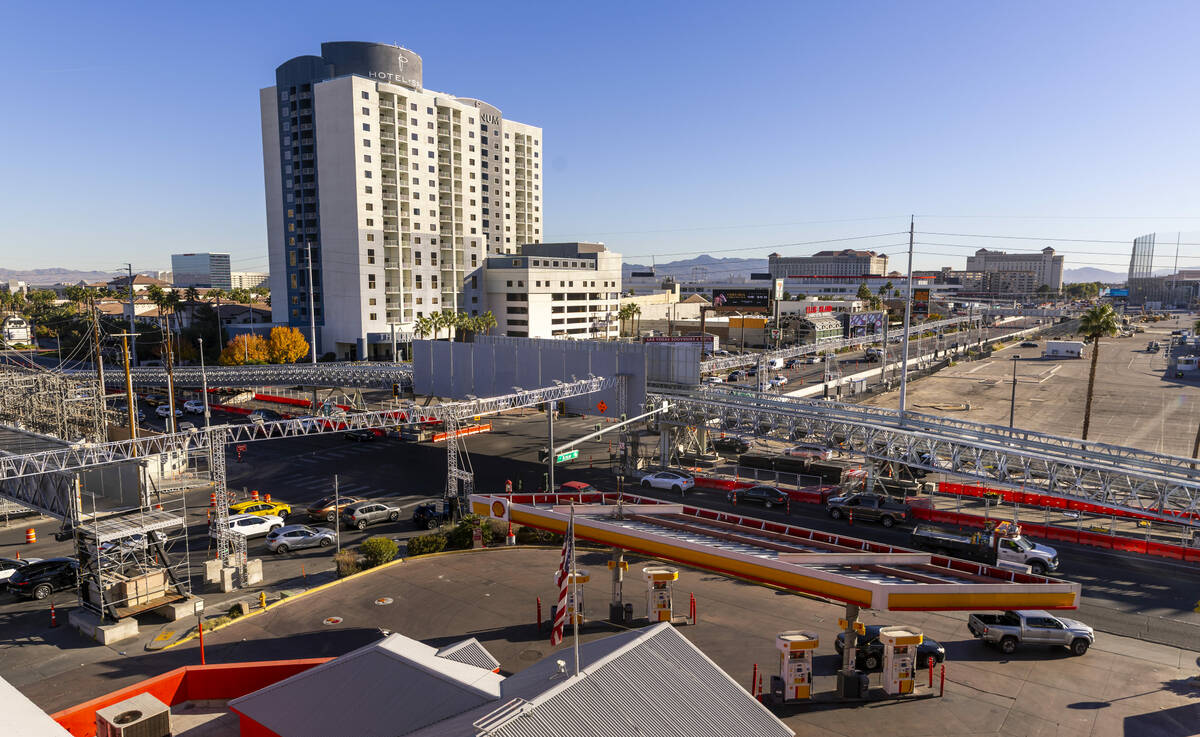
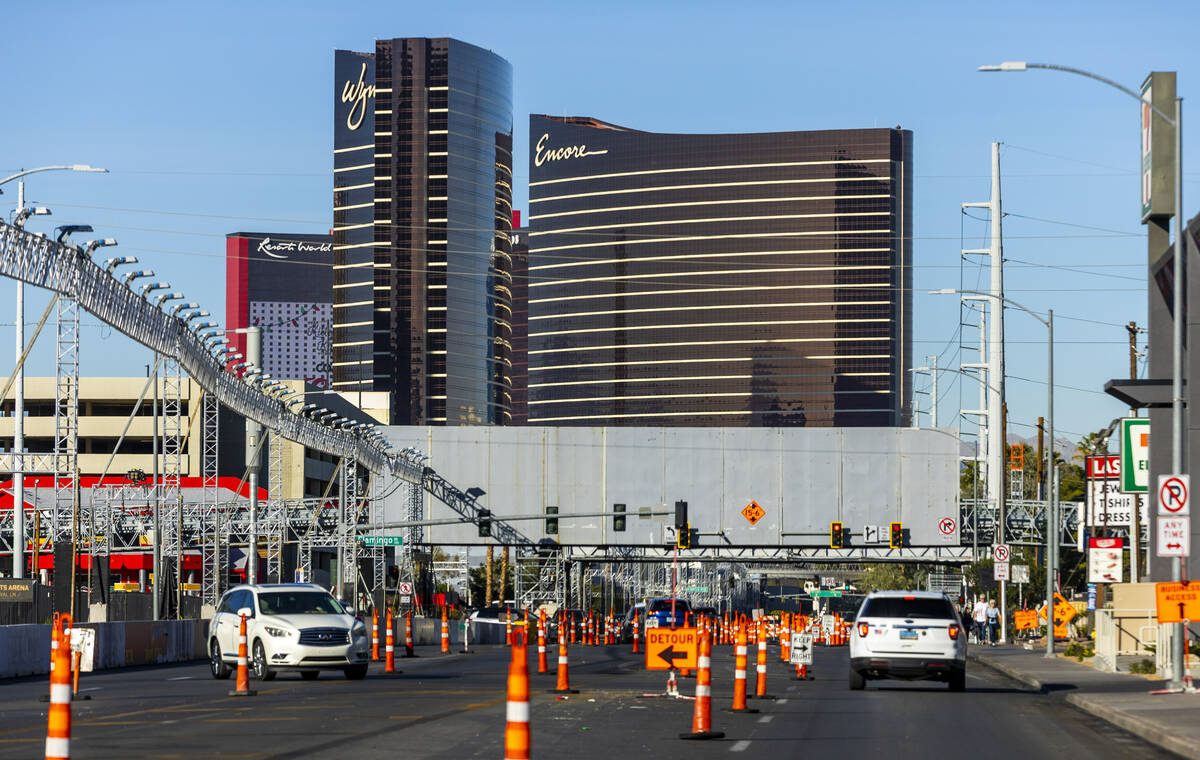
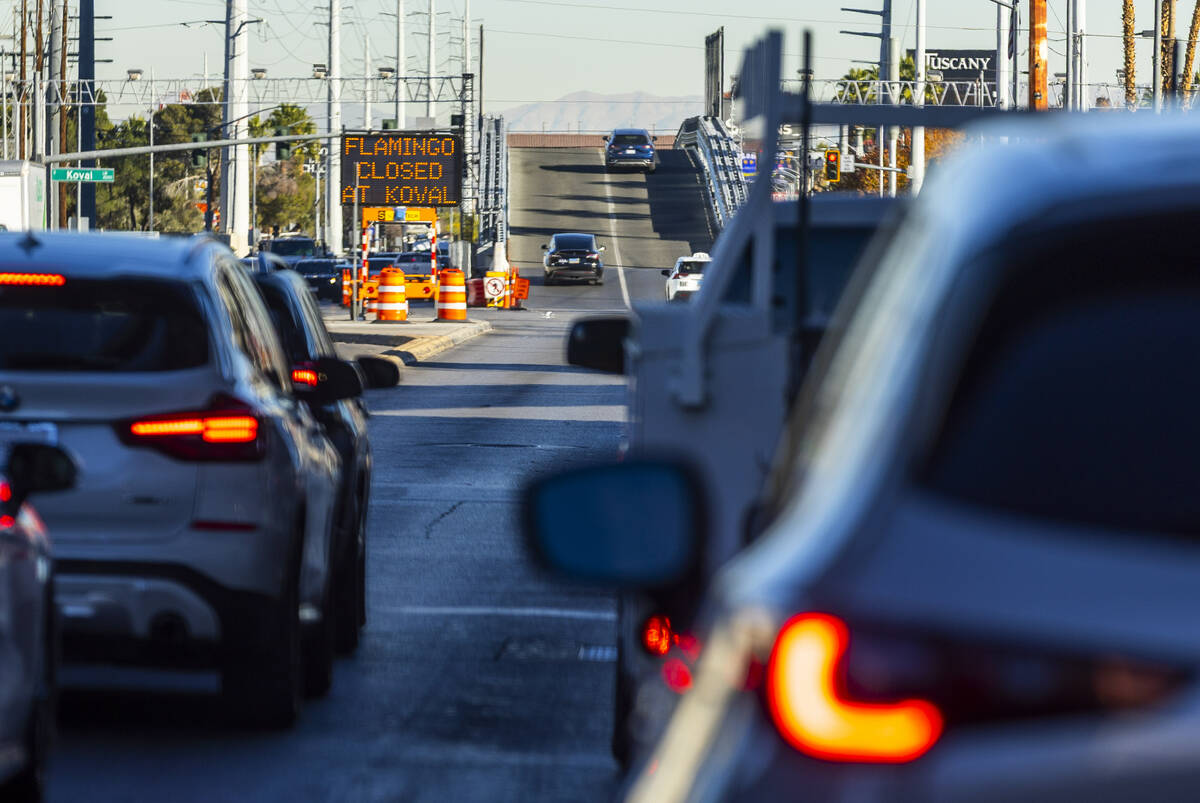





The temporary Flamingo Road bridge over Koval Lane built each year for Formula One Las Vegas Grand Prix weekends may be a thing of the past for future races.
The installation and removal of the temporary two-lane bridge is one of the most disruptive aspects of the race’s infrastructure. It leads to a full week closure of the intersection of Flamingo and Koval in October to build the structure and another week to tear it down in December, which is happening this week.
The Flamingo bridge allows vital traffic to flow in and out of the resort corridor when the circuit is active with F1 activity. The bridge offers access, especially for delivery drivers, guests of the properties and law enforcement and first responders, to Caesars Entertainment properties such as the Paris, Planet Hollywood, Horseshoe, Linq, Flamingo, Cromwell and Harrah’s and also Venetian and Palazzo off Linq Lane.
It’s on Flamingo because the circuit runs on Harmon and Sands avenues, the closest east-west roads in the area.
New deal could lead to Flamingo bridge ending
The Las Vegas Convention and Visitors Authority are in early talks with F1 about extending the race, which is contracted to occur on the weekend before Thanksgiving through 2027, for another five to 10 years, through potentially 2037.
If that is achieved, F1’s parent company, Liberty Media, would look at making capital investments around the 3.8-mile track, which includes portions of Las Vegas Boulevard, Koval and Harmon and Sands avenues, to further smooth out race infrastructure-related work, including moving the Flamingo bridge, according to LVCVA president and CEO Steve Hill.
Although Hill was not ready to say where the bridge might be moved, but he said relocating the vital piece of infrastructure would have less of an effect on traffic.
“There’s options available that might be better than where that bridge is now,” Hill said. “Everybody involved would love it if there was a better location than right there on that intersection (Flamingo and Koval). We can continue to do it the way we’re doing it, but it would be terrific if we could eliminate two weeks each year where that intersection was closed.”
If the bridge is moved to a new location, plans are for it to become a permanent fixture, to eliminate the traffic headaches caused by setting it up and dismantling it each year.
“If we can find a new location, where a permanent bridge was welcomed and capable of being built, that’d be great,” Hill said. “It would save Formula One a bunch of money. It would save the community a bunch of disruption. It would be fantastic if that could work out.”
Permanent race infrastructure
Plenty of work remains left to do to get to the point of potentially moving the Flamingo bridge, Hill said, with Clark County having the final say on what the future of the structure would be.
“It’s work that’s well worth trying to do,” Hill said. “The time frame would really be dictated by the county and the pace that they would like to move. But again, I think that everybody involved would agree that if we didn’t have to shut that intersection down for a couple of weeks each year, the faster that we could do that, the better.”
Las Vegas Grand Prix CEO Emily Prazer told the Las Vegas Review-Journal last month that race organizers would also look at other ways to add permanent infrastructure to further increase track setup and tear-down, including fixtures for track lighting that could speed up the installation process and not take away a lane while the rigs are in place.
Miller Project Management, who manages track setup, took drone video of the entire track this year, so officials can better study where permanent fixtures could go, Hill noted.
County awaiting pitch
Clark County Commissioner Micheal Naft said the county looks forward to having the conversations about the fate of the bridge, but it would have to make sense for commissioners to move forward with a plan.
“From my perspective, any kind of permanent infrastructure has to be able to demonstrate it will compress the timeline of tear-down and setup,” Naft told the Review-Journal. “That’s most important both for the people who live here and the people that come here for the thousands of other events we have during that Formula One window.”
If plans confirm that any permanent infrastructure upgrades related to the race would be beneficial, then serious conversations among all parties involved would be needed before that would be approved by the county, Naft said.
“I think it’s very preliminary,” Naft said. “I think they are really going to have to demonstrate that they can cut a significant amount of time — and equally as important, cut a significant amount of headache for people who are here not for the race, but the other events, for people who are getting to and from work. Those are the people that we need to show respect to, and I think if there is a way to make the timeline of Formula One’s impact lessened, then certainly the county will be open to having that conversation.”
Contact Mick Akers at makers@reviewjournal.com or 702-387-2920. Follow @mickakers on X.