



Research shows these are the 3 best exercises for building muscle


You may associate building muscle with athletes or bodybuilders. But building and maintaining muscle mass is important for everyone, regardless of age. And several exercises can help you build muscle, as well as strength and endurance.
“Building muscle isn’t just about how you look; it’s about how you feel and function,” says Juliana Andrea Betancur, a certified personal trainer and assistant head coach at Orangetheory Plaza District in New York City. “Muscle plays a critical role in everything from supporting your metabolism and stabilizing your joints to improving balance and reducing the risk of injury.”
Muscle is also one of the strongest predictors of long-term health, adds trainer Andrea Leigh Rogers, founder of Xtend Barre and author of “Small Moves, Big Life.”
The Physical Activity Guidelines for Americans recommends doing muscle-strengthening exercises at least two days a week, along with 150 minutes of moderate-intensity physical activity.
“These activities should make your muscles work harder than usual against an applied force or weight and should target the major muscle groups of the legs, hips, back, chest, shoulders, arms and abdomen,” American Council on Exercise-certified trainer Chris Gagliardi says.
So, what are the best exercises for muscle building, and what benefits do they bring? Here’s what experts and research say.
Benefits of muscle
A 2024 observational study published in the Journal of the American College of Cardiology found that women who engaged in physical activity, including strength training, had a lower risk of death from cardiovascular disease.
“The more lean muscle you have, the better your metabolism, bone density, stability and balance, even cognitive function and mood,” Rogers says. “There’s nothing like feeling strong.”
Increasing muscle mass also aids in weight management and enhances overall physical and mental health by building confidence and releasing endorphins (the feel-good hormones), Betancur says.
Building and maintaining muscle is especially important as you age, Gagliardi says. Starting around age 50, your muscular strength begins to decline, and you start to lose muscle mass and function.
“While strength training can’t completely stop these changes from happening, it can reduce or minimize the changes,” he says. “A loss of muscular power specifically is associated with falls, frailty and functional decline, so even power training (lifting lighter loads at a greater velocity) can be safe and effective for older adults.”
But starting much earlier than age 50 sets a foundation for muscular and cardiorespiratory fitness, Gagliardi says.
3 top exercises
Doing muscle-building exercises two to three times a week is a “great goal for most people,” Betancur says. “That gives your body enough stimulus to build strength while still allowing time for recovery.”
But what matters most is consistency, she adds. Start by adding a few reps to your routine and then build on it, Rogers says.
“That is where results are built,” she says. “Habits like these are built on cues, so aim to do your training sessions at the same times each week, get your workout gear ready, your favorite playlist and get training before your brain tells you not to.”
Here are the three best exercises for building muscle, according to research (and experts):
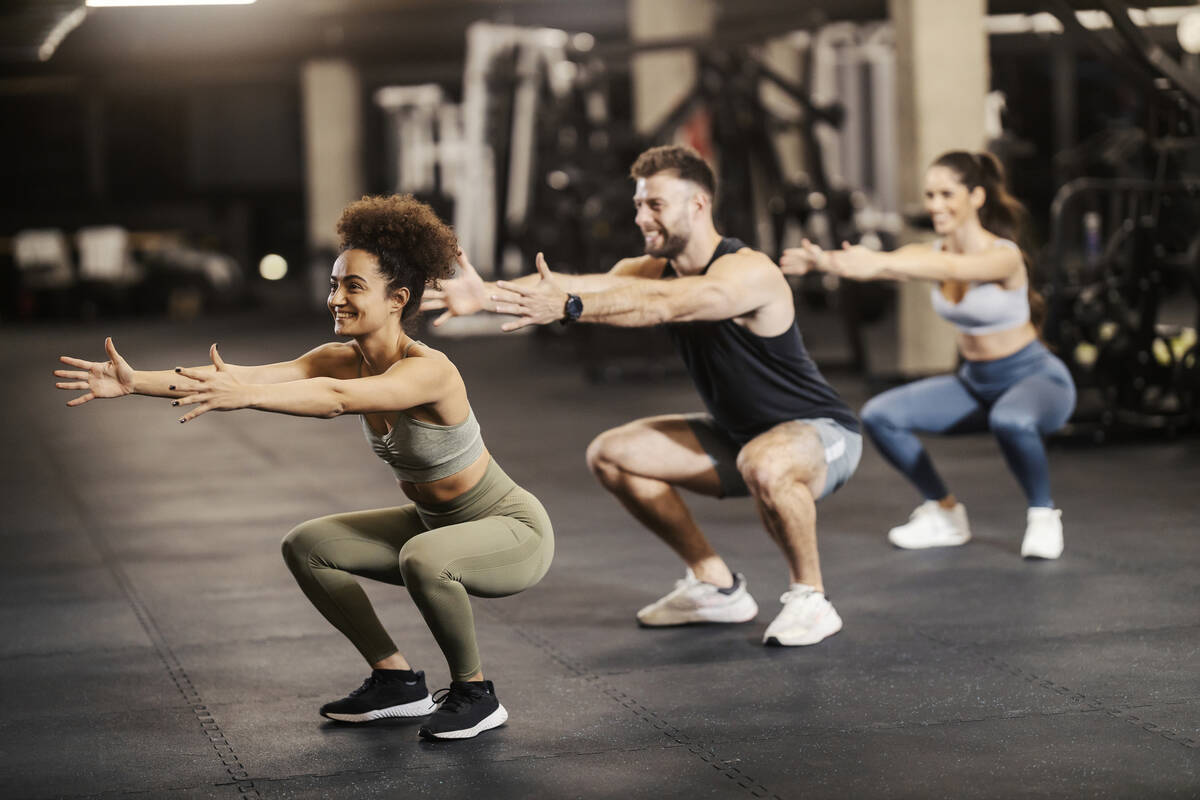
Squats
Squats “mimic many of our everyday actions, like picking up something off the floor or standing up from a chair,” Rogers says.
A small 2022 study found that parallel squats led to the growth of quadriceps muscles, or those in the front of the thigh.
Squats also target the glutes and hamstrings, Betancur says. “They also engage your core and improve mobility in the hips and ankles. Because we sit and stand so often throughout the day, improving your squat helps with both strength and daily function.”
Here’s how to do a squat, according to the American Council on Exercise (ACE):
Stand with your feet slightly wider than hip-width, your toes turned out slightly and your arms down by your sides.
Shift your weight into your heels and push your hips back towards the ground, like you’re sitting down in an invisible chair, until your thighs are parallel to the floor.
Keep your knees in line with your ankles; avoid pushing them forward over your toes.
Stand back up and repeat.
You can start with bodyweight-only squats to improve mobility and flexibility, Rogers says. Then, enhance the movement by holding hand weights.
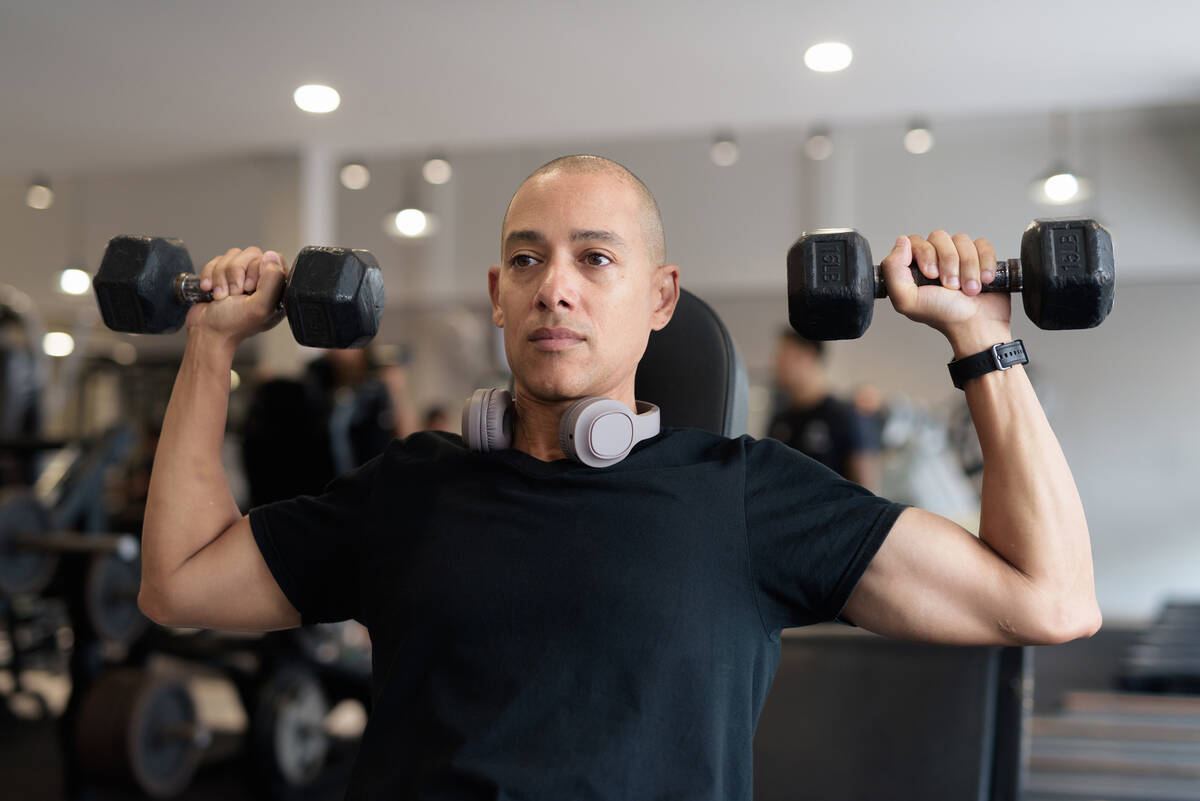
Shoulder presses
“Shoulder presses help build strong, stable and balanced shoulders by targeting key upper body muscles that support everyday activities involving pushing or lifting, such as opening doors, pressing carry-on luggage into overhead bins or lifting a child,” Betancur says. “Strengthening these muscles also contributes to better posture and reduces the risk of shoulder injuries over time.”
Research published in 2020 suggests that shoulder presses and lateral raise exercises provide a high level of muscle activation in the front and middle of the shoulder.
You can do shoulder presses sitting or standing. You just need a set of dumbbells of whatever weight feels safe for you. Here’s how to do them:
Start by sitting with your back against a chair or standing up straight.
Grasp dumbbells, one in each hand.
Lift the dumbbells up to shoulder level slowly with your palms facing outward and with the weights shoulder-width apart.
Press both dumbbells overhead simultaneously until your elbows are fully extended. Avoid arching your back.
Lower the dumbbells slowly back to shoulder height.
Repeat.
Planks
“Planks are one of the simplest yet powerful core exercises you can do,” Rogers says. You don’t need any equipment, and you can do them anywhere.
The move has been shown to activate your core muscles, according to research. Planks also strengthen your deep core muscles, which provide stability to your spine and pelvis, and engage your upper and lower body muscles, making it a “true full-body move,” Rogers says.
“Even short holds can help build endurance, improve posture and improve total body strength,” she explains.
Here’s how to do a plank, according to ACE:
Lie face down on your belly on the floor or a mat.
Place your forearms and palms on the ground, with your elbows close to your sides and your hands facing forward.
Extend your legs and place your toes on the ground.
Tighten your ab muscles.
Lift your entire torso off the floor, with your weight distributed on your forearms and toes, and keep your body in a straight line from head to toe.
Avoid arching your back, hiking up your hips, bending your knees or shrugging your shoulders.
Hold the position. Start with several seconds and progress.
Lower your torso slowly back onto the floor.


