



A winter hike among Joshua trees, burros, wildflowers





Old West history, natural wonder and wildflowers mix with walking opportunities near Nevada’s southern tip.
Plenty of possibilities exist to combine exercise with desert fun, especially while temperatures remain hospitable. One such combination is hiking at Wee Thump Joshua Tree Wilderness near Searchlight followed by about an hour drive southeast to the touristy, burro-saturated town of Oatman, Arizona.
An old wagon trail
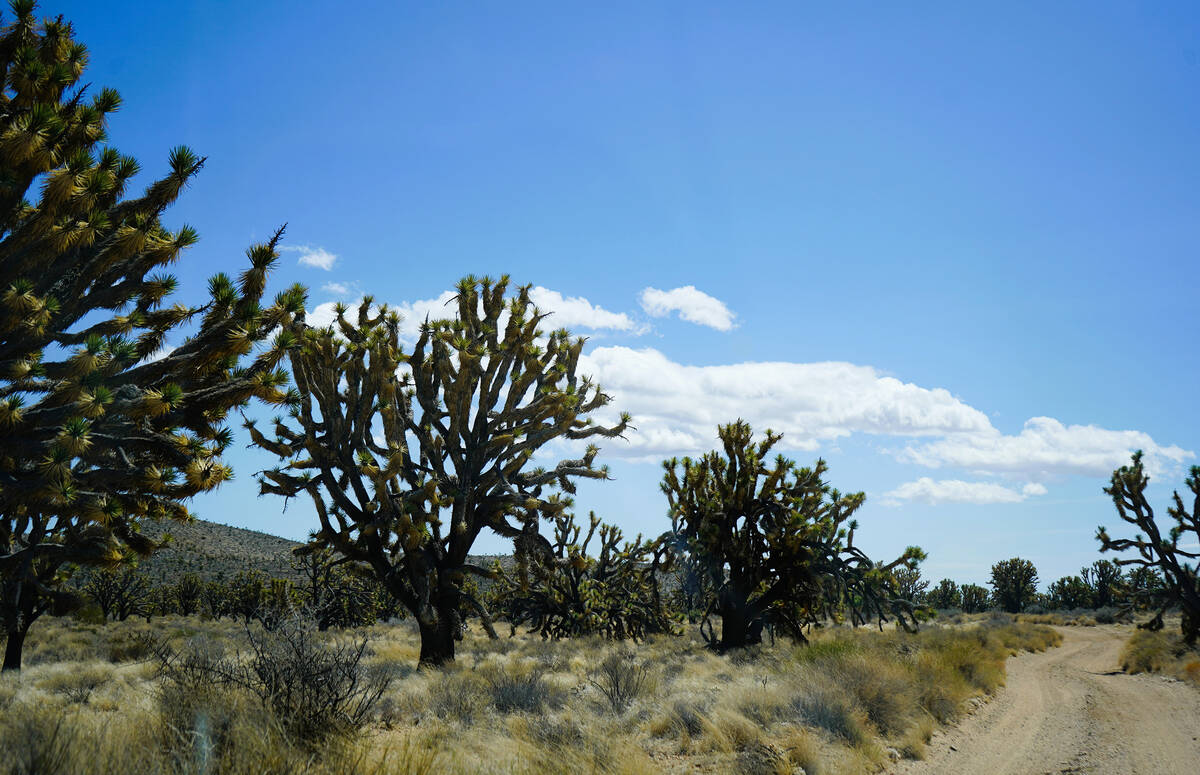
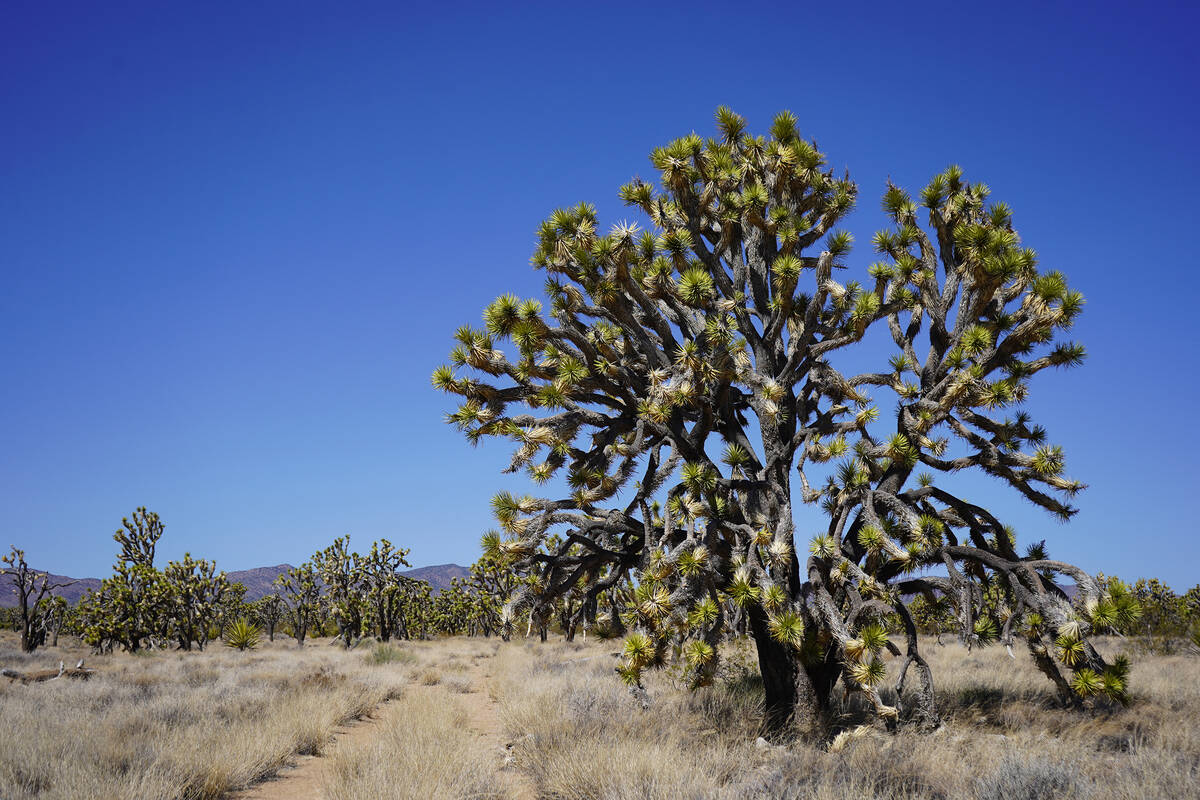
Wee Thump, meaning “ancient ones” in the Paiute language, is a protected forest of some of the Mojave Desert’s oldest and largest Joshua trees.
The protected forest is about 1½ hours from Las Vegas and reached by driving south on U.S. Highway 95 and then turning right onto state Route 164 (Joshua Tree Highway) from the town of Searchlight.
Continue to Wee Thump East Road and turn right to head north on the dirt road to a Bureau of Land Management parking lot.
Joshua Tree Trail begins at an opening in the fence behind the parking lot’s large sign for Wee Thump Joshua Tree Wilderness. The trail is an old wagon road once used by area miners that’s now followed by hikers meandering through the whimsical trees and other vegetation, including buckhorn cholla, yuccas and creosote bushes.
Signage and the trail itself get off to a subtle start. Follow shoe prints and thin brown trail posts until reaching the more obvious two tracks of the wagon road. How far to go on this primitive path is the hiker’s choice, maybe 1½ miles out and 1½ miles back.
Jackrabbits and birds, including ladder-backed woodpeckers, make their homes in Wee Thump, along with lizards and snakes, which become active again during the warmer days of March and April.
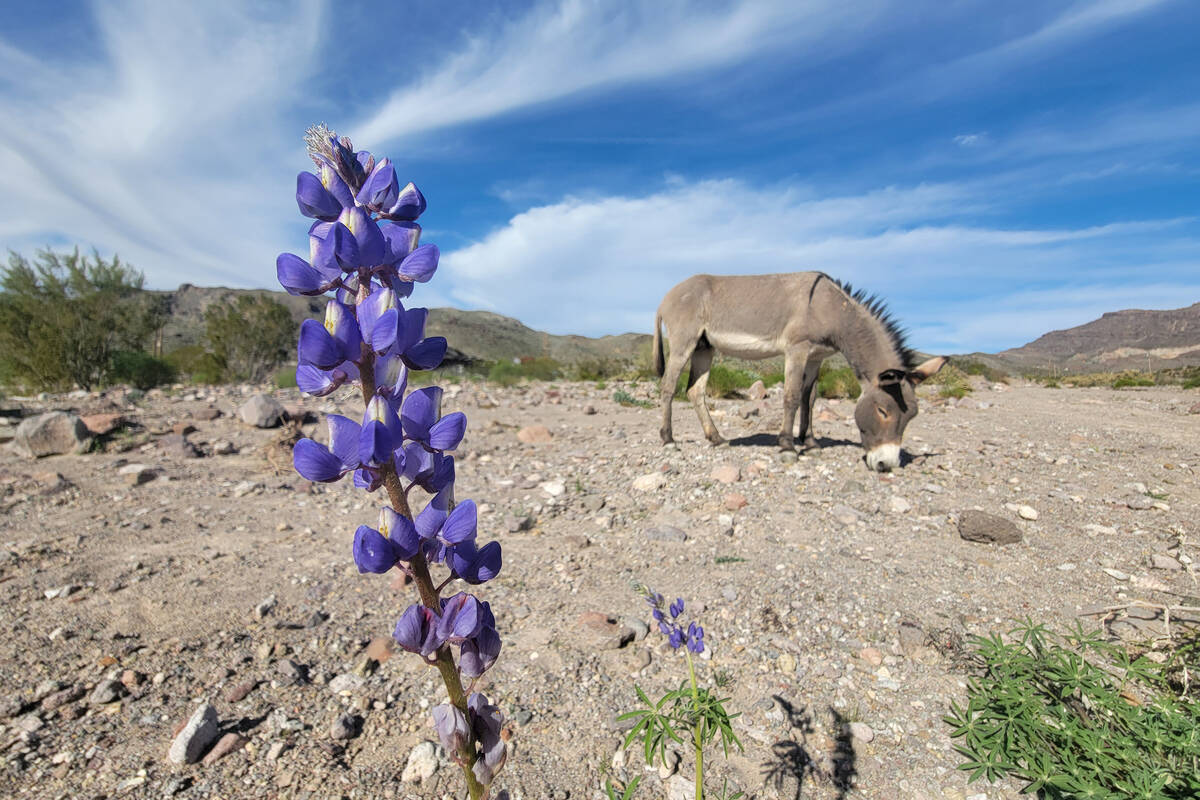
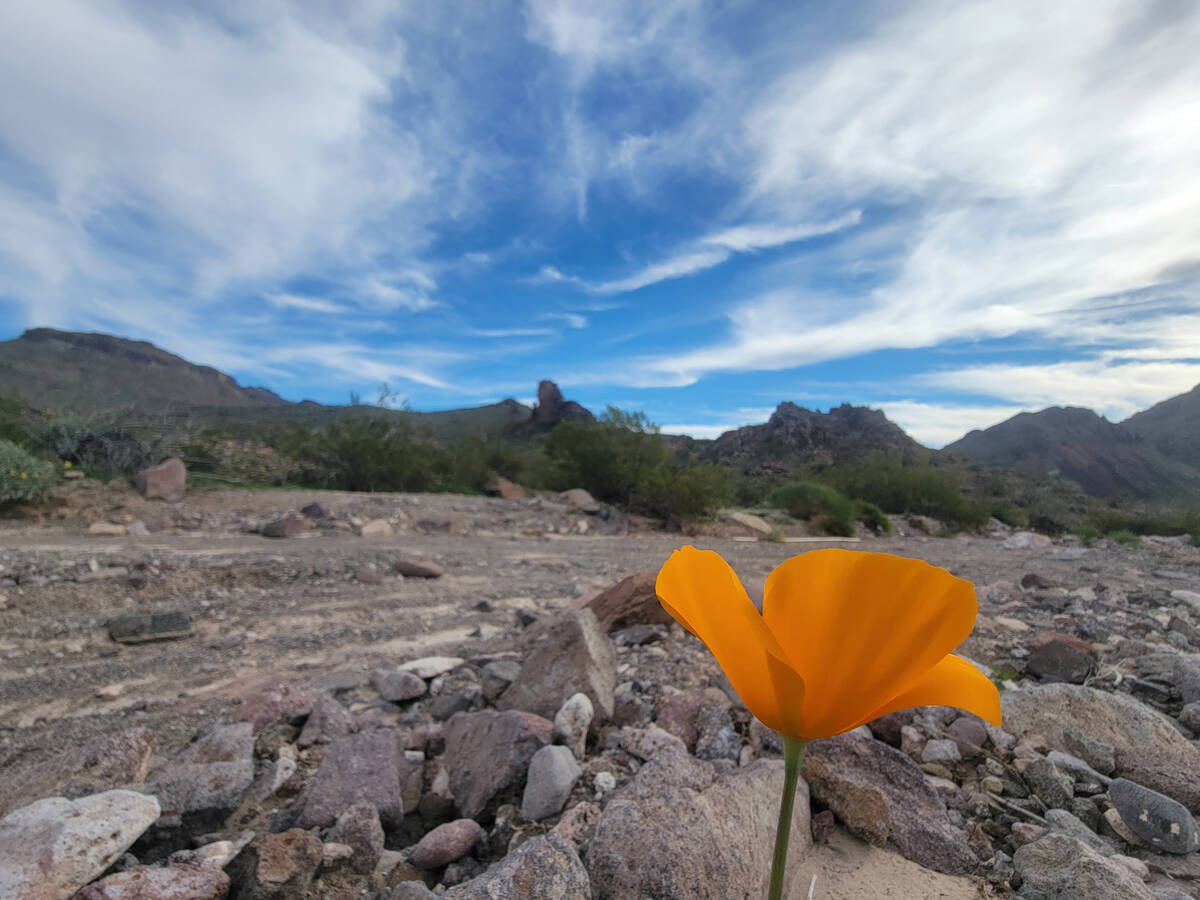
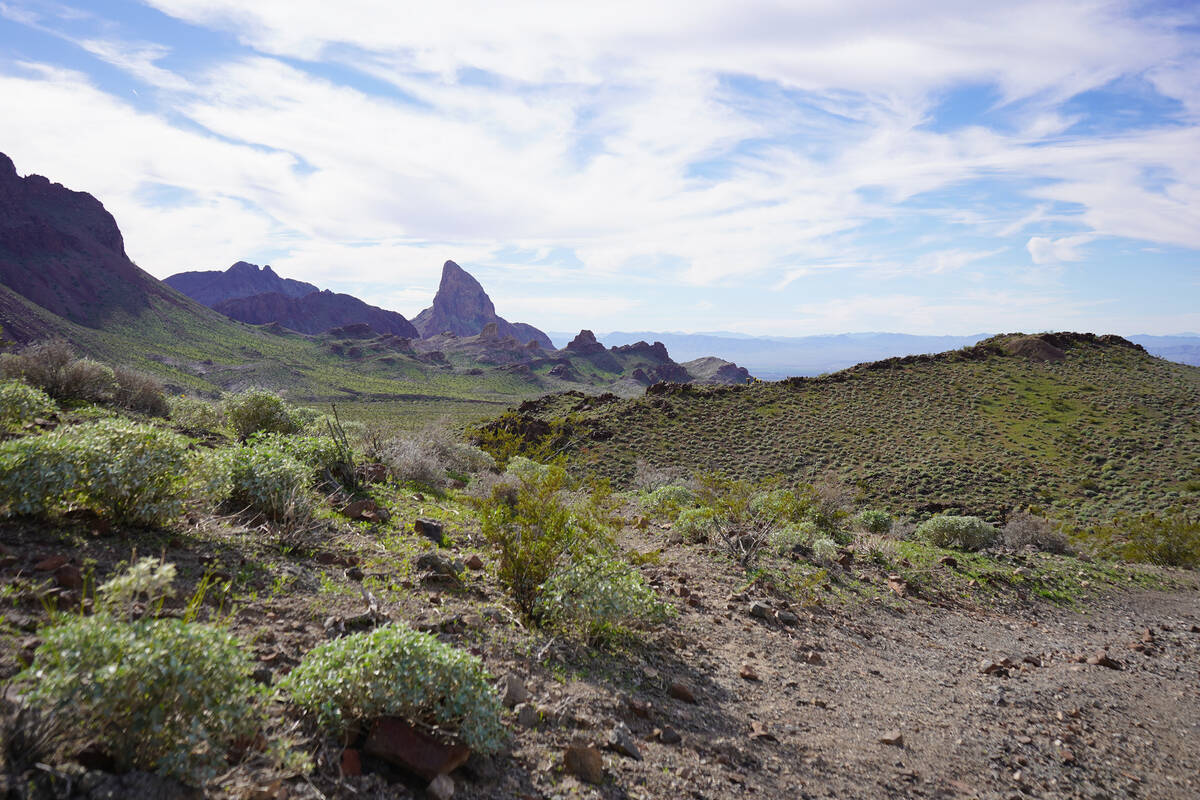
Keep an eye out for wildflowers in February and March as temperatures increase. In mid-January, a few early Joshua tree blooms were spotted near Searchlight, and plenty of sprouting plants were present on the desert floor in Nevada and Arizona because of fall and winter rains. Bright green covered much of the hills on the approach to Oatman, and a few early gold and California poppies as well as lupines and brittle bush were flowering.
In past years, blankets of poppies have drawn wildflower fans to the Oatman area. Signs are good, but it’s too early to predict how abundant blooms will be in 2026.
Kicks on Route 66
Traveling from Wee Thump to Oatman, drivers will return to state Route 164 (Joshua Tree Highway) and take a left heading east to the town of Searchlight.
Once there, turn right onto U.S. Highway 95 to state Route 163. Turn left in the direction of Laughlin.
Before reaching Laughlin’s town center, turn right on Needles Highway. Shortly after passing Avi Resort and Casino, turn left on Aha Macav Parkway.
Follow that until reaching the option of a left turn onto Aztec Road, which crosses the Colorado River and quickly comes upon Veterans Parkway. Turn right and follow Veterans Parkway until reaching Boundary Cone Road for another left-hand turn.
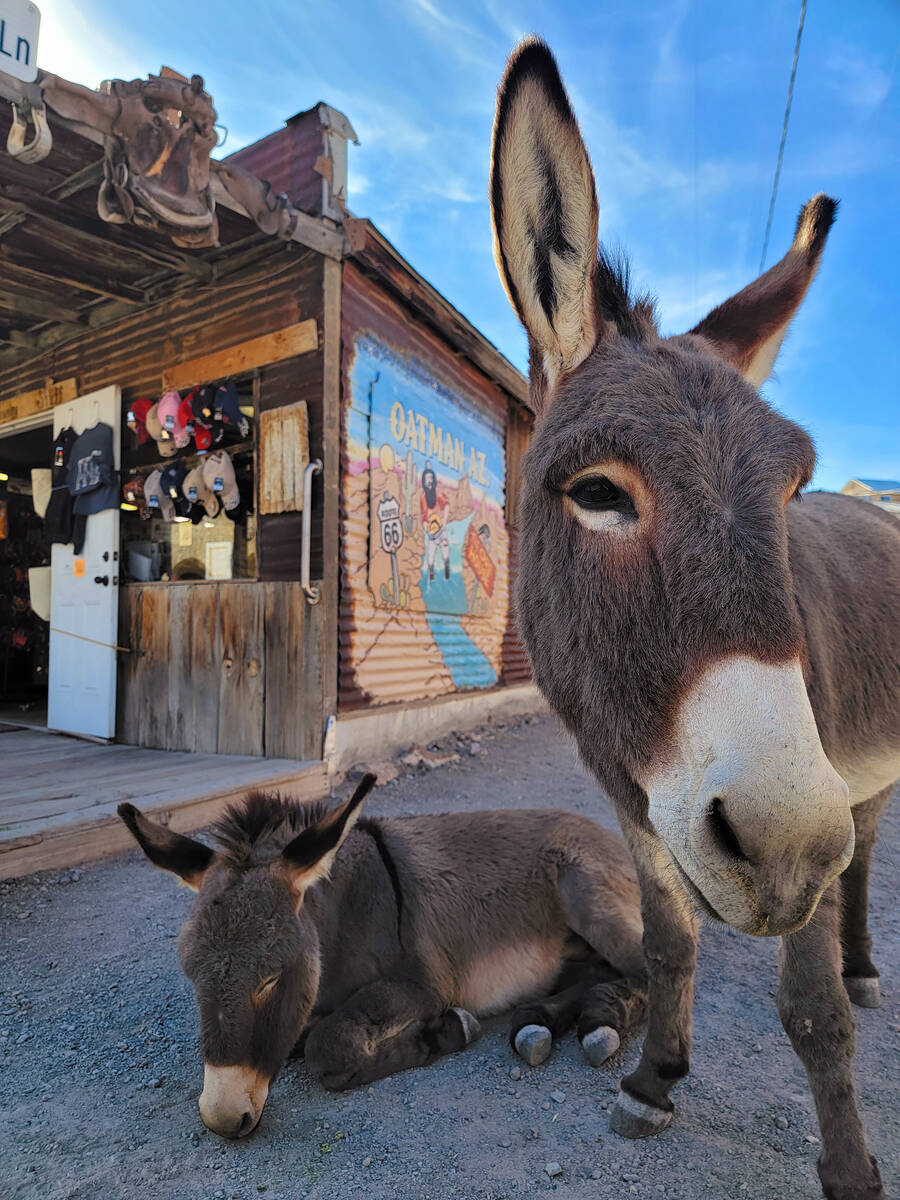
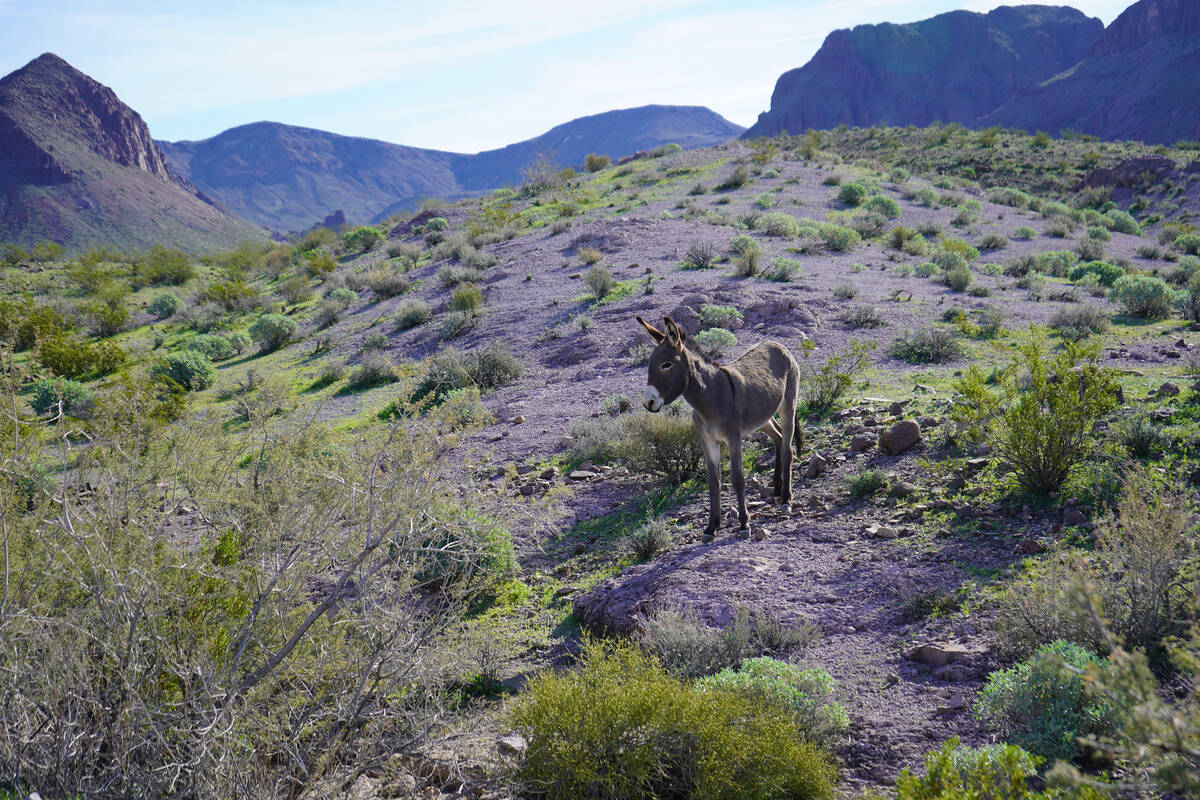
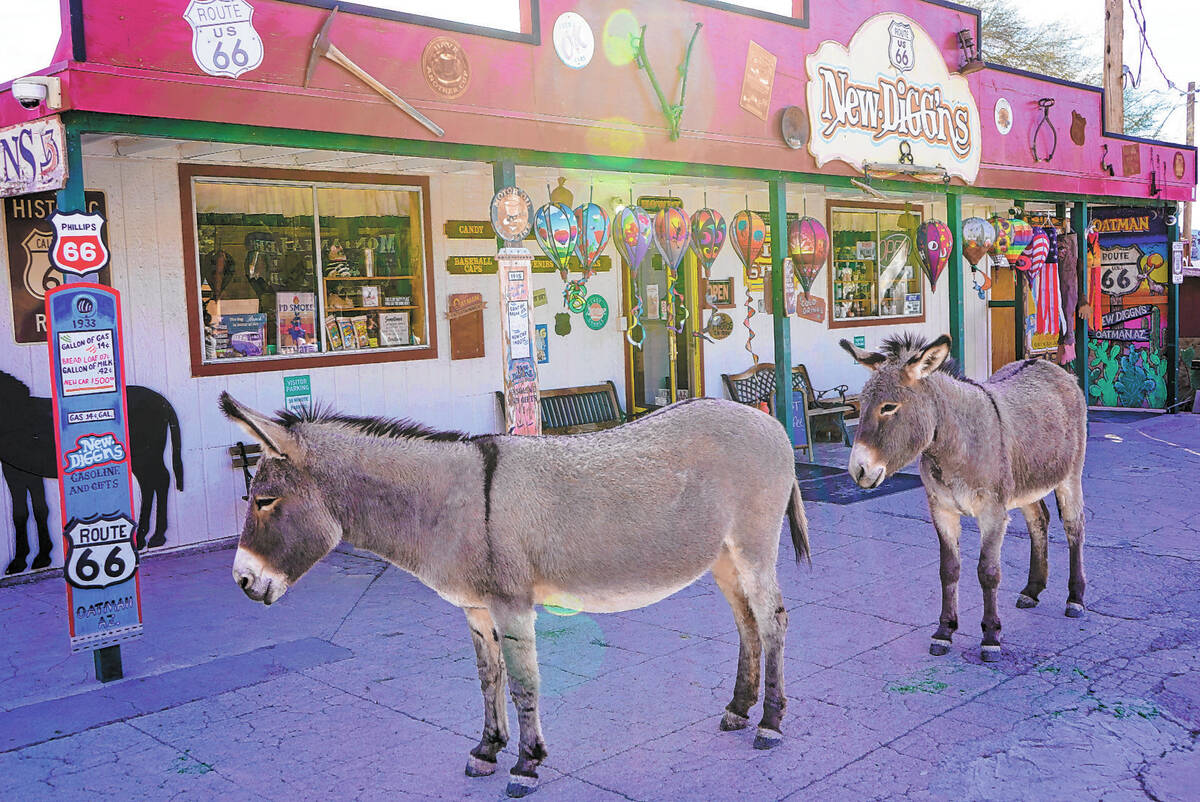
That road becomes Oatman Road, part of the old Route 66, and leads to the town of Oatman. Expect to meet wild burros on the approach to Oatman and to see more of them after parking your car.
Oatman gives visitors plenty of reasons to smile. There isn’t another place where it’s possible to get your kicks on historic Route 66 while walking alongside a wild burro or taking a selfie with one. (Keep away from their backsides to avoid actual kicks.)
Burro-centric and Mother Road merchandise is sold by proprietors along Oatman’s slice of one of America’s first major highways, which extended from Chicago to Santa Monica, California.
Oatman is part of the longest uninterrupted stretch of old Route 66, still connecting Ash Fork, Arizona, to the community of Topock, Arizona, on the eastern bank of the Colorado River across from California.
Quirky and historic
It’s not just highway history that contributes to Oatman’s personality. More than a century ago, Oatman was a boomtown with gold in its veins.
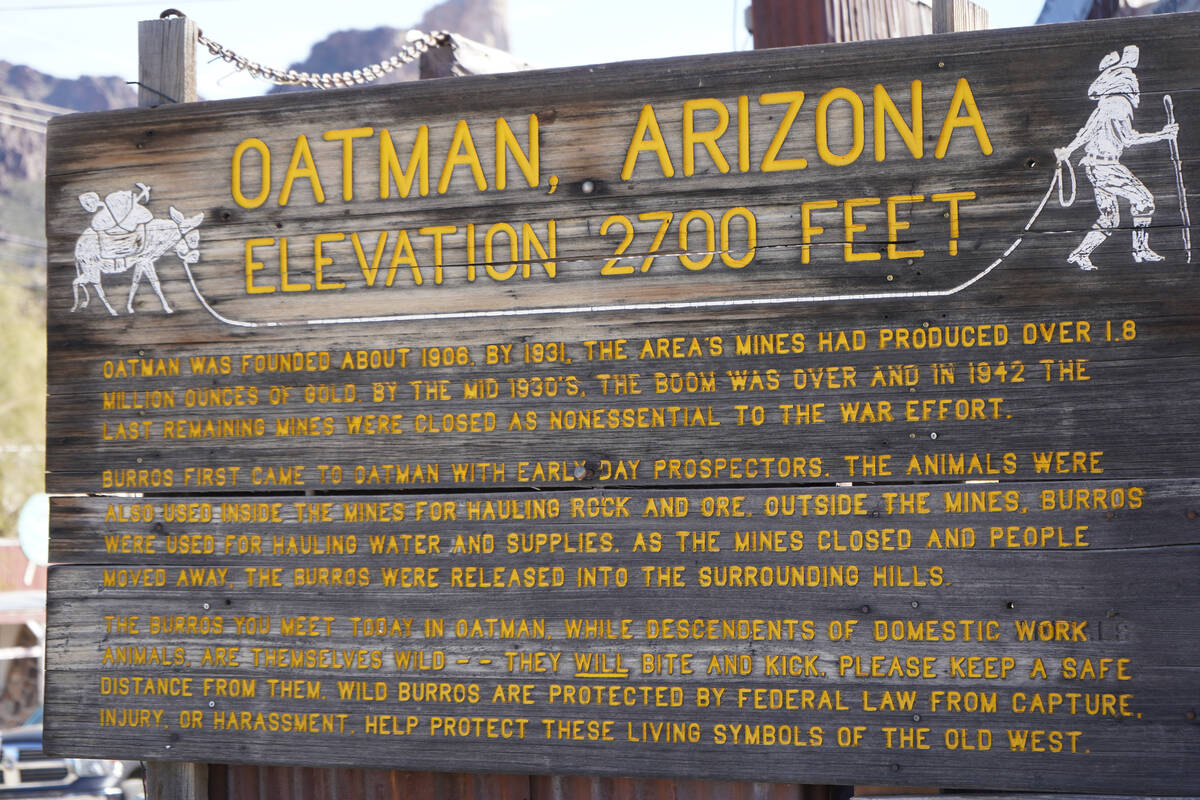
According to a history sign posted in Oatman, the town’s mines had produced 1.8 million ounces of gold by 1931. By that time, fire had ravaged the town, and gold was getting harder to find in the nearby Black Mountains.
The mines were closed by 1942, and the burros that had hauled materials, equipment and supplies for miners were left to fend for themselves in the hills surrounding Oatman.
Today’s wild burros meandering through Oatman’s streets and supporting its tourism business are descendants of burros that helped prop up yesteryear’s gold industry.
Abandoned mines remain part of the area’s landscape, so warning signs with skulls and crossbones can be found in the area to dissuade people from getting too close to potentially fatal hazards like deep mine shafts and abandoned structures that could collapse. Old buildings and mining remnants can be spotted from the road.
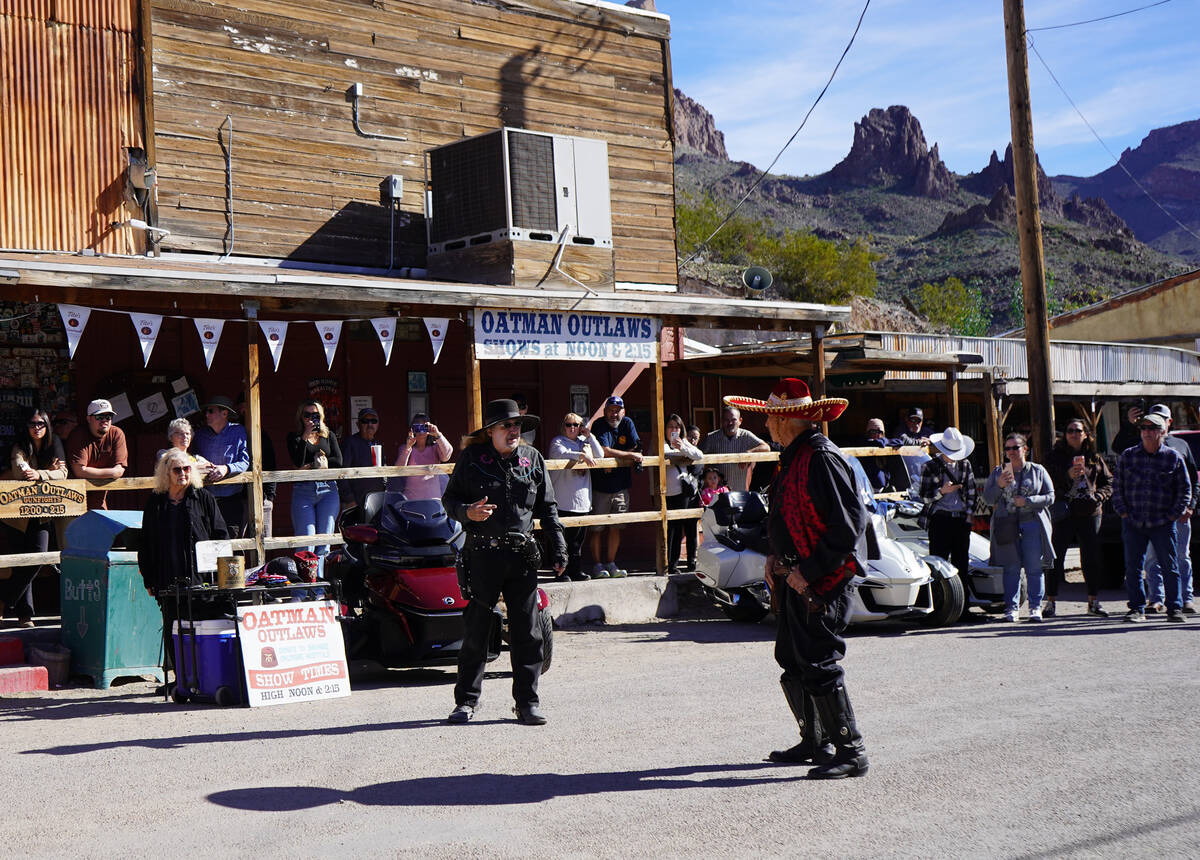
In Oatman at high noon, visitors can expect to hear the dangerous sounds of gunshots. If they’re not close to the center of the action, the burros don’t seem to be bothered by the loud noises, possibly because they’re familiar enough with Oatman to know that Wild West shootouts are staged daily by actors.
That’s part of the kitschy appeal of a quirky town loaded with history, souvenirs, original artwork, road trip snacks, burros and reasons to smile.
Exploring scenic parts of Nevada’s southern tip and side-tripping to Oatman makes for a day well spent.


