



Families say ICE deportations let Las Vegas crime suspects skip court, justice
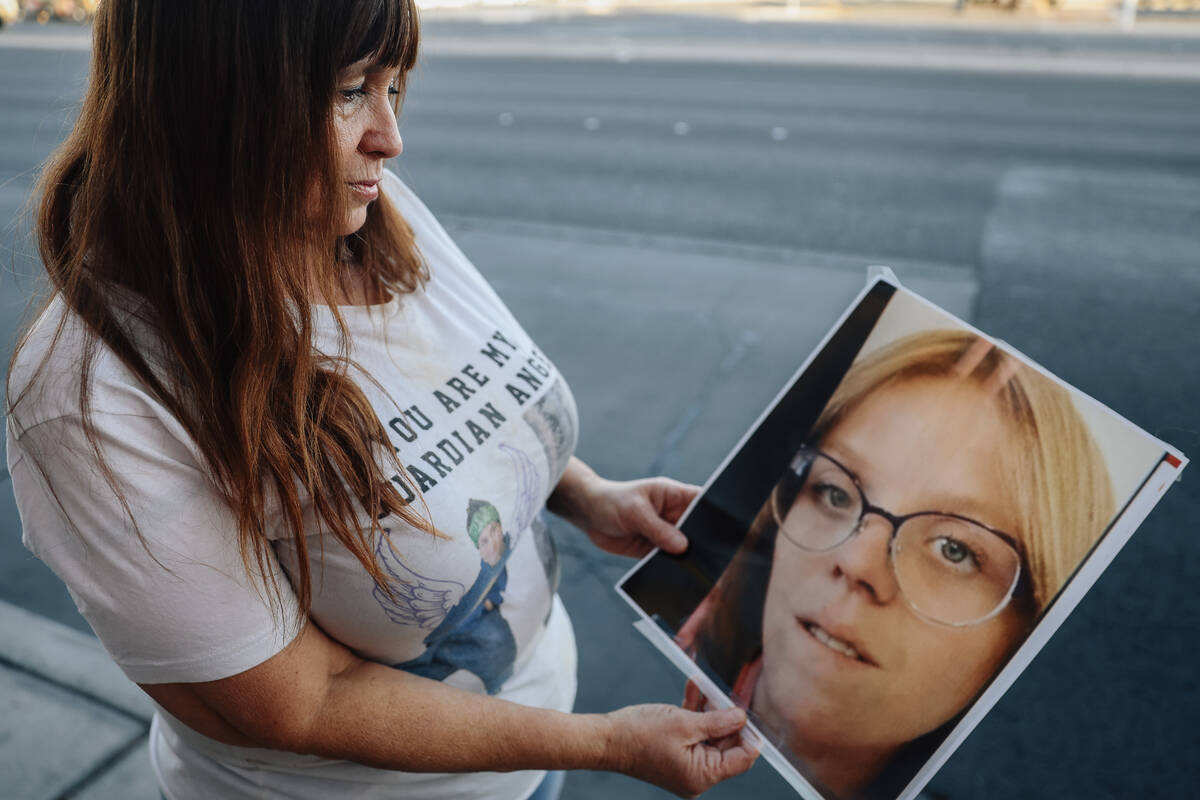

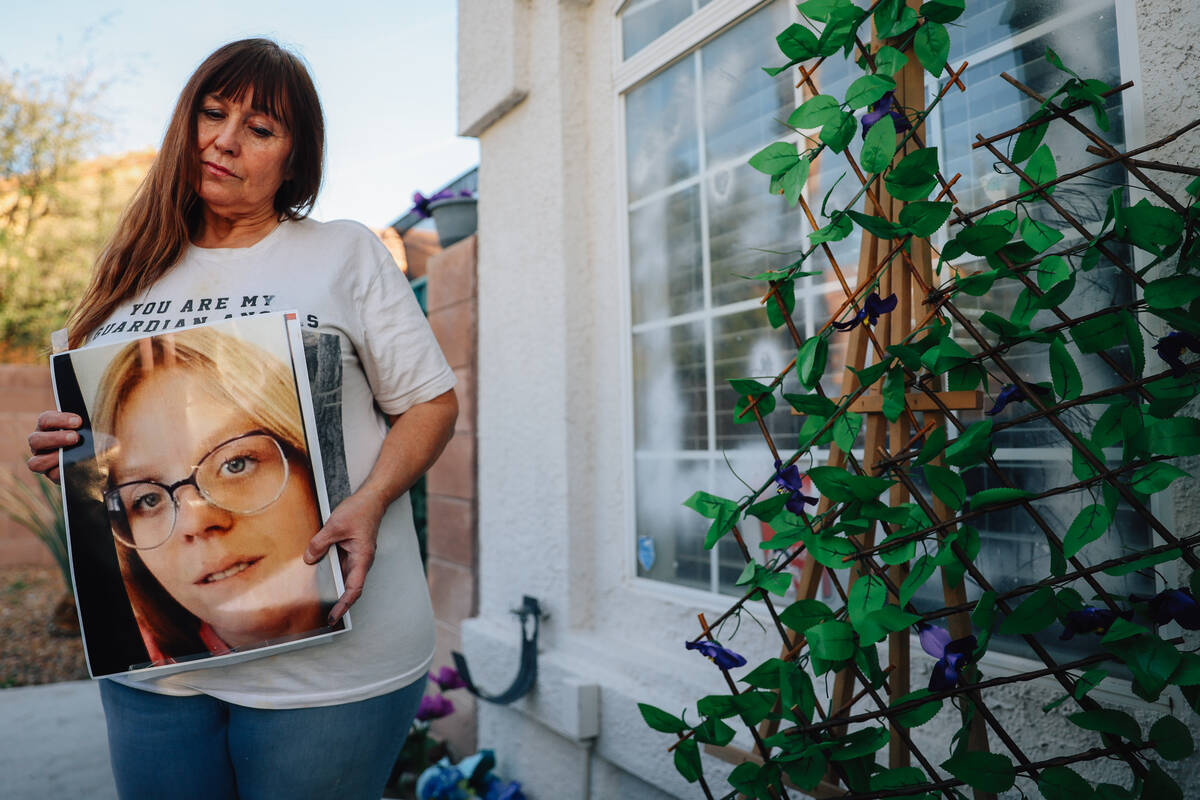





Las Vegas nurse Amber Brown was a homebody who regularly enjoyed a stroll around her neighborhood and to a nearby convenience store.
The 33-year-old woman was on one of those walks on the evening of June 19 when a pickup ran a red light and struck her in a crosswalk at North Rancho Drive and Decatur Boulevard, according to the Metropolitan Police Department. She did not survive.
Angel Antonio Franco Merida, a Guatemalan national who was suspected of living in the country illegally, told police he had driven through a yellow light, according to an arrest report. It said Merida wasn’t impaired at the time of the crash but that witnesses and video footage confirmed he had driven through a solid red light.
He was taken into custody, and Clark County prosecutors quickly moved to file a felony charge of reckless driving resulting in death or substantial injuries. But within five days, Merida was in Immigration and Customs Enforcement custody, records show. The following month, an immigration judge allowed him to self-deport.
That Merida was able to leave the country without answering for the alleged crime came as a shock to the victim’s family, Clark County District Attorney Steve Wolfson and even Merida’s own attorney.
“I feel like the laws need to change,” said Cheri Brown, Amber Brown’s mother. “If we went to their country and committed a crime, we would be in their jail.”
It’s unclear how often ICE detains defendants with pending cases, but the practice is controversial. Some say it deprives victims of justice and allows defendants to escape consequences — but also prevents them from defending themselves in court.
But at least one expert thinks it saves local authorities money and reduces recidivism.
Andrew Arthur, a former immigration judge and a fellow at the Center for Immigration Studies, which seeks low levels of immigration, said there are advantages to ICE detaining someone with a pending case.
“It’s cheaper for the state, because they don’t have to pay the cost of detaining that individual and, for what it’s worth, if they simply deport the person, that person is not likely to reoffend,” he said.
‘Cheated’ of justice
“We did our job,” Wolfson said about Merida’s case. “We argued for an appropriate bail. We filed a criminal complaint in a very timely fashion. We were ready to proceed, but within just a few days after his arrest, ICE came and took him.”
He added: “I believe in a real, true sense that the victims were cheated a certain degree of justice.”
The chief prosecutor said he would prefer that undocumented defendants be deported after their cases are resolved.
Wolfson said he does not know if ICE is detaining such suspects more frequently under President Donald Trump as his administration seeks to fulfill his campaign promise of mass deportations.
The district attorney’s office has a good relationship with federal authorities, said Wolfson, but he added that he hadn’t communicated with ICE. He acknowledged that a dialogue might be appropriate.
Records show that Merida has a warrant out for his arrest and Wolfson said his office would still pursue the case if he returned, but he said it was unlikely that defendants in this position would return to Nevada to face their charges.
“I think these are rare circumstances,” Wolfson said. “They don’t happen very often at all. I think that the only reason they’ve come to our attention is because of what’s happening nowadays with ICE and how much attention ICE has received.”
Client ‘was just gone’
Attorney Michael Becker, who represented Merida, said it was his understanding that Merida — who had posted $50,000 bail — went straight from Metro’s custody into federal detention.
“What happened is that the federal government is trying to boost deportation numbers,” the attorney said. “They would rather just say they got rid of someone. They don’t care if they do so at the expense for justice, even for the family of the (victim) here or for the client.”
Becker said he didn’t have a chance to speak with Merida before he was removed from the country, and he doesn’t know exactly under what circumstances his client was taken into custody by ICE.
“All I know is that my client at some point was just gone,” he said.
Under a jail-based 287 (g) agreement with ICE, Metro flags certain foreign-born inmates for possible pickup.
Metro deferred comment to the Department of Homeland Security, which didn’t respond to multiple messages seeking comment. The White House also referred queries to DHS.
Becker said that it was unusual for ICE to remove a suspect of serious offenses to be taken by ICE before they answered for local charges, and that he hadn’t seen it happen before.
“As much as Ms. Brown’s family righteously feels they were deprived of justice, so was Mr. Merida,” he said. “He had a right of determination of guilt or innocence and an opportunity to fight the case. Everybody loses, in my opinion, and justice suffers.”
Similar cases
A similar dynamic has played out in at least two other local cases.
Last summer, a sentencing hearing could not move forward for Duglas Esteban Chacon, whose attorney said he was picked up by immigration authorities.
Esteban Chacon pleaded guilty to a charge of reckless driving after police accused him of killing 77-year-old Ricardo Ureño while Ureño was in what police described as “an unmarked/implied crosswalk” on Nellis Boulevard.
Prosecutors had agreed not to oppose probation, and Wolfson said the victim’s family agreed to the plea deal. The fact that the crosswalk was poorly marked presented challenges in prosecuting the case, he said.
Pauline Ureño, the victim’s wife, still becomes distraught speaking about the case and her husband. She confirmed her family agreed to probation with an underlying suspended sentence. She said she wishes Esteban Chacon had been deported after facing her family in court and being sentenced.
In another recent case, Jorge Alvarado Ontiveros was accused of sexual assault against a child under 14 and two counts of lewdness with a child under 14.
Court records show that he was released to ICE on Jan. 13 and that a bench warrant was issued on Monday, the day of his preliminary hearing, when he was still in ICE custody.
Alvarado Ontiveros had not entered a guilty plea, but prosecutor Michael Allmon said a prospective plea agreement, reached in consultation with the now-adult alleged victim, would allow him to receive probation if he pleaded guilty to attempted lewdness with a child under 16.
He would be deported upon conviction, then serve prison time if he ever returned to the U.S., according to the prosecutor.
The name of the alleged victim in his case was redacted in records, and a relative could not be reached for comment.
Alvarado Ontiveros’ case could have a different ending. Prosecutors are filing a petition telling the federal government that they need to regain custody of him, and Allmon said they “are going to get him back.”
Ira Mehlman, a spokesperson for the Federation for American Immigration Reform, another organization that seeks to reduce immigration, said ICE has a responsibility to pick up defendants who could face probation. But he also agreed with others interviewed for this story, who said defendants should serve their time in the U.S. before being deported.
“If you have committed a serious offense in this country and (are) subject to jail time or prison time, the penalty should not be a plane ticket home,” he said. “You should serve whatever sentence you get in Clark County or Nevada and then, after you have served that sentence, then be removed.”
ICE: ‘Getaway driver’
Michael Kagan, a UNLV law professor who runs the school’s immigration clinic, said he is seeing many defendants with low-level cases get detained by ICE, interfering with their ability to go to court.
“It’s definitely exploded in 2025 and obviously, no sign of that abating in 2026,” he said of the practice.
He added: “It’s not that this problem was invented in 2025 under the Trump administration, but it’s become much, much larger so that I would describe it as essentially, now, two separate systems of justice operating in Las Vegas in criminal cases: one for immigrants and one for other people. And that is alarming and disturbing.”
Though not typical, in some cases, ICE also acts as “getaway driver,” allowing defendants to evade prosecution for serious crimes, said Kagan. He agreed with Becker’s theory that the practice allows immigration authorities to increase deportation numbers.
“Whether someone is accused of a low-level trespass or a homicide, we don’t just take them outside and whip them or take them to the firing squad,” said Kagan. “We have trials and a legal process, and essentially, the aggressive immigration enforcement is thwarting that.”
Letter to the White House
Cheri Brown said that a panic began to set in after her daughter didn’t return home and didn’t answer calls that late spring evening. It wasn’t until the following morning that she thought to track her daughter’s phone through a locator app. She said that the device pinged at the Clark County coroner’s office.
Cheri Brown called and confirmed her worst fear.
“I fell to the floor,” she said.
She laments that she didn’t get to see her daughter before she died at University Medical Center hours after the crash.
“It’s right down the street from my house, you’d think the cops would’ve came over,” she said.
Her daughter, a one-time “Make-a-Wish” child, was inspired to pursue the medical field from a young age after seeing what illnesses had done to her and her sister. She worked at a rehab facility, where she was a gifted nurse who deeply cared about her patients, the mother said.
Amber Brown didn’t like going out and hated missing work. She instead would save money to go on family vacations.
“All she did was work and come home,” she said. Cheri Brown kickstarted a verified GoFundMe campaign to help keep their home and pay her daughter’s debt.
Her daughter cherished a good swim in California beaches, and visits to Universal Studios.
“She was a very devoted person, very sweet,” Cheri Brown said.
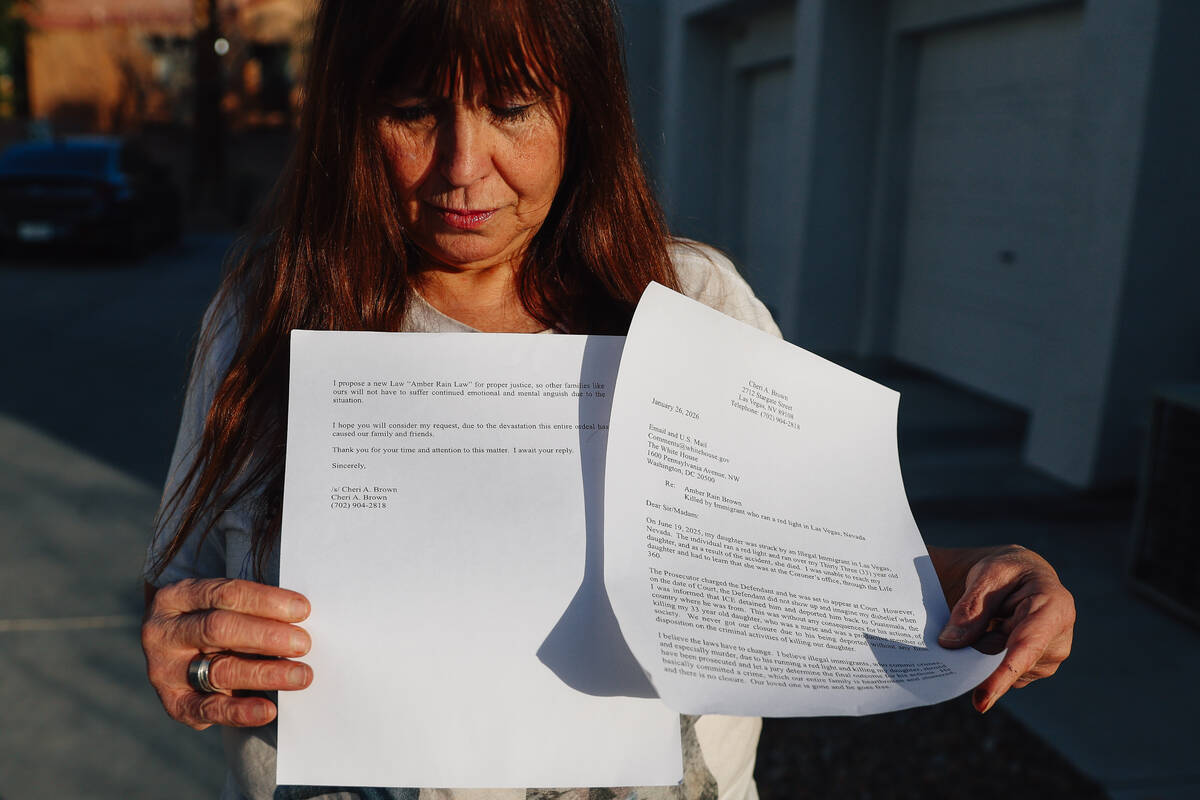
This week, the mother sent a letter to the White House, outlining the family’s tragic ordeal.
“I believe illegal immigrants, who commit crimes, and especially murder, due to his running a red light and killing my daughter, should have been prosecuted and let a jury determine the final outcome for his actions,” she wrote. “He basically committed a crime, which our entire family is heartbroken and shattered, and there is no closure. Our loved one is gone, and he goes free.”
She said she was hopeful the president would respond to the letter.
The White House did not comment on the correspondence.
After her death, Amber Brown’s boss told her mother that the nurse always spoke out on behalf of her patients.
“You gotta fix this, this is not right,” Cheri Brown said the supervisor said.
“I could see her in heaven now, telling Jesus, ‘you’ve gotta fix this,” the mother added.
Contact Ricardo Torres-Cortez at rtorres@reviewjournal.com. Contact Noble Brigham at nbrigham@reviewjournal.com. Follow @BrighamNoble on X.


