



Regulators and utility debate saving money or electricity


Should Nevada Power Co. save money or electricity?
That is the question facing state regulators, some analysts say. Others disagree, arguing that the electric utility serving Las Vegas can save both money and electricity for customers by maintaining a big budget for energy-conservation programs.
Usually energy conservation and power savings go hand in hand because reduced power consumption saves on the cost of building new plants and burning fuel to make electricity.
Although energy-conservation programs cost money, they often save money that otherwise would need to be spent on fuel and power generation equipment.
However, the struggling Southern Nevada economy has dampened demand for electricity, and Nevada Power already has adequate generating capacity to meet needs, some analysts argue.
Nevada Power, the Las Vegas-based subsidiary of NV Energy, sparked the regulatory debate in February when it changed its Integrated Resource Plan application with state regulators, cutting the proposed 2010 budget to $52.8 million from $95.8 million suggested in July.
Even with the budget reduction, the utility intends to boost the amount of money spent on demand-response energy programs. Demand-response programs automatically reduce electricity consumption by shutting off power to participating customers for short periods when electricity prices are high or electricity is in short supply.
Nevada Power's Cool Share program, which allows the utility to turn off a home air conditioner during peak periods of energy use, is a demand-response program. In contrast, the residential refrigerator recycling program, which pays residents $30 for old, inefficient refrigerators, is not a demand-response program .
Demand-response programs reduce rates for all customers, Gregory Kern, the utility's director of renewable generation and energy efficiency, said in testimony filed with the Public Utilities Commission.
The utility is forecasting slack power demand because of low population growth in the Las Vegas Valley.
"Sales growth is flat in the short run and projected to grow slowly in the coming years," Kern said. "With the sluggish economy and less (power generating) capacity required to meet future growth, it makes sense to defer plans for adding capacity."
Eric Witkoski, chief of the attorney general's Bureau of Consumer Protection, also favored trimming the budget for energy-conservation programs at Nevada Power. Utility consumers pay for conservation programs at Nevada Power through rates, Witkoski said in an e-mail.
"We need to be wise and reasonable on future investment, including energy efficiency expenditures that are paid for by the ratepayers," Witkoski said. "Additionally, Las Vegas is expected to lag behind the rest of the nation in recovery. So we have to watch expenditures as we move through the recession."
Several conservation groups contend that Nevada Power should retain its full energy-conservation budget.
"Whether or not there's the need for new (power-generation) capacity in the near term, medium term or long term, the company has developed cost-effective programs that generate economic benefits that exceed the cost," said Howard Geller, executive director of the Southwest Energy Efficiency Program, a public interest group based in Boulder, Colo.
Energy-conservation programs reduce air pollution from power plants, reduce water consumption by power plants and create jobs, Geller said.
"Our recommendations are good for customers, good for the environment and good for the local economy," Geller said.
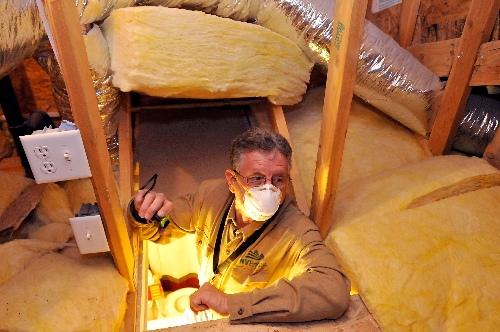
Yet houses and buildings will be constructed without sufficient energy conservation features if the Nevada Power program is curtailed, he said. After a home or building is completed it is more costly to install energy-conservation measures, such as insulation, he said.
"It's criminal not to build energy-efficient homes and buildings," he said. "This isn't something you can turn on and off. It's much harder to go back in and retrofit energy efficiency down the road."
Contact reporter John G. Edwards at jedwards@reviewjournal.com or 702-383-0420.


