



Shares in Snapchat parent soar in market debut
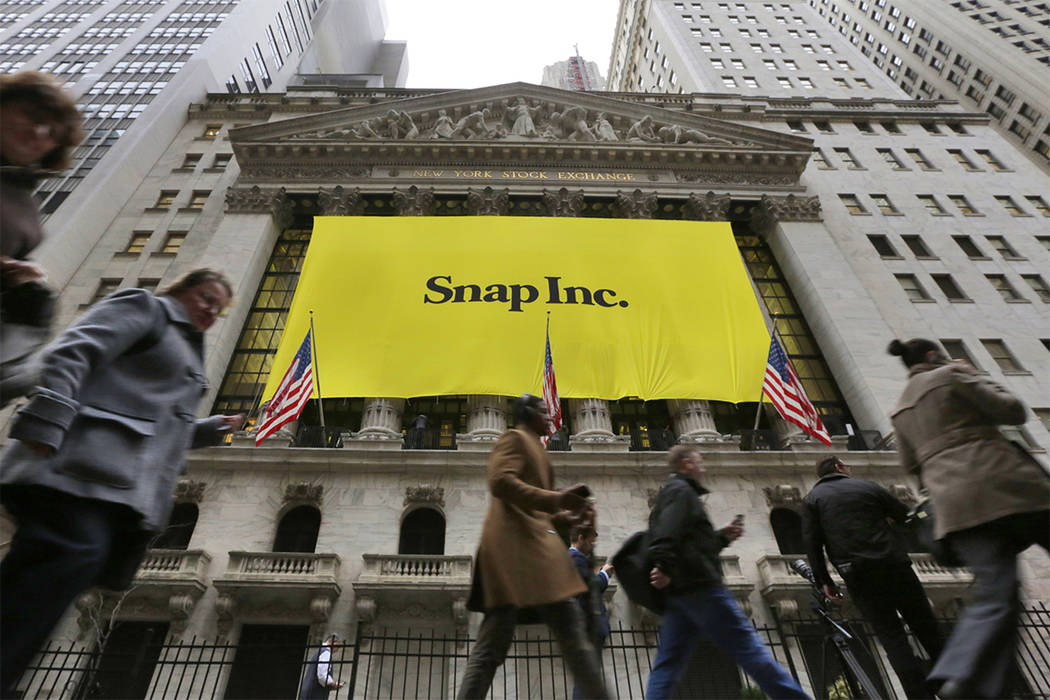


Snap, the parent company of the ephemeral messaging service Snapchat, outstripped expectations for its stock market debut Thursday, closing at $24.48 per share for a value of approximately $28 billion.
The IPO was a massive success for co-founders Evan Speigel and Bobby Murphy, who founded the company in 2011 out of their Stanford University dorm rooms. Both are now billionaires before the age of 30.
The company saw a healthy pop in its first moments of trading, opening at $24 — roughly 40 percent higher than the company’s price of $17 per share, and far higher than the company’s original $14-$16 range.
The steady trading at the higher price showed the great demand for Snap’s initial public offering. Some are hoping that Snap’s debut can revive a lagging IPO market, as Barron’s reported, and encourage other tech firms to make their debuts.
Snapchat, Snap’s main service, has a loyal user base of 158 million people who use it to send 2.5 billion messages every day, according to its initial public offering filing. While it has yet to profit off that popularity, it is growing its revenue, which was $404.5 million in 2016. The firm has invested substantially in working with media partners — including The Washington Post — to deliver news and analysis to its predominantly young audience.
The company’s growth has been largely driven by younger users, who spend over 30 minutes on it per day, according to the company’s filing.
Snapchat’s growth, however, is being driven more and more by older users, according to the research firm eMarketer. The firm projects that 6.4 percent of Snapchat’s users this year will be between ages 45 and 54, showing that its expanding its appeal among older users — even as fewer younger users join the network.
But some analysts still caution that Snap has to prove itself. James Gellert, chief executive of the analysis firm Rapid Ratings, expected Snap to crackle with a post-IPO pop, thanks to tech-focused investors hungry to get their hands on something new. But, he said, Snap has a way to go to prove itself as a stable investment.
“Snap is relatively young, and it’s yet to generate profits. The typical IPO tech investor will say that’s fine and it doesn’t matter,” he said. But from a long-term perspective, Gellert said, being able to demonstrate the ability to generate profit and make money on assets is key for a company’s financial health.
Snap also runs some risk of getting the wind taken out of its sails by competitors. Facebook — which famously tried to buy Snap (then Snapchat) for $3 billion in 2013 — has introduced some Snapchat-like features to its Instagram social network.


