



Domestic violence victims mourned
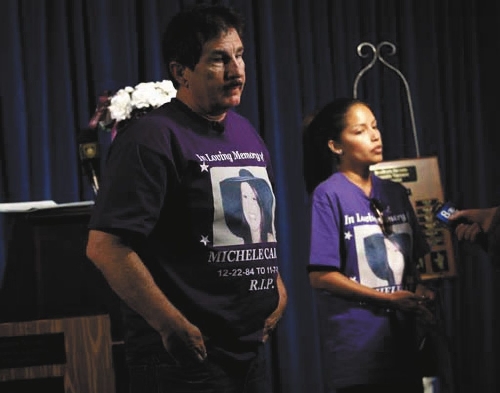


Michele Carson made her final trip to Las Vegas two years ago.
The vibrant 25-year-old drove from her West Covina, Calif., home with her best friend to blow off some steam before the two planned for graduate school.
But Carson never made it home. Her body was found in a south valley desert area by target shooters.
Her friends and family never saw it coming.
"One minute you think your life is normal. The next, it's a parent's worst nightmare," her father, John Carson, said at a ceremony Monday at Las Vegas police headquarters to mark Domestic Violence Awareness Month.
His daughter, a California State University, Fullerton graduate, decided to meet up alone with her former boyfriend while visiting town, said her best friend, Vicki Rojas.
Justin "Spider" Burns - a former Bishop Gorman basketball player and son of former UNLV basketball player Michael "Spiderman" Burns - was later arrested on a murder charge related to Carson's slaying. His trial is scheduled for next month.
Now, Rojas and Carson's father visit town regularly - for Burns' court appearances and to attend events that raise awareness about domestic violence.
"I don't want any other parent to go through the pain I and my family went through," John Carson said.
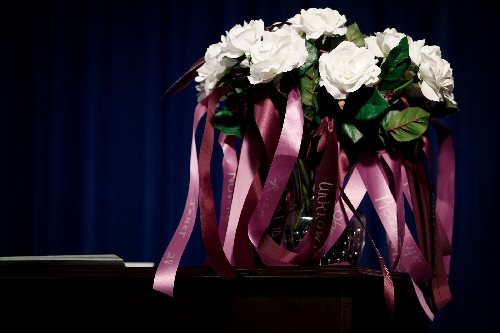
Seventeen Clark County residents died as a result of domestic violence between July 1, 2011, and June 30, 2012, Las Vegas police said. Their names were read aloud at Monday's ceremony and placed on a memorial plaque. White roses representing the victims were placed in a vase.
The list included men and women who ranged in age from 22 to 79.
Since police began recording the names of victims on plaques 12 years ago, 280 names have been added.
"One name is too many," said Elynne Greene, supervisor of victim services detail for the Metropolitan Police Department.
There's one bright side to this year's list: It's shorter. Last year, 30 names were added to the plaque. The year before, the number was 50.
Greene credited greater community awareness and the implementation of a "lethality assessment program" for the decrease.
The program uses a questionnaire to help police identify domestic violence victims who are at a significant risk of being killed by their abusers. Police ask victims questions such as whether the abuser has ever threatened to kill the victim, tried to choke the victim or threatened the victim with a weapon. Based on the answers, police can gauge the victim's risk of being killed. Those victims are quickly connected with Safe Nest, an organization dedicated to helping them.
"The police officer will call and hand the victim the phone," said Lisa Lynn Chapman, Safe Nest spokeswoman. "We are in immediate contact."
It's important for victims of domestic violence to know help is available, John Carson said. It's vital that they understand violence does not equal love and that it could quickly escalate. And it's crucial that victims stop keeping dangerous secrets.
"It's a problem we need to talk about," he said. "People used to keep it secret. We want to encourage women to talk to people, to get help."
Rojas wishes she had told Michele Carson's family about her friend's abusive relationship while she was alive.
But "I never thought it would get to the point where he would take her life," Rojas said.
She thought she was being a good friend by staying quiet.
"I was the person who would keep her secrets," Rojas said. "But some secrets you shouldn't keep."
Contact Lynnette Curtis at Lynnette.Curtis@yahoo.com.
Need help?
Safe Nest's 24-hour crisis hotline: 646-4981.


