



Ash Meadows great place to get in touch with nature
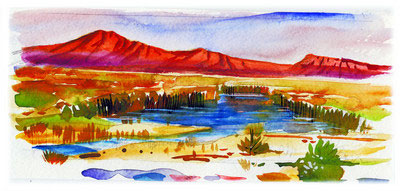


One of those lovely surprises hidden away in the desert, Ash Meadows National Wildlife Refuge invites exploration during the cooler months. The refuge includes 30 warm water springs and seeps along a geological fault, creating an oasis of wetlands, vegetation-lined creeks, and reservoirs surrounded by forbidding desert and stark hills. Helping to maintain the diversity of life on the desert, the refuge protects two dozen unique plant and animal species found nowhere else.
Located just 90 miles from Las Vegas, Ash Meadows National Wildlife Refuge lies in southern Nye County on the Nevada-California border. The shortest route runs through Pahrump, following Highway 160 to Bel Vista Road. Enter the preserve's south end on a graded road from Bel Vista or reach the main entrance by turning right at Death Valley Junction and driving north about eight miles. A few miles longer, another approach uses U.S. 95 northwest to Lathrop Wells. Turn to follow Highway 373 south to the main entrance.
The graded refuge road accesses headquarters at Crystal Spring and a network of interior roads to other points of interest. Popular stops include Crystal Spring, Crystal Reservoir, Point of Rocks, King Spring and Devil's Hole, a detached portion of Death Valley National Park. Slow down when you drive the interior roads as they are dusty when dry and slick and muddy when wet.
Formerly the site of a ranch and brothel, Ash Meadows once was farmed extensively. Heavy use of water for irrigation threatened the plants and animals unique to the area. Finally, the ranch became the core of a new 22,000-acre wildlife refuge in 1984 under the management of the U.S. Fish and Wildlife Service. Work continues to restore the natural wetlands, eradicate introduced plants and animals, and protect the native species.
About 50,000 visitors a year register at the information kiosk at Crystal Spring. The refuge, a no-fee area, closes at dusk. Adjacent to the small parking lot, they find a ranger station, picnic tables, restrooms, information panels and the beginning of a boardwalk trail to Crystal Spring, a warm spring that boils up from under a ledge to form a lovely aquamarine pool and a shallow running stream.
The boardwalk protects the fragile desert soil as it curves through mesquite thickets, alkaline flats, wild grapevines and marshy streamside vegetation. The trail and its short spurs provide opportunities to see one of the protected natives -- a two-inch silvery gray pup fish with vertical stripes. The darting fish, feeding on strands of algae, are one of seven species of pup fish in the refuge, four of which are listed as endangered. The population of pup fish at fenced-off Devil's Hole exists only upon a single shelf at one end of a deep, water-filled cavern and in two special aquariums maintained as backup in case of disaster in the natural setting. Visitors view Devil's Hole from above a deep crevice.
The coyote, one of 27 mammals found on the refuge, hunts and scavenges throughout the area. This adaptable creature likes to use the Crystal Spring boardwalk, recently leaving muddy footprints from the stream banks and scat filled with seeds from dried wild grapes upon which it has feasted.
Nearly 240 species of birds either live in the refuge or seasonally visit there. Varied habitat and abundant water draw winged creatures from hummingbirds to bald eagles. The refuge annually becomes part of the National Audubon Society's 109-year-old Christmas bird count, ongoing until Jan. 5. The Red Rock Audubon Society scheduled a day-long bird count at Ash Meadows last weekend, one of three sites in the Southern Nevada court that contributes to national figures.
Winter visitors should be able to spot a couple of bald eagles roosting in the trees round Crystal Reservoir, no doubt drawn by the abundance of waterfowl wintering there. The body of water attracts ducks, geese and shoreline waders such as egrets and herons. By February, when the short desert winter is nearly over, many of these avian visitors will wing their way elsewhere, rapidly replaced by arriving migratory birds heading north. By March, signs of spring appear everywhere on the refuge, especially noticeable when the cottonwoods and willows begin to green up and sprouting plants promise future flowers.
Margo Bartlett Pesek's column appears on Sundays.


