BEST OF BOTH WORLDS




Beijing is well on its way in transforming itself into an ultramodern venue to host the summer Olympics. But as my husband and I discovered on a trip to China in November, there is still a lot of history to see in the city center.
We arrived on a beautiful, clear fall day and, after checking into our hotel, decided to alleviate our jet lag with a walk around the neighborhood. We headed to nearby Jingshan Park, a beautiful royal landscape garden situated in the center of Beijing. Covering an area of about 57 acres, the park faces the north gate of the Forbidden City -- the imperial palace for five centuries.
Jingshan Park is found on a hill, which was built in 1420 and rises to a height of 144 feet. On the summit are five scenic viewing pavilions, from which visitors can see the entire city. The midsummit of Jingshan is the highest point in Beijing.
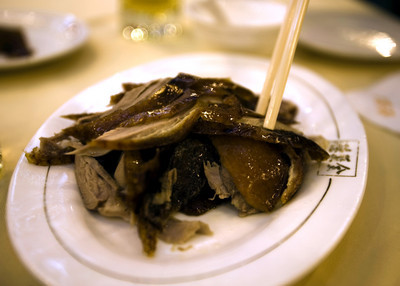
That evening, we ventured out for a taste of Beijing's gastronomical specialty, Peking duck. History has it that the dish was once confined to kitchens in the Forbidden City. The emperors of the Yuan dynasty first developed a taste for Peking duck in the 1200s, and it soon became a favorite of imperial families.
Through the years, cooks from all over China traveled to the capital to cook inside the palace walls. With the eventual fall of the Qing dynasty in 1911, court chefs left the Forbidden City to set up restaurants around Beijing.
One of the most famous restaurants was Quanjude, which was established in 1864 and became the first restaurant in the world to serve imperial roast duck to the common masses. The flagship restaurant was set up just south of Tiananmen Square, but there are a number of branches throughout the city.
We ate dinner at the Quanjude located in Wangfujing, Beijing's modern shopping district. The wide, pedestrian street is lined by shopping malls, department stores and souvenir shops. Branching out are whole side streets full of food stalls.
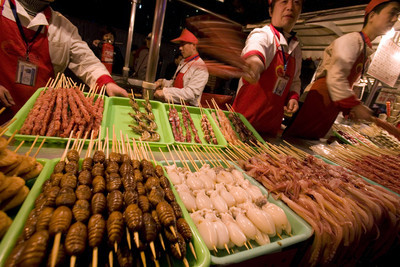
Quanjude wasn't open yet for dinner when we arrived, so we strolled through the nearby alleys that held the food stalls, where skewers of scorpions and seahorses stood out amidst more common Chinese fare.
When we returned, a crowd of about 30 people was waiting for the doors to open; when they did, there was a mad dash to get a table in the large, sterile dining room. Fortunately, we weren't one of the unlucky patrons who had to wait for the next round of table openings.
We ordered the half duck with sliced cucumbers, sauces and oriental pancakes. The duck, which was carved tableside, was an enticing blend of sweet, crispy skin and roasted meat. The duck was tasty, but it was the whole service production that made the experience memorable.
For our first full day in Beijing, we had made prior arrangements with Personal China Helpers for a private tour. American and British university teachers in Beijing and Shanghai formed Personal China Helpers to provide visitors with young English-speaking guides. Some of the "helpers" are actually certified tour guides, but many are university students who want to practice their English language skills.
Customers set up their own itineraries and, in addition to the $60 daily rate, pay for entrance and transportation fees, as well as any meals, for their helper.
Our guide, Lulu, met us in the hotel lobby promptly at 9 a.m., despite a two-hour bus ride to get from her home to our hotel. We started our tour at the sprawling Forbidden City.
From early 1400s to the early 1900s, this palace functioned as the administrative center of the country as well as being the residence of emperors and empresses of four dynasties. The largest and the best-preserved imperial palace complex in the world, it is surrounded by a 19-foot-deep moat and a 32-foot-high wall. It once had 9,999 rooms, but now there are only around 8,000 rooms.
In addition to the imperial family, the place was home to the emperor's concubines -- what we would call mistresses. Becoming a concubine might not seem like a very appealing career path, but successful concubines became extremely rich and were able to use their positions to promote the interests of their own families. By the mid-1600s, there were around 20,000 concubines, who were guarded by an equally obscene number of eunuchs (men who had been castrated) to ensure that they couldn't get pregnant by anybody except the emperor.
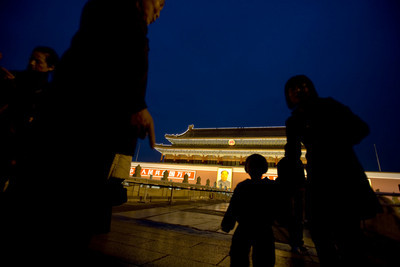
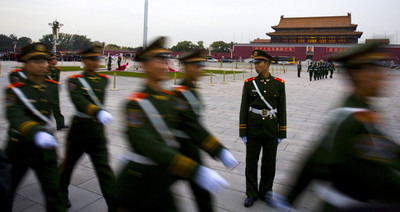
Across the south entrance of the Forbidden City is Tiananmen Square, the largest central city square in the world. This immense courtyard is the site of various historical events -- the most memorable for people of my generation are the protests of 1989. The entrances to Tiananmen Square are heavily guarded, and we found it odd during our first and subsequent visits that the only people who had their bags searched were Chinese.
From there we hailed a taxi and headed north to explore a hutong. In Beijing, hutongs are alleys formed by the lines of traditional courtyard residences that originated during the Yuan dynasty of 1271-1368. The word hutong is also used to refer to the neighborhoods formed when the compounds, or siheyuans, join together and produce many walled lanes.
There are still thousands of hutongs surrounding the Forbidden City, but the number is dropping as many are being demolished to make way for new roads and buildings. Recently, some hutongs have been designated as protected areas in an attempt to preserve this aspect of Chinese cultural history.
We set out to explore the maze of lanes that surround Houhai Lake, a popular nighttime hotspot because of the bars and restaurants that line the shore. Lulu was able to negotiate a deal with a couple of rickshaw drivers to ferry us around.
There are also many small retail outlets in the neighborhoods and we road past bakeries, liquor stores, jewelry and clothing shops, markets selling vegetables and everyday products, hair salons, bike repair shops and souvenir shops geared to tourists. In the residential area, red doors that are entrances to homes intermittently break the long, solid gray walls. The compounds behind the walls usually consist of a quadrangular courtyard and one-story buildings around it, which could house a few families.
After exploring the hutong, Lulu took us to a nearby dumpling restaurant for a typical Chinese lunch, giving us a chance to learn a little more about our guide. Like many Chinese people her age, Lulu prefers to listen to American entertainers; her favorite singers, however, are anything but typical: John Denver and Karen Carpenter. Lulu's English language skills will be put to good use in August, as she will be one of the volunteers aiding tourists and athletes during the Olympics.
That evening, we decided to return to the hutong for dinner at one of the restaurants along the lake. Unfortunately, we had no way to tell the non-English-speaking taxi driver where we wanted to go. Since few taxi drivers in Beijing speak English (a situation that is being addressed for the Olympics), most hotels print up business cards with the names of major tourism sites written in both English and Chinese.
I'm embarrassed to say that I resorted to that annoying American habit of repeating the words louder and louder in the hopes that my English would miraculously make sense to driver. It didn't, but my husband was able to direct us through the neighborhood to where we wanted to go.
After walking around the lake, we chose to eat at South Silk Road, Yunnan-style restaurant known for its spicy southwestern Chinese cuisine. The trendy place was packed with the upwardly mobile young Chinese and the floor-to-ceilings windows afforded great views of the lake.
The Great Wall of China tops most visitors' must-see lists and it was no different with us. There are a number of tours that travel to different parts of the Great Wall outside of Beijing. The Badaling and Mutianyu sections are closer to the city and, therefore, more crowded with tourists. We chose a tour with Compass Travel that featured a six-mile hike from Jinshanling to Simatai.
Compass Travel, which caters to budget travelers, picked us up at our hotel at 7 a.m. for the three-hour drive to Jinshanling. It was raining when our crowded minivan departed Beijing, but the skies had cleared by the time we arrived at our destination.
The Great Wall of China, a UNESCO World Heritage site, winds more than 4,000 miles through the mountains, deserts and grasslands of northwest China. With a history of more than 2,000 years, some of the sections of the great wall are now in ruins or even entirely disappeared.
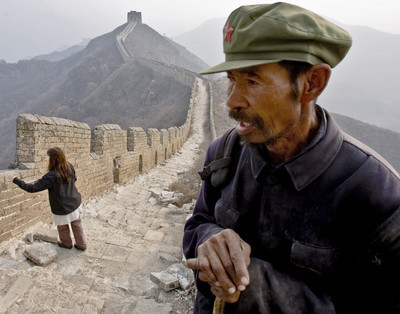
The Great Wall was built for protection; originally it was designed to keep Mongol nomads out of China. Now, women from Mongolia ply their trade on the Wall, hawking T-shirts and postcards.
The walk itself involved a lot of climbing as we moved from tower to tower along the ridgeline -- and there are more than 35 towers between Jinshanling and Simatai. The low peaks of the Jinshanling area offer an excellent vantage point to survey the surrounding terrain on both the northern Hebei region and the southern Beijing municipality region.
At the beginning of the hike, I tried to ignore the two Mongolian women who closely shadowed my husband and me. But after receiving many a helping hand every time I stumbled along the crumbling rocks, I began to appreciate their presence. When the women turned around about a mile from Simatai, they refused our offer of a tip, insisting we buy some merchandise. So now I am the proud owner of an "I hiked the Great Wall" T-shirt
The Wall started sloping downwards as we neared the Simatai valley area, where a reservoir was built in the mid-'70s. We clambered over the suspension bridge to the other side of the reservoir and climbed up the Wall to the exit point, which leads to Simatai, a small village with accommodations and dining.
As we headed back into the city, the skyline -- defined by ultrasleek high-rises -- came into view. As it readies itself as an Olympic stage, Beijing is in a headlong rush to modernize and redefine its image. But one wonders if these futuristic buildings will stand the test of time as well as the city's more historic sites.
ON THE WEB Click here to view a slide show of Beijing