Cerca: Discover your inner cowboy in Wickenburg, Ariz.

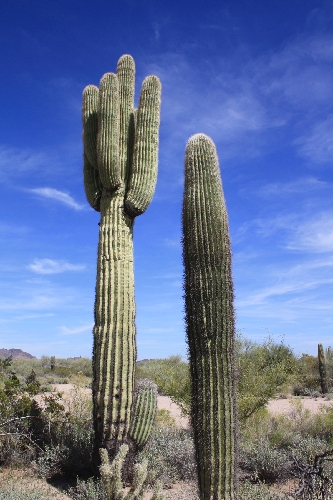





WICKENBURG, Ariz. -- Leaving the fast-paced lifestyle of Las Vegas behind, a friend and I headed south into the Sonoran Desert to Wickenburg. Our mission was simple: to spend a couple of days with dirt under our feet, fresh air in our nostrils and this distinctive desert landscape before our eyes.
Wickenburg's landscape looks and feels like the Old West. Arizona's oldest town north of Tucson, Wickenburg cherishes its frontier roots and taps into them to stake its claim as the Dude Ranch Capital of Arizona.
We weren't looking for mock shootouts, or even historically accurate re-enactments, but to get a feel of what it was like to live in the West when active mines dotted the landscape, people traveled on horseback and outdoorsmen could lose themselves in wide-open spaces.
We found it in Wickenburg. The town is named for Austrian immigrant Henry Wickenburg, who arrived in 1863 seeking a cure for his gold fever. He found it in a quartz outcropping that would later become the Vulture Mine and yield millions of dollars in gold.
Nowadays, of course, most visitors to Wickenburg are not seeking gold so much as an experience in the Golden West. They come from all over the world. And no matter what means of transportation brought them here, a great many will spend part of the trip on horseback in the rolling hills covered with saguaro, ocotillo and barrel cactus -- the quintessential plant life of the Sonoran landscape.
The classic way for a city person to satisfy the inner cowboy or cowgirl is to stay at one of Wickenburg's guest ranches -- what used to be called "dude ranches." The tradition is 100 years old, and today's ranches rarely specialize in making guests rough it.
Over the years, I've had the opportunity to stay at two guest ranches in Wickenburg, the Kay el Bar Ranch and the Rancho de los Caballeros. Both experiences were great -- and quite different. Kay el Bar was a smaller operation where you really got to know the staff and fellow guests. (Sadly, I recently learned that the owners don't plan to open this fall because of the poor economy.)
Rancho de los Caballeros is larger and more resortlike, with amenities that most ranches don't offer, such as a golf course, spa and tennis courts.
Once you settle into these guest ranches, it's hard to tear yourself away and take in Wickenburg's other attractions, but doing so for at least a day or two is well rewarding. A good start is a walking tour of the historic part of town.
We started by picking up a map at the Santa Fe Depot, which was built in 1895 and now serves as the town's visitor center. Until 2009, this area of town was quite congested with constant truck and car traffic, but the Wickenburg bypass makes walking around town safer and more pleasant.
More than 20 of the town's buildings are on the National Register of Historic Places.
As we walked around town, we also found interesting sculptures. There are six large bronze sculptures and 16 smaller pieces that feature wildlife such as Gila monsters, rattlesnakes, tarantulas and roadrunners. We found the famous Jail Tree, a 200-year-old mesquite, well used from 1863 to 1890 for chaining up bad guys.
Wickenburg's roots are full of cultural diversity. Seven generations of Hispanic families have lived here. The Vernetta Hotel, now called the Hassayampa Building, owes its existence to an African-American businesswoman named Elizabeth Smith, who hired a local architect to design the building, which was built in 1905 for overnight railroad passengers.
Desert Caballeros Western Museum focuses on the area's mining and cowboy history and also houses the Aiken W. Fisher Gallery of Western Art. The museum has a permanent collection of art by internationally known artists, including George Phippen and Frederic Remington.
We were enchanted with the vast collection of spurs, chaps, guns and even bolo ties. While some believe the braided, cordlike ties were made by American Indians as early as 1860s, a silversmith from Wickenburg makes the contrary claim of inventing and patenting it in the 1940s.
After our museum tour, we had the afternoon open for more exploring, so we headed south from the Rancho De Los Caballeros along a scenic road, about 10 miles to Vulture City and the Vulture Mine. Once home to more than 4,000 people, this is now a ghost town. Some of its former residents departed by being hanged from the old ironwood tree, which we found near Wickenburg's old home along our one-hour self-guided walking tour. Some say the town is haunted, but we didn't see anything unusual. The scariest part of our visit was the feeling that some old building might collapse on us, or at least drop a chunk of iron on our heads.
The ideal time for a Wickenburg vacation is now through April. In November, daily high temperatures average in the mid-70s, and even in the coldest months of December and January, things are quite enjoyable with averages in the upper 60s. Come February and March, average temperatures again rise into the 70s.
The town's Bluegrass Festival takes place Nov. 11 to 13. In its 32nd year, it's one of the oldest events of its kind in the Southwest and features the Four Corner states' championships for fiddle, flat-pick guitar, mandolin and banjo. Featured bands this year include Sonoran Dogs, Thomas Porter and Copper Creek and The Brombies. Besides great entertainment, the festival features food and drink concessions, arts and crafts and a designated Kids Zone.
Wickenburg's 23rd annual Cowboy Christmas Poetry Gathering runs Dec. 2 to 4. Besides poetry, the event offers songs and storytelling.
Wickenburg's largest annual event is Gold Rush Days, held in February and coming up on its 64th year. The event boasts one of the largest parades in Arizona. Cowboys come from around the country for the rodeo, and there are also plenty of child-friendly events. Gold Rush Days features a carnival, food booths, arts and crafts and contests in the old-time mining skills of hard-rock drilling and mucking. This year's celebration starts with a shootout on Frontier Street.
As long as you can avoid personal involvement in that shootout, it sounds like a good time to visit Wickenburg.
GETTING THERE
Location: Wickenburg, Ariz., about 234 miles from Las Vegas.
Directions: Take U.S. Highway 93 south for about 105 miles. Merge onto Interstate-40/U.S. 93 south and drive 22.4 miles. Merge onto U.S. 93 south via Exit 71 toward Phoenix and drive 107 miles to Wickenburg. Wickenburg Chamber of Commerce: 216 N. Frontier St., (928) 684-5479, wickenburgchamber.com
Guest Ranches: Rancho de los Caballeros, 1551 S. Vulture Mine Road, (800) 684-5030, SunC.com; Flying E Ranch, 2801 W. Wickenburg Way, (888) 684-2650, flyingeranch.com; Williams Family Ranch, Hassayampa Wilderness Area, (928) 308-0589, williamsfamilyranch.com.
Desert Caballeros Western Museum: Features one of the best collections of Western art in the country and one of the largest selections of historic cowboy memorabilia, 21 N. Frontier Street, Open Mondays-Saturdays 10 a.m.-5 p.m. Sundays noon-4 p.m.; closed on major holidays; (928) 684-2272; westernmuseum.org.
Robson's Arizona Mining World: This ghost town includes original mining cabins, replicas of old stores, a 200,000-pound collection of minerals and a variety of mining equipment; open Oct. 1-May 1, 10 a.m.-4 p.m. Mondays-Fridays, 9 a.m.-5 p.m. Saturdays-Sundays; about 30 minutes outside of Wickenburg on Highway 71; (928) 685-2609; robsonminingworld.com.