



CLOSE TO HOME



What the world obviously needs is a sort of culinary MySpace, because Bob Morris and Alex Stratta need to get together. Strictly platonically, of course, and all in the interests of those who dine in the city's restaurants.
Morris, a horticulture specialist with University of Nevada Cooperative Extension, is trying to help the small farmers in the Southern Nevada region connect with the city's chefs, with a goal of selling them their products.
Said Stratta, executive chef of Alex at Wynn Las Vegas, "I would be first in line. If they're growing it, I'm buying it."
Morris and Stratta are both part of and helping to drive the national trend toward chefs using local products whenever possible. Considering Southern Nevada's harsh desert climate and dearth of food-processing plants, it's quite a challenge to buy locally, with few products available.
"I would say tortillas," said Matthew Silverman, executive chef of Vintner Grill. "It's very few and far between."
As for produce, "I have yet to find anything here," Stratta said. "I even roam the farmers markets. Everything's coming from California."
"We try to deal as much with local purveyors as we can," said Andre Rochat, chef/owner of Andre's French Restaurant, Andre's at the Monte Carlo and Alize at the Palms. "The biggest problem is we see the small company disappearing."
Morris is trying to change that. He's working with about six local producers of "everything from natural beef and pheasants to vegetables and fruit" to develop their marketing plans.
"There's money to be made, and pretty good money," Morris said.
The movement here is young, but not without precedent. Only a few decades ago, farming was prevalent in the Moapa Valley and a few other parts of the region, although most of it has died out. But currently, Morris said, the Cooperative Extension Research Orchard in the northern part of the valley has 600 fruit trees and vines -- producing apples, pears, quince, persimmons, peaches, pomegranates, plums, apricots, table grapes, wine grapes and figs -- and already sells directly to Whole Foods Markets.
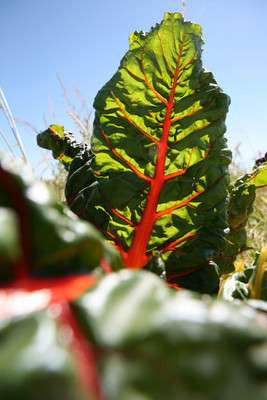
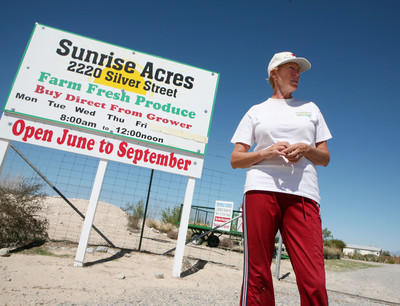
One of the producers working with Morris is Mary Balloqui, who with her husband owns Sunrise Acres in Pahrump. On the four acres she has under production -- with another to be added next season -- Balloqui specializes in a supersweet variety of cantaloupe that isn't generally found in supermarkets because it has a short shelf life. She also grows zucchini and crookneck squash, garlic and asparagus.
Balloqui said she sells to the Pahrump Valley Winery, has a contract with Whole Foods Markets for next season and has been in talks with Las Vegas chefs, including some at Caesars Palace. She noted the demand and interest from the chefs is "phenomenal, because they want locally grown produce that I pick in the morning and they serve by the evening.
"They only want field-grown crops in their season. They don't want tomatoes grown in greenhouses in the middle of the winter. They want them grown under the sun."
"The less it travels, the better it is," said Bryan Ogden, chef de cuisine at Bradley Ogden at Caesars Palace. "There's only a few things that get better after they're picked."
Ogden already is working with Penguin Produce in Sandy Valley, the owner of whom he said also is a blackjack dealer at Caesars. From Penguin he gets herbs, acorn and butternut squashes, greens and cilantro flowers -- "cool stuff you can't find."
Morris said Penguin Produce also has started to broker some of the other producers' goods to the chefs.
Balloqui said as her business develops, the chefs' requirements will grow more specific.
"They may want a certain size of melon, or color, or taste," she said. "Next year we're going to grow to suit their requirements."
It takes a couple of years to get such a relationship off the ground, said Stratta, who still buys from some of the Arizona growers he established relationships with while working in Phoenix more than a decade ago. "It takes a real commitment from the chefs. Either you grow a whole bunch of it, or you find a chef who will take whatever you grow."
Morris said most of the local operations are small, like Balloqui's. But she's not daunted by the prospect of supplying Strip chefs.
"The chefs will work with what I supply them," she said. "They're not going to demand quantity, but they're going to want quality."
"If somebody could get me some real good corn two weeks of the year, I'll take it," Stratta said, adding that he already buys from a woman in Hurricane, Utah, who plants in her backyard and whose "incredible turnips, spinach, sweet peas and tomatoes" are available only during a "really short season, basically one month in August."
"We don't have a lot of local stuff, so there's a big opportunity for people to do some small-scale production," Morris said. "There is a huge potential if they've got some property."
Not necessarily a lot of property, either. Morris said some crops can be grown on a half-acre or less. In the case of specialty garlic, he said, "you're looking at a very high income on a very small area."
Morris noted that water is always a concern in the Las Vegas Valley, but said it is to a lesser extent in other nearby valleys. And he said drip irrigation can be very effective on "high-value cash crops of a horticultural nature" -- vegetables and fruits, as opposed to agricultural crops such as grain or alfalfa.
All of which could pay off not only for growers but also for chefs -- and their customers.
"As a chef," Stratta said, "you want to undress your food as much as possible and have it really representative of what it really should taste like -- like biting into that unbelievable apple. The more locally you find your ingredients, the more you can do that."
Contact reporter Heidi Knapp Rinella at hrinella@reviewjournal.com or (702) 383-0474.


