Dude, where’s your car? Your phone parked it
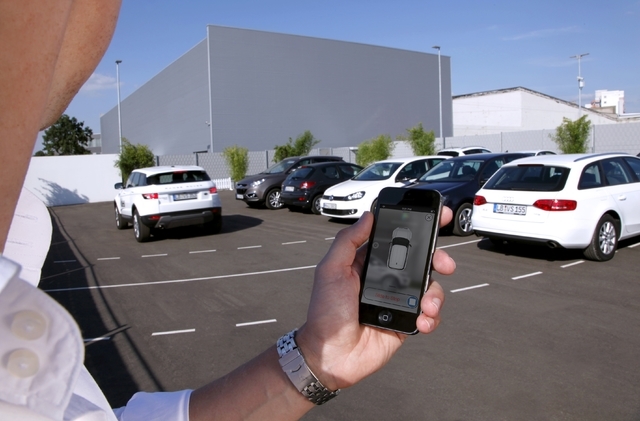




DETROIT — With a thumb swipe on a smartphone, your car one day will be able to drive into a parking deck, find an open spot and back into a space — all by itself.
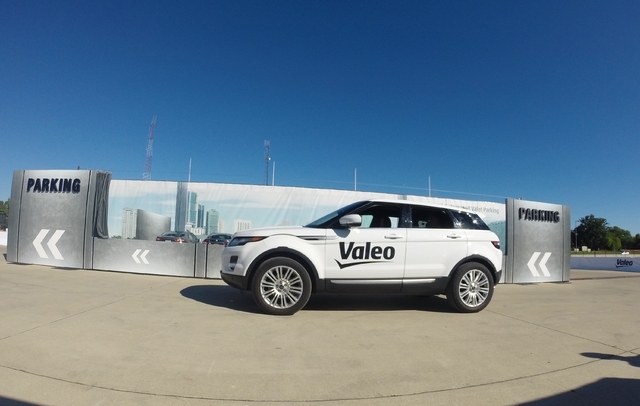
Technology being honed by French auto parts maker Valeo uses a dozen ultrasonic sound-wave sensors, 360-degree cameras and a laser scanner to safely park within a few centimeters of other vehicles. Then, when you’re done with dinner or a business meeting, the car will return to you after another swipe of the thumb.
The potential benefits are plenty. More orderly parking means less congestion. Drivers are spared the time and frustration of the hunt for a spot. Parking lots can squeeze more vehicles into limited space.
The fully-automated system called “Connected Automated Valet Parking” is still about a decade away, however. More states must permit driverless cars and regulations have to be crafted. Equipment needs to be rolled out.
Here’s how it works: Drivers approach their destination and the system finds a deck with an open space. The driver goes to the deck and activates the system. The deck then tells the car where the open space is. The sensors, cameras and laser activate, letting the car drive itself about 3 miles per hour, winding its way to the space and backing in. The system can even find a space on its own without a signal from a deck.
Here’s what’s likely within five years: The driver finds the space and the car then parks itself.