



Las Vegas dancer prepares for elite ballet competition
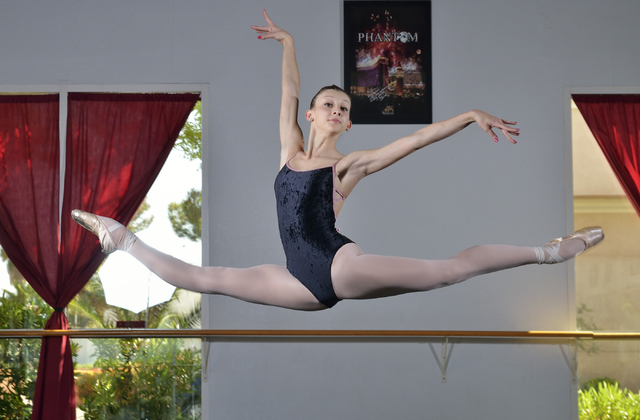
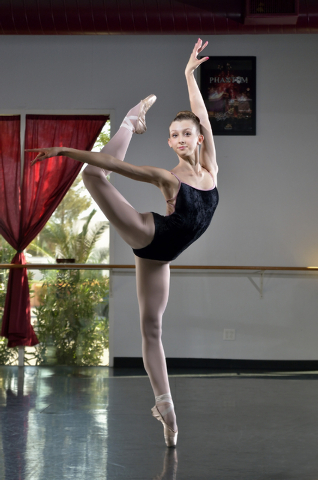
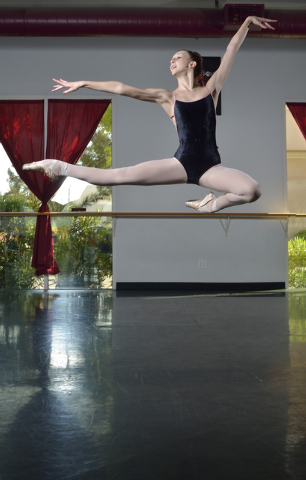
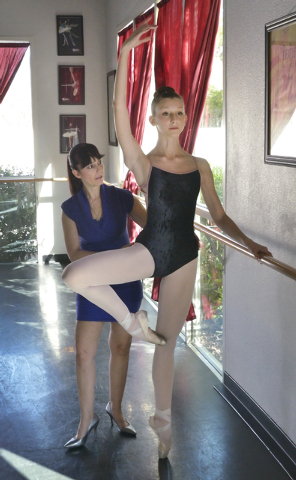
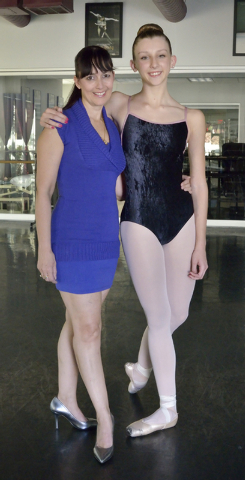


Seventeen-year-old ballerina Monika Haczkiewicz says she doesn’t get overly anxious before performing.
“I usually don’t get nervous,” she says. “I might get butterflies right before I go on. But then I get an adrenaline rush. It’s hard to tell you what is going on in your mind while you’re performing.”
Instead, she mentally reviews her routine and then goes for it.
“I always say I have nothing to lose,” she says. “I love performing for an audience. I love losing myself in the music. And so far, I haven’t ate it onstage yet.”
Far from it. Haczkiewicz will compete in the finals of the Youth America Grand Prix April 10-15 in New York City. The organization helps develop dancers from age 9 to 19 through education and performance opportunities.
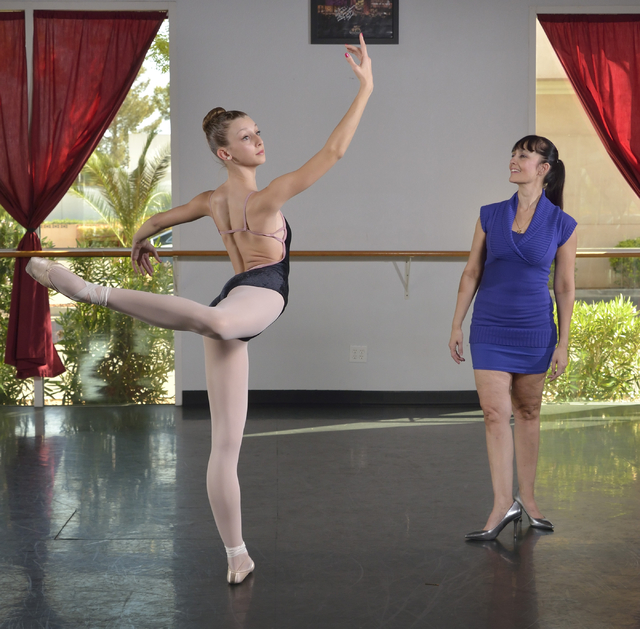
Haczkiewicz has been training with ballet instructor Tara Foy — a former dancer who now runs Elite Ballet — for two to three hours daily since she learned in February she will be going to the competition.
But this moment is a lifetime in the making.
Born of two Cirque du Soleil performers — her father is in “Mystere” and her mother is a former dancer who used to perform in “Mystere” — it was only natural for Haczkiewicz to become a dancer.
Haczkiewicz’s parents put her in ballet when she was 3.
“It doesn’t really count,” she says of the early years. “You learn a lot of technique and they teach you the moves.”
Haczkiewicz says it wasn’t until she was 10 and received her first pair of pointe shoes that she truly felt she was on the path to becoming a ballerina.
“My mom used to have a bunch of pointe shoes that I would sit and try on,” she says. “It was exciting to get my own pair.”
From that moment, she knew she wanted to be a professional ballerina.
The first few years after getting her shoes, she spent improving her technique. She would appear in performances and group numbers along the way.
Her first big role at 14 was a dream come true, she says, playing Clara in “The Nutcracker.”
“I felt I looked a little like her,” she says. “It made me feel more in the role.”
She continued to grow as a dancer and became a student at Las Vegas Academy.
Starting at 7 a.m. each weekday, she takes dance classes at school and then practices after school to further her talents.
One day in 2013, she ended up in a class with Foy. She went home and told her mother about the experience.
“I was talking about Ms. Tara and my mother asked me, ‘Wait, is that Tara Foy?’ ” Haczkiewicz recalls. “I said yes. Then she asked, ‘A British lady with long black hair?’ ”
What Haczkiewicz didn’t know was her mother had worked with Foy years ago when they both were dancers.
Haczkiewicz’s parents recommended she start studying with Foy to enhance her techniques.
When Haczkiewicz learned about the Youth America Grand Prix hosting its regional competition in Las Vegas, she was encouraged by Foy to compete.
“I’ve always wanted to send a student to the Youth America Grand Prix,” Foy says. “No matter what happens, it is great for her resume.”
This isn’t Haczkiewicz’s first competition experience. As a 14-year-old she entered a competition in California and finished in the top 12.
After more years of honing her technique, she’s ready to try again.
“I knew if we were going to audition, we were going to do it right,” Foy says. “We worked to bring it to the next level.”
They have been training since August to prepare two dances from the ballet productions “Don Quixote” and “Giselle.”
“I wanted her to choose two different solos,” Foy says. “I wanted to show her diversity.”
She says dancers who can show they are ready to take on multiple roles have a better chance of going farther in the industry.
The Youth America Grand Prix semifinals took place in February.
“I thought I did really good on one solo,” she says. “The other one, I thought I could have done better. I was confident that it was still good.”
She didn’t let herself dwell on it nor did she get her hopes up. Haczkiewicz landed in the top 12 again.
“From there, they announce the top three,” she says. “I heard them call No. 3 and didn’t think anything of it.”
As she gazed into the audience, she saw her parents, sister and Foy. When they began screaming in excitement as the name for No. 2 was announced, she realized it was her name.
“They were going crazy,” she says.
Foy wasn’t surprised by her achievement.
“Were there other dancers who were just as good? Sure,” Foy says. “But (Haczkiewicz) wanted it more. She was hungry for it.”
Next week, they will travel to New York to prepare for the finals.
“I’m honestly not going for the competition,” she says. “I’m going as an audition because a lot of dance companies will be out there scouting for girls.”
Her dream job is to work for a company such as American Pacific Ballet Company.
If she gets picked, she would finish school online — she has a year left at Las Vegas Academy — so she could join a professional company.
She would love to play iconic ballet roles in productions of “Swan Lake” or “Giselle.”
“Swan Lake is so beautiful and so tragic,” she says. “It’s hard not to fall in love with it. I watch it on YouTube all the time. I look at (the dancer) and always think, ‘I just want to be you.’ ”
But first things first — compete in New York.
She will face off against dancers from around the world.
“There will be dancers from Russia, France, Japan, South America,” Foy says. “The competition is going to be fierce.”
But if Haczkiewicz is going to experience nervousness, Foy says now is the time to do it.
“Because once we get on the plane, we are all smiles,” she says. “You never know who is watching.”
Contact reporter Michael Lyle at mlyle@reviewjournal.com or 702-387-5201. Follow @mjlyle on Twitter.


