



New Neighbors



Nancy Alamo remembers Hispanic students still were "few and far between" during her student days at Chaparral High School in the 1980s.
"I remember when you could count the number of Hispanics, literally, on one hand," says Alamo, whose parents came to Nevada from Cuba during the '60s. "And most of us were related. I always make that joke."
Alamo saw no Spanish-language billboards while growing up here and relatively few markets or businesses that catered to the valley's sparse Hispanic population. Nobody spoke Spanish, she says, and "none of my friends were Hispanic."
"Honestly, it was difficult," Alamo admits. "You were always caught between two worlds. You were too Hispanic to be American and too American to be Hispanic."
Now, fast-forward a couple of decades, and Southern Nevada has become, if not a melting pot, at least a multi-ingredient stew of cultures.
And, considering the growth of the Hispanic community here, let's call that metaphorical multicultural entree a tasty bowl of menudo.
Today, says Otto Merida, president and chief executive officer of the Latin Chamber of Commerce, any Southern Nevadan would "have to be blind not to see the tremendous growth of Hispanics in Southern Nevada."
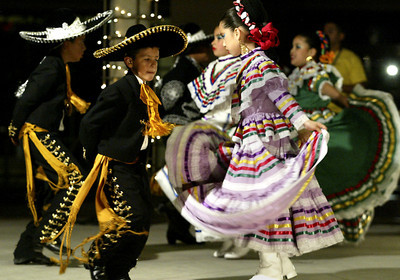
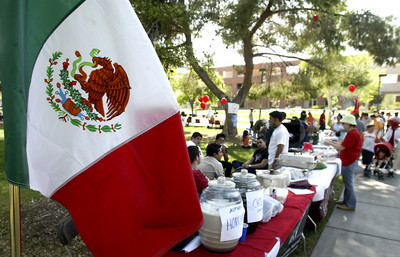
This weekend's Cinco de Mayo celebrations highlight that reality. But, every day of the year, the influence of the valley's Hispanic community is visible in everything from the bilingual answering machine messages used by valley businesses to the extensive menu of Hispanic-flavored groceries and restaurants found in just about every part of the city.
Alamo, now an administrator with the Clark County School District, admits it wasn't until she left town to attend college in Los Angeles that she reconnected with her Hispanic heritage.
At Loyola Marymount University, the Hispanic presence was predominantly Mexican, she recalls, but "even though it was a different culture, it was Hispanic, and it really made me realize how isolated I was here from the whole culture."
But, today, Alamo feels right at home in Southern Nevada.
THE COMMUNITY
According to the 2008 Las Vegas Perspective, Hispanics make up about 26 percent of Southern Nevada's population. That continues a marked upward trend from 2001, when Hispanics represented about 15 percent of the valley's population.
A Hispanic community has existed in Southern Nevada probably since the region's settling. However, Merida pegs the beginning of the Hispanic community's boom times in the early '90s, when the Strip's megaresort construction trend kicked off and offered jobs to new immigrants.
But the numbers can be tricky, in part because most surveys hinge on respondents' self-identifying their ethnic backgrounds and don't necessarily include undocumented immigrants. And, the definition of "Hispanic" -- or "Latino," often used interchangeably with "Hispanic" -- can vary widely, encompassing, for instance, people from Mexico, Cuba, Puerto Rico, and Central and South America.
Christie Batson, an assistant professor of sociology at the University of Nevada, Las Vegas who currently is studying Mexican women who work in the hotel industry, said research indicates that about 74 percent of Clark County's Hispanic population is of Mexican descent, followed by Cubans at 4 percent, and Puerto Ricans and Salvadorans, both at 2.5 percent.
Whatever their backgrounds or places of origin, Batson adds, all "have the American dream that we all have. They want to own a home and they want to own a car and they want to have a good job and they want their kids to go to school and graduate and be more successful than they were."
And, along the way, these waves of Hispanic immigrants are changing the face of daily life in Southern Nevada.
BUSINESS
Batson notes that Las Vegas is a gateway city for many Hispanics, particularly those moving here from Mexico. Here, she explains, relatively well-paying jobs can be obtained by relatively low-skilled people who don't speak English as their primary language.
"I think Las Vegas has always been a good place to get work, a good place for people to get jobs in the service industry -- hotels and so forth," agrees Merida, who moved here in 1974, a time when there were "maybe 30,000" Hispanics in the valley.
In Southern Nevada, waves of newly arrived Hispanic people have "been able to find jobs, been able to take care of their wives and families, been able to become cooks and kitchen helpers, and been able to move up," he says.
Pilar Weiss, political director of Culinary Local 226, estimates that 45 percent of the union's membership is Hispanic. Yet, Batson says, sometimes "we're just oblivious to the fact that if you were at the buffet at Bellagio last night, probably 95 percent of the workers that cooked that food were Hispanic to some degree. We don't think of that. We don't think about all of the impacts."
Interesting, too, says Keith Schwer, director of the Center for Business and Economic Research at UNLV, is that today's Hispanic immigrants are relatively young. And, as they move into Southern Nevada and raise families, they become consumers for other businesses in the valley for "the things that families would buy -- kids going through shoes and T-shirts and all of those kinds of things."
However, a recent downturn in residential housing construction, higher prices for such daily necessities as gasoline and a generally flattening economy have put a crimp in the valley's Hispanic in-migration.
Merida knows of people who have returned home to Mexico or moved elsewhere throughout the Southwest in search of jobs or job stability. "And I think, too, if you look at many local restaurants -- Mexican and Cuban restaurants -- you can see many restaurants that are basically catering to the Hispanic community are suffering, and many of them are reporting doing, maybe, half of what they used to do on a weekly or daily basis," he says.
Yet, Merida sees reason for continuing optimism, too. For example, he says he knows of a Hispanic-owned bank scheduled to open in the coming months. And, he says, the scheduled opening of several resorts bodes well for Hispanic employment, too
EDUCATION
The growth of the valley's Hispanic population also can be seen in any Clark County public school classroom.
Norberta Anderson, director of the Clark County School District's English Language Learners department, says Hispanic students make up 39.9 percent of the district's enrollment, making Hispanics, in effect, the district's majority minority.
It also means the district's teachers are seeing in their classrooms more and more Hispanic kids who don't speak English as their primary language.
(According to the 2000 U.S. Census, about 27 percent of Las Vegans ages 5 and older lived in households where languages other than English were spoken at home.)
Anderson says about 105 languages are represented in the district's English Language Learners program, but that Spanish is by far the most common. According to Anderson, Spanish is the primary language for about 87 percent of the district's English Language Learners students.
But, Anderson says -- and, perhaps, contrary to what many Southern Nevadans would assume -- about 73 percent of the district's English Language Learners students were born and raised in the United States, while 17 percent were born in Mexico.
So, teachers are being challenged to teach children who might not understand some or all of what they're saying. Toward that end, Anderson says, the district offers teachers professional development programs through which they can learn techniques for communicating more effectively with kids.
Increasingly, teachers also are earning formal teaching English as a second language endorsements. While earning such certification isn't required for teachers, doing so would be a wise move for any aspiring teacher who wishes to teach in the district.
"I wouldn't say it would ever become mandatory," Anderson says, but it's "highly suggested" and can make a teacher more marketable not only here, but throughout the country.
The district also has designated several schools as bilingual facilities where instruction is given to all students in English and another language, Anderson notes.
Meanwhile, the district is increasing its efforts to recruit bilingual teachers, primarily Spanish-speaking ones to serve its Hispanic students.
"We do extensive recruitment across the country and do travel to highly Hispanic areas in order to be able to recruit bilingual teachers," says Byron Green, director of recruitment for the district.
Alamo -- who serves with Green as director of recruitment -- notes, too, that the growth of the district's Hispanic student population can be seen in a baccalaureate program sponsored by the Hispanic Educators Association of Nevada.
The first year's program, in 1987, honored 27 Hispanic grads, Alamo says. Last year, about 1,200 graduating seniors were honored, while this year's program is expected to include 1,300 to 1,500 graduating seniors.
Melissa Jaramillo, a 2003 graduate of Sierra Vista High School, says she never felt culturally isolated during her school days, primarily because Hispanic enrollment had grown so much by then.
That same trend probably proves true in Southern Nevada in general, adds Jaramillo, 23, who now teaches second grade at Paradise Professional Development School. "I think Las Vegas is very diverse. And I think everyone here is from someplace else, so I think any kind of culture is accepted and celebrated."
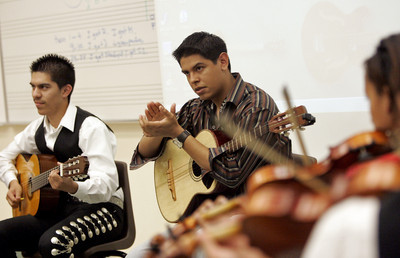
The growth of the school district's Hispanic student body also can be seen in such programs as the mariachi music program at Rancho High School. Just as with marching band, students can obtain credit for performing in Rancho's mariachi band.
About 98 students have signed up for Mariachi I class in the fall, while 50 have signed up for Mariachi II and 14 for Mariachi III, according to Al Pappalardo, Rancho assistant principal.
And, Pappalardo says, enrollment numbers also may support a beginning mariachi program, "where students that want to become involved would learn the instruments and music. So it has expanded."
CULTURE
The Hispanic community's growth also has altered the city's cultural scene, from giving area foodies more dining options to enabling Southern Nevadans to attend fairs and festivals that a smaller Hispanic population couldn't have supported just a couple of decades ago.
Both the Clark County Parks and Recreation Department and Las Vegas Department of Leisure Services offer a wide-ranging slate of concerts, fairs and exhibitions of interest not only to the Hispanic community but to multiculturally minded Southern Nevadans in general.
Candy Rutledge, senior program administrator for the Clark County Parks and Recreation Department, says popular offerings include Fiestas Patrias -- Mexico's patriotic festivals -- and November's Day of the Dead celebration, both of which have been presented for about three years.
Last year, Rutledge says, Fiestas Patrias brought about 17,000 people to Sunset Park, while the Day of the Dead festival attracted about 5,000 over three days.
The city of Las Vegas' East Las Vegas Community/Senior Center was designed with its largely Hispanic neighborhood in mind, from the Spanish-styled architecture of the facility itself to the programming offered inside it.
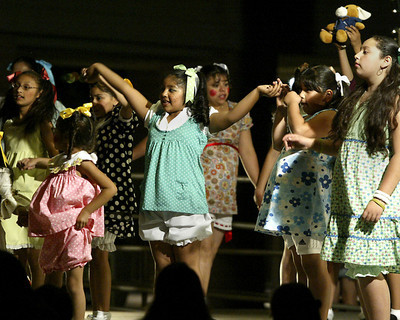
Among the center's offerings are film series that include Spanish-language discussions after a film's showing, says Leisure Services spokeswoman Kelly Schwarz. The center also regularly serves as a performance space for Hispanic-centric bands, dances, classes and activities.
"One of the things we kind of looked into as far as what programming we do is, we know the Hispanic community is very family-oriented," Schwarz says. "So, we try to offer more programs that include all family members, whether it's daddy-daughter dances or family dances. And that's just something we've learned by doing our business."
The Las Vegas-Clark County Library District also increasingly is seeking ways to serve its Hispanic patrons. According to Jan Passo, the district's collection development director, the district this year has allocated about $400,000 -- about 75 percent of its total international language acquisitions budget -- on Spanish-language materials.
Those materials range from study guides, books and periodicals in Spanish, to fotonovelas -- paperbacks that, Passo says, are "very popular" -- and even Spanish language databases.
Then, the district tracks the circulation of such materials to place them in branches where they'd reach the most Hispanic community members.
The library district's outreach to the Hispanic community also includes such efforts as organizing Hispanic Heritage Month programs each fall, and even to offering bilingual children's story hours at the Clark County Library.
And, along the way, the library system's outreach works in reverse, as other members of the community are exposed to a Hispanic community they may or may not even realize is here.
That, Passo notes, "goes back to what we are all about: exploring the diversity of the community."
In fact, one beneficial ripple effect of the Hispanic community's growth has been a Southern Nevada that, Alamo says, is largely welcoming.
Alamo remembers a high school friend's parent who called her mother "and said her daughter wasn't allowed to be friends with me because they weren't allowed to hang out with 'those type' of kids."
Today, Alamo says, "it's a different mind-set. The population has grown so exponentially that there's more acceptance of (the community)."
Contact reporter John Przybys at jprzybys@reviewjournal.com or 702-383-0280.


