Vegas Valley Book Festival unites readers, writers



Family relationships. Food. Notable Las Vegans and local history. Storytelling for kids.
Oh, and zombies. Don't forget the zombies, because nobody can ever say that the Vegas Valley Book Festival doesn't give Southern Nevada bibliophiles everything their imaginations might crave.
Southern Nevada's celebration of all things bookish celebrates its 10th anniversary this week with a series of readings, workshops and activities that begins Thursday and runs through Nov. 6.
The festival will feature panel discussions -- many of them with Vegas-centric themes -- workshops, performances and events, all created with local readers and writers in mind.
Festival chairman Richard Hooker said that, during the past five years, the festival (whose producing partners include the Las Vegas Review-Journal) has increased its roster of offerings, doubled its attendance -- about 10,000 are expected this year -- and enlisted the participation of an ever-growing contingent of local writers.
This year, Hooker said, "I'm happy to say 70 percent of our authors are local. It really has become a platform for the local literary community."
This year's festival consists of three parts: the main festival, a children's and young adult festival, and a comic book festival. Most events will take place at the Historic Fifth Street School, 401 S. Fourth St., in downtown Las Vegas, although some are scheduled for venues that include the Clark County Library, 1401 E. Flamingo Road.
The second "Feasting on Words: The Literature and Food Fair" is scheduled from 11 a.m. to 3 p.m. Nov. 6 at the Historic Fifth Street School. That event will feature panel discussions and workshops, as well as tastings offered by valley chefs for a $10 fee. Proceeds go to Three Square food bank.
With the festival, "I think what we have done is really create a kind of one-stop shopping for literature," Hooker said.
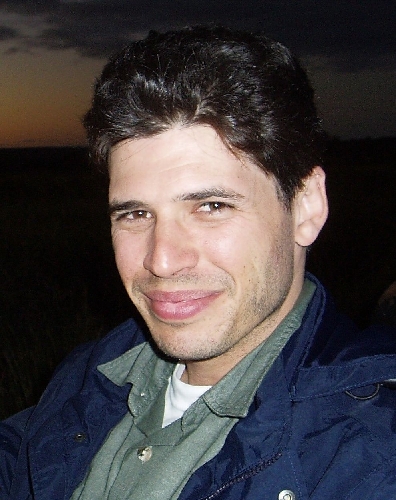
Max Brooks will present the festival's first keynote address, "An Evening with Max Brooks: How to Survive a Zombie Attack," at 7 p.m. Thursday at the Clark County Library's Main Theater.
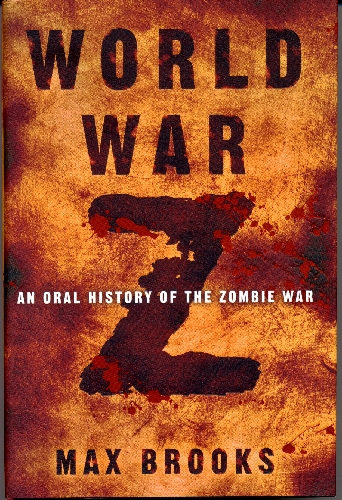
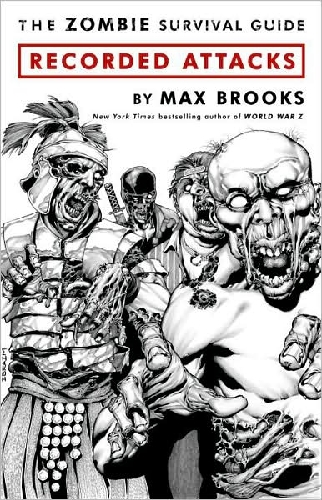
Through his best-sellers "The Zombie Survival Guide" (2003) and "World War Z: An Oral History of the Zombie War" (2006)," Brooks helped to ignite American pop culture's current fascination with the undead.
"I didn't even think the (first) book would be published," Brooks said during a recent phone interview. "I wrote it just for me. It was a passion project back in the late '90s because of the Y2K scare."
And also, Brooks admitted, because "I was just a zombie nerd."
"When I was 13, when my parents" -- you'd know them as Mel Brooks and Anne Bancroft -- "went out to dinner, I was flipping channels, trying to see boobies, because what else do you want to see when you're 13, and I ended up seeing this Italian zombie movie," Brooks recalled. "And it scared the crap out of me."
What's behind America's fascination with zombies? Consider it a function of the times.
"The last time zombies were this popular was during the 1970s, when they had all the problems we have today," Brooks noted, including a bitter cultural divide and political partisanship, economic crises, environmental problems and international terrorism.
Zombies, Brooks said, are "sort of a safe way for us to kind of experience the apocalypse, because you can just tell yourself, 'Oh, it's just a zombie,' and you can close the book or turn off the TV and you can still sleep at night."
Yet, zombies aren't about just imaginary thrills. In 2009, Brooks lectured at the U.S. Naval War College about zombies as a metaphor for national security threats.
Imagine how a zombie invasion might affect public health, transportation, the economy and other taken-for-granted institutions of daily life. Then, Brooks said, "if you take out the zombies, you still have a very real scenario of how global systems can collapse.
"People ask me, 'Do you have a zombie preparedness kit?' I'm, like, 'Yeah, it's my earthquake preparedness kit. It's exactly the same stuff -- bottled water, medical kit, a flashlight.
"So the funny thing is, all these kids who log onto ... my website or read my books, they don't realize they're preparing for another Hurricane Katrina."
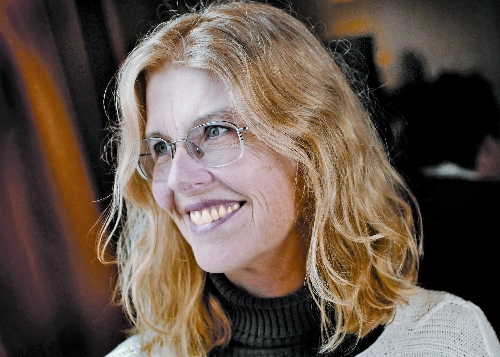
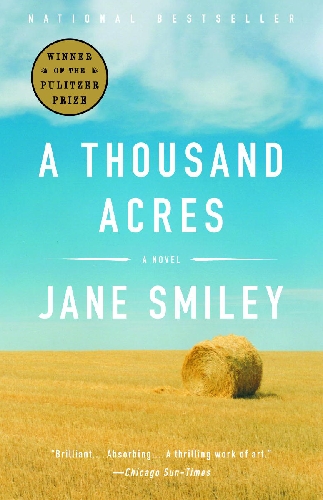
At 3:30 p.m. Saturday, Pulitzer prize-winning novelist Jane Smiley will present the festival's second keynote speech at the Historic Fifth Street School auditorium.
Smiley's latest novel, "Private Life," explores a woman's marriage to a very unusual man from just before the turn of the century to World War II with characters based, in part, on a few of her own relatives.
Smiley has written comic novels, reimagined "King Lear" on an Iowa farm, written children's books about horses and written commentaries. She even wrote a script for the TV series "Homicide: Life on the Street."
But, Smiley said during a phone interview, this diversity of work grows out of a simple dynamic.
"It's just that I get interested in things and hope for the best," she said. "I haven't a master plan.
"My reading interests are very diverse, so my writing interests sort of follow my reading interests."
Is there any literary form she attempted but abandoned because, perhaps, it just wasn't for her?
"No, because each form is interesting in and of itself," Smiley answered. Each "also presents a puzzle, so it's enjoyable to try to solve that kind of new puzzle that you haven't solved before."
"That doesn't mean that all forms are equally pleasurable to write. I mean, comic novels are fun to write because you're laughing. You're telling the jokes you like best," she said. "Probably sad novels are harder to write, for me, because you have to be in that state of mind for an extended period of time. But, even so, they present a kind of catharsis to the author as well, so they're very odd, at least retrospectively."
Smiley's latest work is "based on real family members I never knew," including a man who, in the novel, might be a genius or might be just crazy. Either way, she said, he's "kind of a characteristic American" who's interested in "nothing but the largest," be it the largest idea, the largest philosophical question or, even, the largest pile of wealth.
"We see those guys all the time, so the question that arises for not only their wives but also the people around them is: Is this guy crazy? And, even more important: Does this guy's ambition hurt anyone else? Is he a megalomaniac? Is he a genius? Does he have to be controlled or channeled in some way? So these are issues that come up for his wife."
In that way, "Private Life" is a uniquely American story because, Smiley said, "American stories are always about grand efforts, whether or not they're doomed or whether or not they succeed."
Contact reporter John Przybys at jprzybys@ review journal.com or 702-383-0280.
FESTIVAL SCHEDULE
The Vegas Valley Book Festival runs Thursday through Nov. 6 mostly at and around the Historic Fifth Street School, 401 S. Fourth St.
All events but Sunday's tasting are free and open to the public. The tasting from local chefs includes a $10 donation that benefits the Three Square food program.
A complete schedule of festival events can be found at the festival website (vegasvalleybook festival.org). That site also offers details about parking and the festival in general.
Here are some festival highlights:
THURSDAY
7 p.m. -- "An Evening with Max Brooks: How to Survive a Zombie Attack," Clark County Library Main Theater, 1401 E. Flamingo Road
FRIDAY
7:30 p.m. -- "Nevada Humanities Salon: An Evening with Poet Martin Espada," Winchester Cultural Center, 3130 McLeod Drive
SATURDAY
9 a.m. -- "Las Vegas Selects: Writing for Today's Reader: Favorite Authors Discuss Their Work," Historic Fifth Street School, 401 S. Fourth St., Young Adult Festival Plaza. "Getting Started in Travel Writing," Historic Fifth Street School, Meeting Room 170. "Children's Books: To Entertain, Educate and Enlighten," Historic Fifth Street School Auditorium
10 a.m. -- "How to Draw Star Wars Characters," Clark County Library Large Conference Room
10 a.m. - 4 p.m. -- second annual Artist Jam, Clark County Library, 1401 E. Flamingo Road (theater lobby)
10:15 a.m. -- "Casino Women/Courage in Unexpected Places," Historic Fifth Street School Auditorium. "What's Your Story? Keeping Important Details in Memoir Writing and Letting Go of the Rest," Historic Fifth Street School, Meeting Room 170. "What's Hot For Teens In Fantasy and Paranormal Fiction?" Historic Fifth Street School, Young Adult Festival Plaza.
11 a.m. -- Entertainer Aaron Nigel Smith, Historic Fifth Street School, Centennial Plaza Main Children's Stage
11:25 a.m. -- "Contemporary Teen Fiction: The Dark and the Light," Historic Fifth Street School, Young Adult Festival Plaza
11:30 a.m. -- "Can't Somebody Get Vegas Right? The Truth (and Fiction) about Las Vegas," Historic Fifth Street School Auditorium. "The Craft of Poetry Workshop," Historic Fifth Street School, Meeting Room 170.
12:25 p.m. -- "Young Adult: Blending Realistic Fiction with Fantasy," Historic Fifth Street School, Young Adult Festival Plaza. "The Good Old, Bad Old Days: Perspectives on Las Vegas Nostalgia," Historic Fifth Street School Auditorium. "Writing Realistic Sci-Fi and Fantasy Workshop," Historic Fifth Street School, Meeting Room 170.
1 p.m. -- "All Ages -- It's Not Just for Kiddies Anymore!" Clark County Library Large Conference Room
1:55 p.m. -- Entertainer Aaron Nigel Smith, Historic Fifth Street School, Centennial Plaza Main Children's Stage
2 p.m. -- "The Craft of Short Fiction Workshop," Historic Fifth Street School, Meeting Room 170. "Kirby Krackle in Concert," Clark County Library Main Theater
2:30 p.m. -- "Married With Comics," Clark County Library Large Conference Room
3 p.m. -- Crystal Bookmark Award Presentation, Historic Fifth Street School Auditorium
3:30 p.m. -- "An Afternoon with Jane Smiley," Historic Fifth Street School Auditorium
7 p.m. -- Young Adult: Paranormal Ball, Historic Fifth Street School Auditorium
NOV. 6
11 a.m. -- "Eating Locally in the Desert," Historic Fifth Street School Auditorium
Noon -- "Las Vegas Chefs at the Community Grill: A Culinary Adventure," hosted by chef Rick Moonen, Historic Fifth Street School, Centennial Plaza
12:30 p.m. -- "Blogging for Food Lovers," Historic Fifth Street School, Meeting Room 170. "Feed Me Bubbe: Recipes and Wisdom from America's Favorite Online Grandmother," Historic Fifth Street School, Conference Room 140
2 p.m. -- "Eating Tomorrow -- What's New for 2012 and Beyond," Historic Fifth Street School Auditorium