



WRITING WHAT HE KNOWS





There's something about Las Vegas that writers of fiction find irresistible. The only problem is that so much of what they produce veers into cliched extremes of either gee-whiz amazement or irredeemable despondency, failing to capture what's unique -- and, just as important, what's normal -- about life in Southern Nevada.
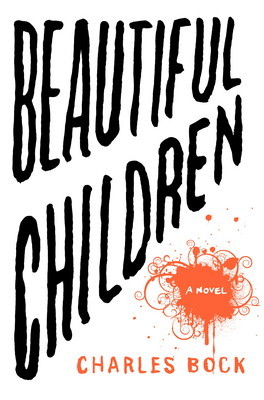
Charles Bock was born and raised here, and he has read many of the words others have written about his hometown. Now, Bock has added his own voice to Las Vegas' literary canon with "Beautiful Children," (Random House, $25), in which the story of a 12-year-old Las Vegas boy who goes missing is interwoven with the lives of a series of possibly disconnected residents and visitors, including a stripper, a group of runaways, a shy young artist and a comic book illustrator in town for a weekend of revelry.
In crafting his debut novel, Bock was able to draw upon a resource other Vegas-smitten writers can't: his own childhood and youth.
"I was born in Women's Hospital in Las Vegas," Bock, 38, said during a recent telephone interview from his New York City home. "It was on Flamingo or Tropicana. And what's weird is, I can still see it in my mind's eye."
As a kid, Bock didn't think growing up in Las Vegas was something anybody else would find unusual. "It was my childhood. You don't know it's strange," he says. "When relatives or someone we knew from out of town with children would come to town, we'd all go to Circus Circus."
Another thing Bock didn't find unusual as a kid was his parents' occupation: They owned and operated pawnshops -- they still do -- where Bock often would help out, witnessing firsthand the human dramas that would play out there daily.
"That's something that, in terms of my little personal narrative, is really important," Bock says. He laughs. "I can see it's going to become part of my meta-narrative. If I continue to be a successful author and write other really good books, this will be part of the story. And, really, it should."
"What I try to do is write about forgotten people," Bock says, "and, in a certain sense, we're all forgotten.
"I've always been less interested in the person on the top of the Bellagio than I am at the person whose house got moved to create the Bellagio."
Bock wasn't a particularly literature-minded person during his years at Clark High School. "I remember, even in college, reading Cliffs Notes about a book and thinking to myself: 'Geez, that sounds like a good book. I should probably read it,' " he says.
Yet, in retrospect, Bock did show what seemed to be an early sign of promise, recalling what he says were his "two big moments" at Clark.
"One was, like, a pencil got stuck in my head in class," he says with a laugh. "A kid threw it, and I turned around. And it got stuck in my head.
"But the other was, I was in 12th grade, and we always got a free write in English. It was a creative essay where you automatically got an A. Whatever anyone wrote and handed in, they got an A for it."
Bock wrote a paper about flatulence -- "The subject matter was crude," Bock says, but he remembers the essay being "very sophisticated in the kinds of humor it used." -- that was a hit among fellow students.
"I do remember kids I did not know or had a passing acquaintance with coming up to me in the hall and saying: 'I heard what you did. That was genius. I heard the whole class just doubled over with laughter,' " he says.
After high school, Bock attended Whittier College, where his writing talent earned him the chance to present a speech at commencement. After graduation, he spent a few years selling clothing at a rock 'n' roll boutique in Los Angeles and then two years working as a sportswriter in Biloxi, Miss.
But, in the evenings, Bock wrote. He'd begun to devour serious fiction after college, realizing, he says, that reading is vital to anybody who's seeking to figure out "how to move through this world and this life."
"To me, fiction is the single best way there is -- to me it's the most profound way -- of dealing with questions that have no answers." Bock says.
And, Bock had come to realize that "I had stories inside of me, and that I wanted to work with language in a way that would allow me to tell them really well. That lit a fire beneath me. The idea of a professional life, the idea of wealth, none of that mattered to me as much."
Bock spent almost 10 years writing what would become "Beautiful Children."
"I did teach fiction, and I (did) third-shift legal proofreading," he says. "I did some ghostwriting. I did as little as possible to create pockets of time to write. The truth is, when it comes to writing, you can do it quickly or you can do it right."
Actually, Bock says, the novel began as a "really bad short story" in grad school, and marked "the first thing I ever tried to do about Las Vegas.
"It was 12 or 15 pages and every sentence was packed with too much detail, but there was something there," Bock says, "So I tried lengthening it, and that meant unpacking the sentences and turning those details into sentences of their own. So it went from a bad short story to a really bad long short story, and then to a novel."
Bock wrote four major drafts of the book. With each go-around, he says, "you figure out what the problems are and go back and, in the process, your understanding of the characters and the story and the language and what's really more important and less important evolves."
Bock knows he's dealing with a literary setting limned by others with varying degrees of skill and veracity.
"I could talk to you about all these other books until your brain exploded," he says. "But, that having been said, there hadn't been, I didn't think, a book that dealt with Las Vegas in the way that I knew it."
Along with the usual run of characters seen in popular culture, he says, are "all these people who keep the city going and who do have very human emotions and who raise kids and who work and who try to make their way through life."
"In addition, I tried to tell a story about people that I hope the reader will care about and think about after the book is over," Bock says, "and that ranges from the parents of the boy who goes missing to people who we normally cross the street to avoid."
Until now, Bock adds, "I was conscious of the fact that no one had gotten it right. I don't know if I did."
But, he says, "I think I gave it a pretty damn good run."
Contact reporter John Przybys at jprzybys@reviewjournal.com or (702) 383-0280.


