Study: Many women unaware of common breast cancer risk factor




When it comes to cancer prevention, early detection and regular screenings are essential. It’s also important to educate yourself on risk factors and know what to look for.
According to a recent study, many women are unaware of the fact that having dense breasts increases their chances of developing breast cancer. In fact, it increases a person’s risk by one to four times.
More than 2,300 women were surveyed and interviewed regarding their perception of dense breasts as a risk factor for breast cancer. They were also asked if having dense breasts puts you at greater risk compared with having a family history of breast cancer, and what can help lower a person’s risk of developing breast cancer.
Results of the study, published in January in JAMA Network Open, showed that women believe family history is the greatest risk factor, and few believed breast density increased the risk of developing breast cancer.
Given this lack of awareness, study authors noted that “comprehensive education about breast cancer risks and prevention strategies is needed.”
Why density raises risk
Breasts are composed of fibroglandular tissue (milk ducts, lobules and connective tissue) and fat. Breast density is used to describe the amount of fibroglandular tissue a patient has in their breasts. Breasts are considered “dense” if there is more fibroglandular tissue than fat, explains Dr. Laura B. Shepardson, head of breast imaging at Cleveland Clinic.
Approximately 50 percent of the population between 50 and 74 years old has dense breast tissue. And while it’s clear that patients with dense breast tissue have a greater risk of developing breast cancer than patients with less fibroglandular tissue, it’s not clear why this is, Shepardson says. One theory is that breast cancers develop in the cells of the fibroglandular tissue. Therefore, it makes sense that the more fibroglandular tissue a patient has, the more cells there are at risk of turning into cancer.
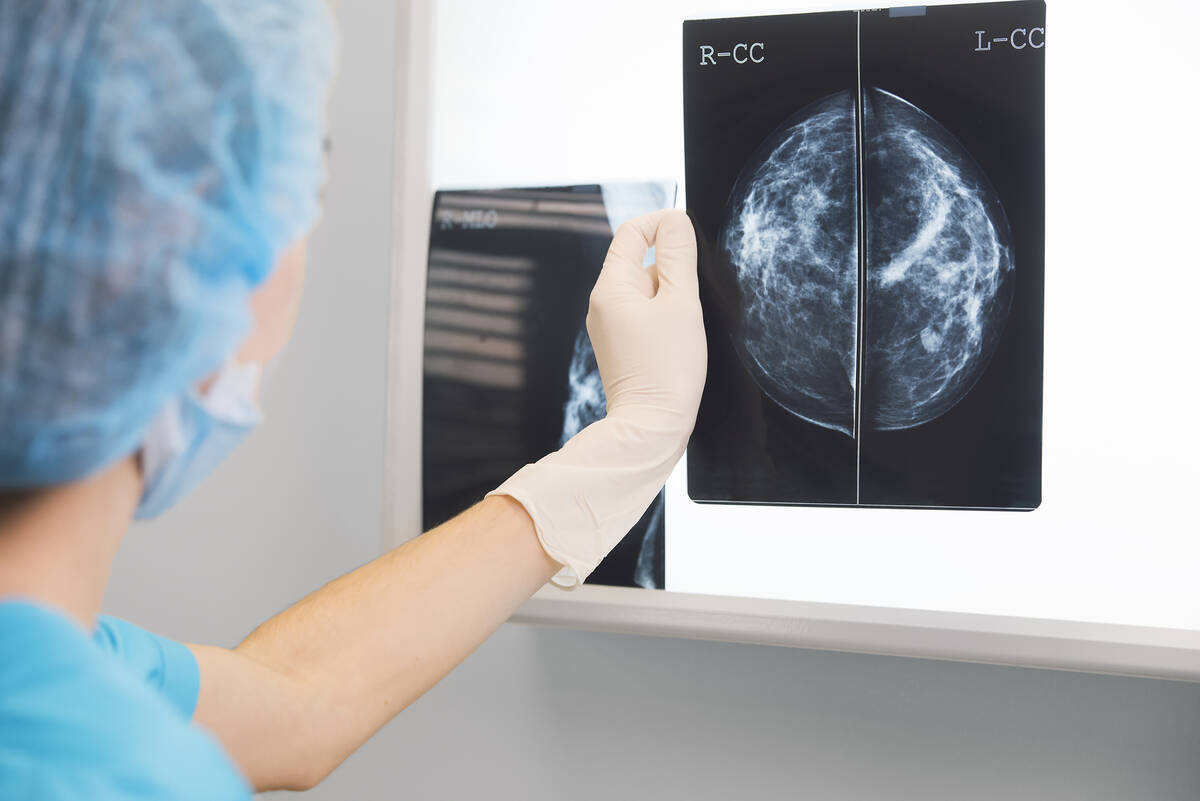
Another equally important reason why breast density matters is because breast cancers may not show up well on a mammogram if a woman has dense breast tissue, Shepardson adds. Fibroglandular tissue is white on a mammogram. Since cancers are also white, the dense white tissue can “hide” a breast cancer, making it more difficult for a radiologist to see.
Classifications of density
Breast density is based on the mammographic appearance, not on how breasts feel. When radiologists read a mammogram, they will assign the breast density.
Radiologists classify density using four categories based on the percentage of fibroglandular tissue (white on a mammogram) compared with fat (gray on a mammogram) in the breast, Shepardson explains. Many states, including Nevada, have passed legislation that requires radiologists to notify patients if they have dense breast tissue.
It is never too early to start talking about breast health with your medical provider, Shepardson says. They can review your specific risk factors for developing breast cancer and, with your input, adopt a breast cancer screening strategy that works for you.
“I advise all patients to consider starting annual mammography screening beginning at age 40, since younger patients tend to have denser breast tissue, and early detection is key,” Shepardson says. “If a patient knows they have dense breasts, I would also advise they talk with their provider about what other screening tests, including whole breast ultrasound and/or MRI, might be right for them.”