CCSD is introducing AI into classrooms. Will it be here to stay?








Schools in Southern Nevada are beginning to enter a new age of artificial intelligence-assisted education.
With hopes of offering more customized instruction for students and assistance for stretched-thin teachers, the Clark County School District is dipping its toes into the AI waters through a one-year pilot program this year.
The school district said it gave all staff access to three programs incorporating AI: Canva, a graphic design tool; Gemini for Education, Google’s AI assistant tailored for classroom use; and NotebookLM, a Google note-taking tool that utilizes Gemini. The costs for Gemini and NotebookLM are covered by the school district’s existing Google Suite license, the school district said, but schools can use their budgets to pay for other district-approved programs as well.
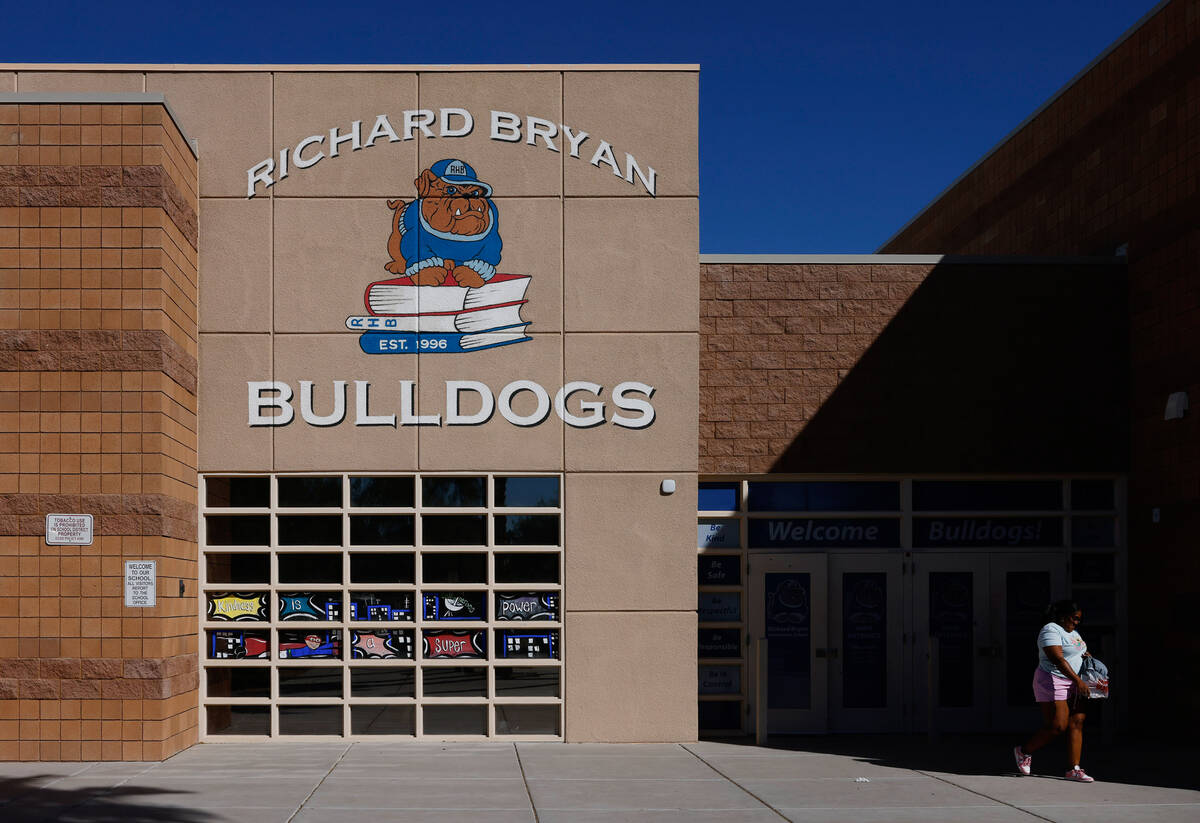
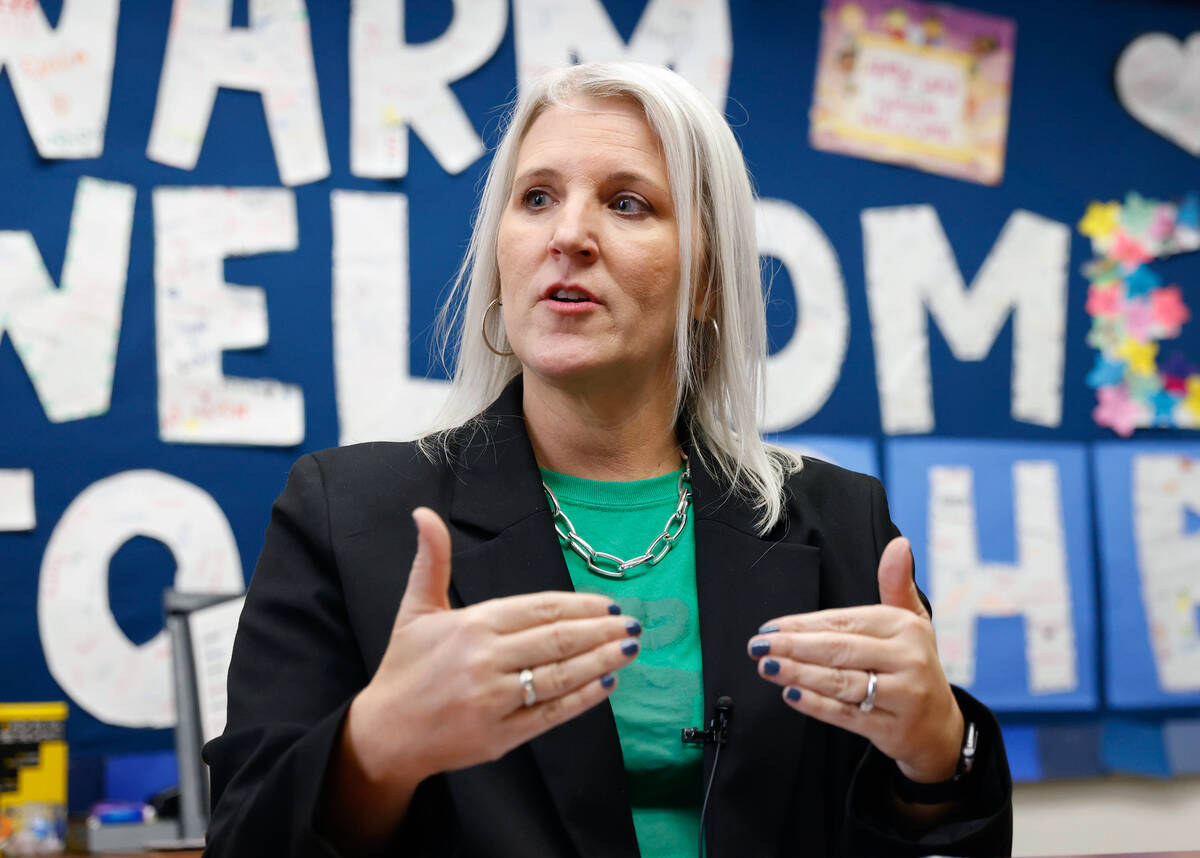
About a dozen schools in Clark County are also piloting the use of these programs for students to gather feedback on how effective they are for learning. One of those schools is Richard Bryan Elementary School in Summerlin, where principal Brandi Mora said she spent upward of $7,500 of her school’s budget to sign up and train eight of her teachers for the AI pilot program.
Mora said she saw AI entering education as an inevitability and joined the pilot to get her students and teachers ahead of the curve.
In practice, Mora said her teachers are using AI as a sounding board to improve lesson plans and an assistant to reduce time spent on more mundane tasks.
Teachers are shaving off multiple hours usually spent brainstorming in weekly professional learning meetings by consulting Gemini for advice on ways to strengthen their lesson plans, Mora said. And with AI able to manage more tedious tasks like writing emails or newsletters, she said the technology has given her teachers a greater ability to balance their work and personal lives.
“Teaching is so time-consuming, and to do it right and to do it well, you have to invest a lot of time outside of the school day,” Mora said. “But that takes time away from your family, the other things that you need to do in your life. So for them, when they were introduced to AI … it’s been a game changer.”
‘Transformative’ technology
For her school’s roughly 450 students, Mora said showing them how to use AI responsibly is at the front of her mind. Even though her students are just ages 5 through 11, she’s hoping to prepare them for an AI future by having teachers model using it as a learning tool in the controlled-classroom environment.
“Kids are curious, and they’re probably hearing their siblings use it or their parents,” Mora said. “It would be our responsibility to introduce it in a way that is responsible.”
Later this month, Mora said she plans to meet with her staff and discuss best practices for incorporating AI into lessons before they guide students through using the AI programs that are already installed on their Chromebooks.
For Kendall Hartley, UNLV associate professor of educational technology, using AI responsibly is an integral part of implementing the technology into the classroom. He said teachers using AI chat bots in lessons should show students how to write prompts that stimulate learning and test their current knowledge instead of demanding answers.
If used right, Hartley said AI could even give struggling students a tool that can help tailor instruction to fit their needs and make classrooms more equitable.
“I think this is just transformative in the sense that you have a tutor in your pocket, the smartest person that ever walked the earth right there at your fingertips,” Hartley said. “What it means for schools, it’s going to vary, but I think we’re probably going to still have the same types of classrooms but we’re going to have maybe some added benefit. Hopefully, more productivity.”
What do teachers think?
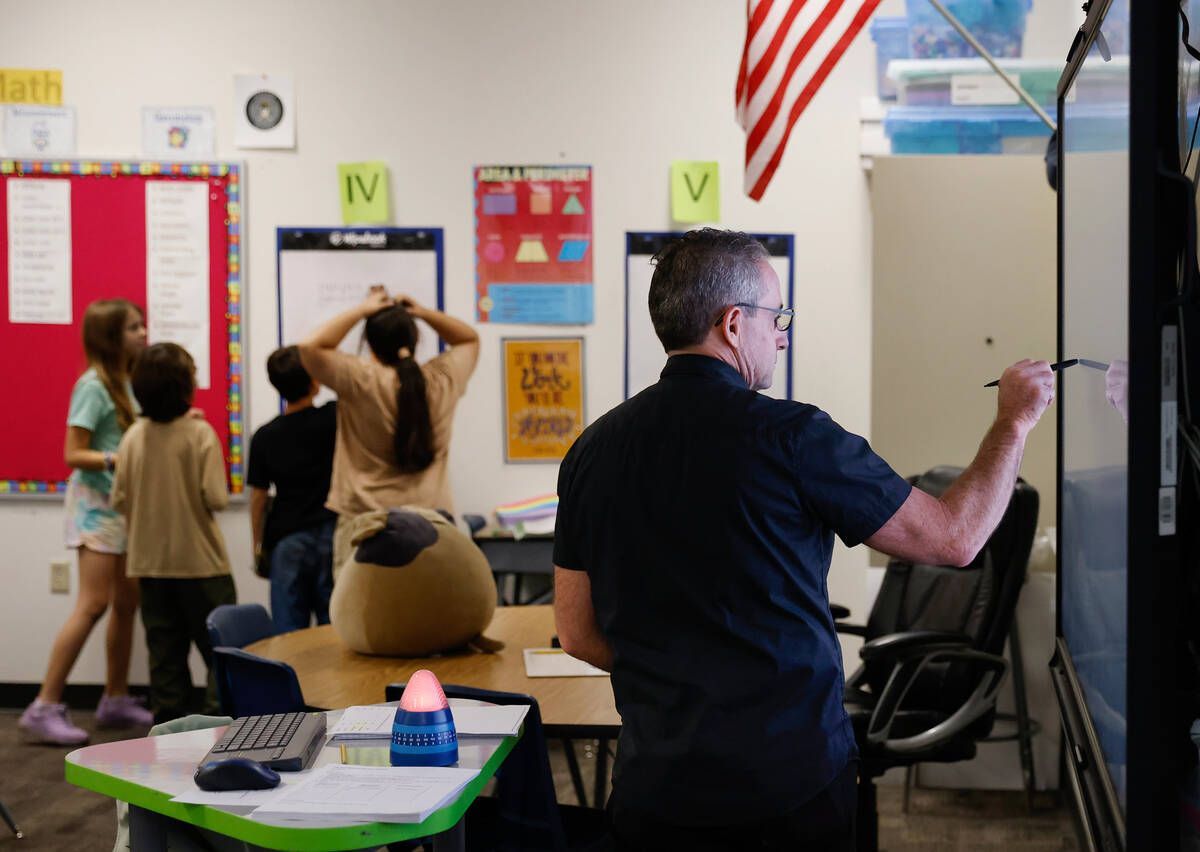
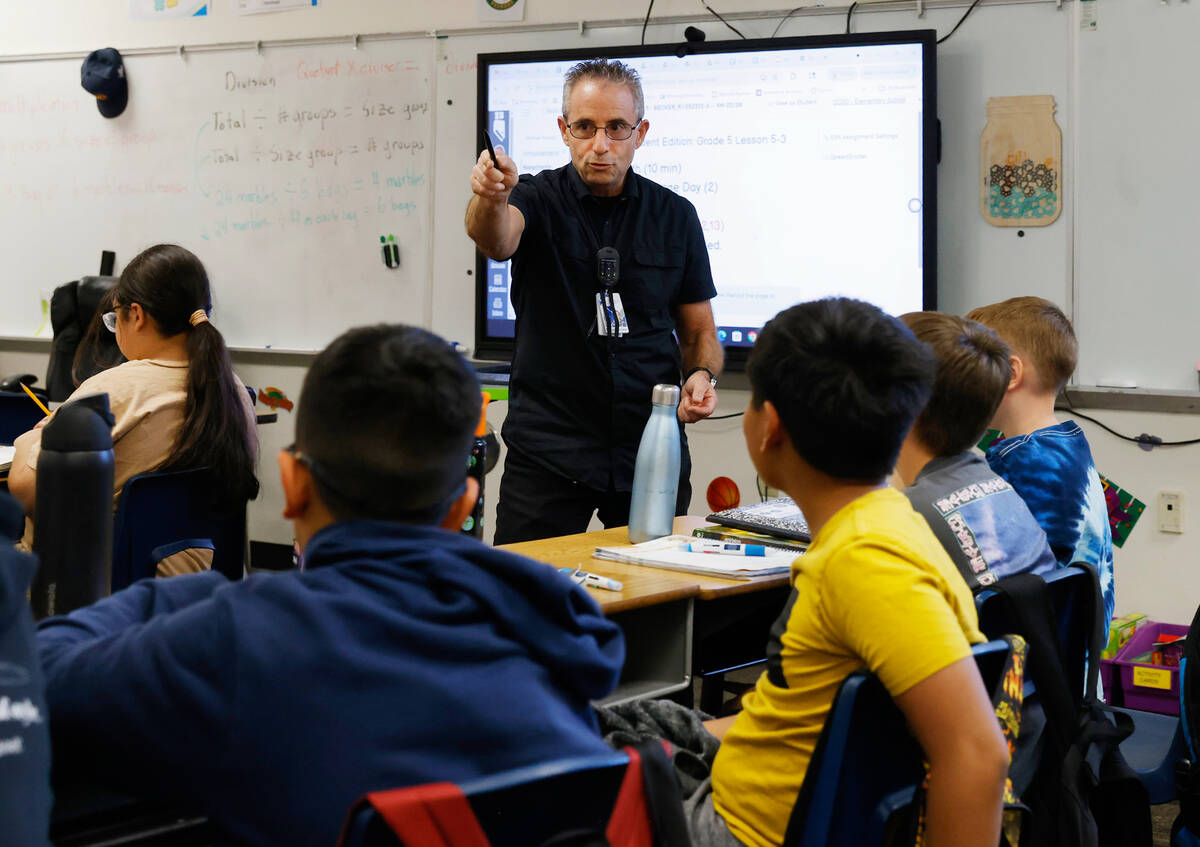
Inside Richard Bryan Elementary on Tuesday, a stack of laptops sat near the door of fifth grade math teacher Roger Becker’s classroom as students gathered around whiteboards solving division problems. Becker, who has taught for about 16 years, said he serves in a cohort giving school district officials feedback about its classroom AI experiences so they can develop a plan to expand AI use. Mora said she is in a similar cohort for principals.
Becker uses AI to help develop lesson plans and compose emails to parents, he said. But with the pilot program in its infancy, Becker said he and most other teachers in the cohort agree that it’s “too early” to know what the best uses for AI in education will be.
“If it’s used properly … it could be a really powerful source for students to be able to learn more independently,” Becker said. “The pilot program will allow us to trial and error, see what works and see what doesn’t work.”
‘AI is here to stay’
As school district officials collect feedback to evaluate the pilot program’s successes and shortcomings, Superintendent Jhone Ebert’s past and recent actions could point toward the future of the school district’s AI use.
In her previous role as superintendent of public instruction, Ebert played a pivotal role in forming the Nevada Department of Education’s AI ethics, principles and guidelines. The document, released in April following a series of town halls, describes AI as a tool to revolutionize classroom learning positively, but requires strong oversight from educators and school leaders to be used effectively.
With Ebert now at the helm of the nation’s fifth-largest school district, she has continued speaking highly about the possibilities AI poses for education. She said the technology could serve to supplement a student’s learning during a Sept. 30 episode of CCSD’s Destination District podcast.
“Artificial intelligence, or AI, is here to stay, but that doesn’t mean that we can’t take a measured approach to understanding what its role can be and should be in education,” Ebert said on the podcast. “CCSD is making sure that what our education environment looks like with emerging technology is safe for students and allowing our educators to be AI copilots when appropriate.”
Having witnessed the internet, smartphones and online learning all change the education landscape as a teacher, Hartley said AI in classrooms is more than a passing fad. But even as technology has evolved, Hartley called education fairly resistant to change. The high school science classroom he taught from in the ’90s wouldn’t be unfamiliar to students today, he said.
What Hartley saw as a common thread throughout these advancements, however, was that students who kept thinking critically about their understanding of lessons, took good notes and studied efficiently continued to succeed. Now, he said there’s a chance for AI to help more students become strong, self-regulated learners.
“All of these (technologies) require the students to have some skills and dispositions that are conducive to learning in all of those environments,” Hartley said. “It’s more about their understanding of their own learning than it is about the technology.”
Contact Spencer Levering at slevering@reviewjournal.com or 702-383-0253.