



Google runs Southern Nevada’s thirstiest data center. UNLV students have a solution
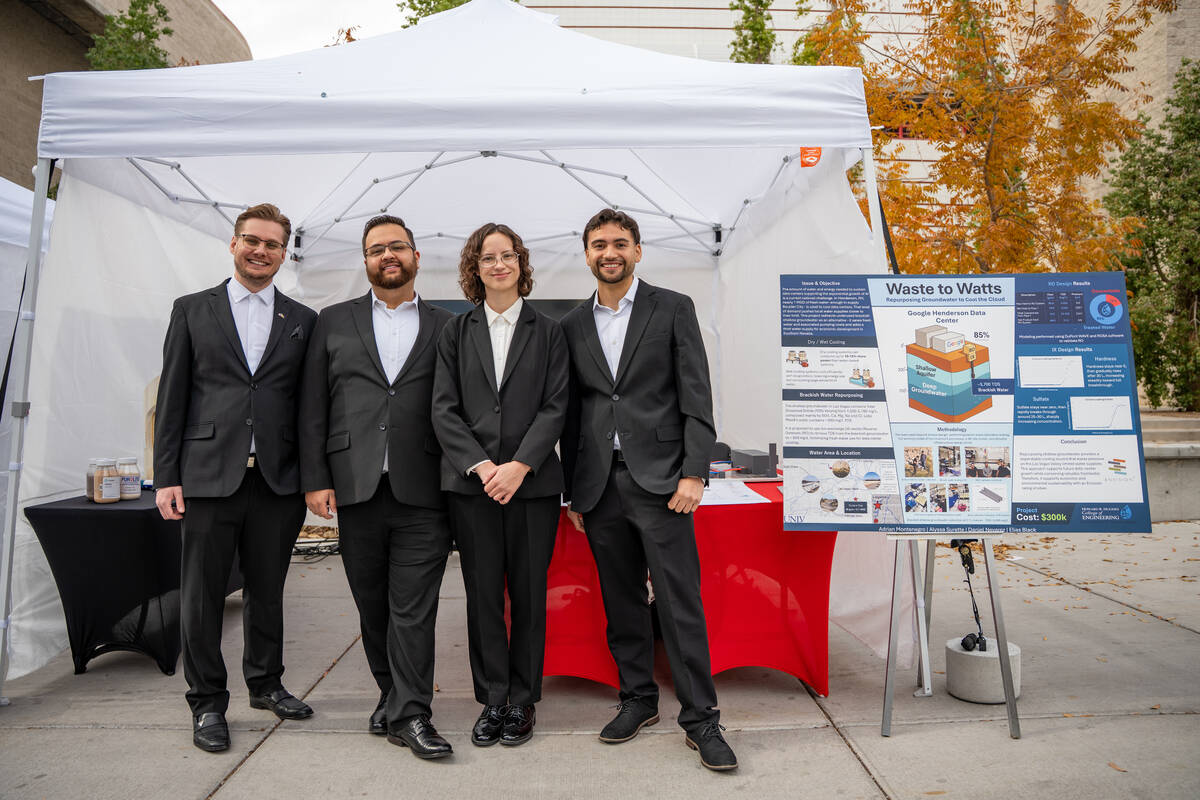
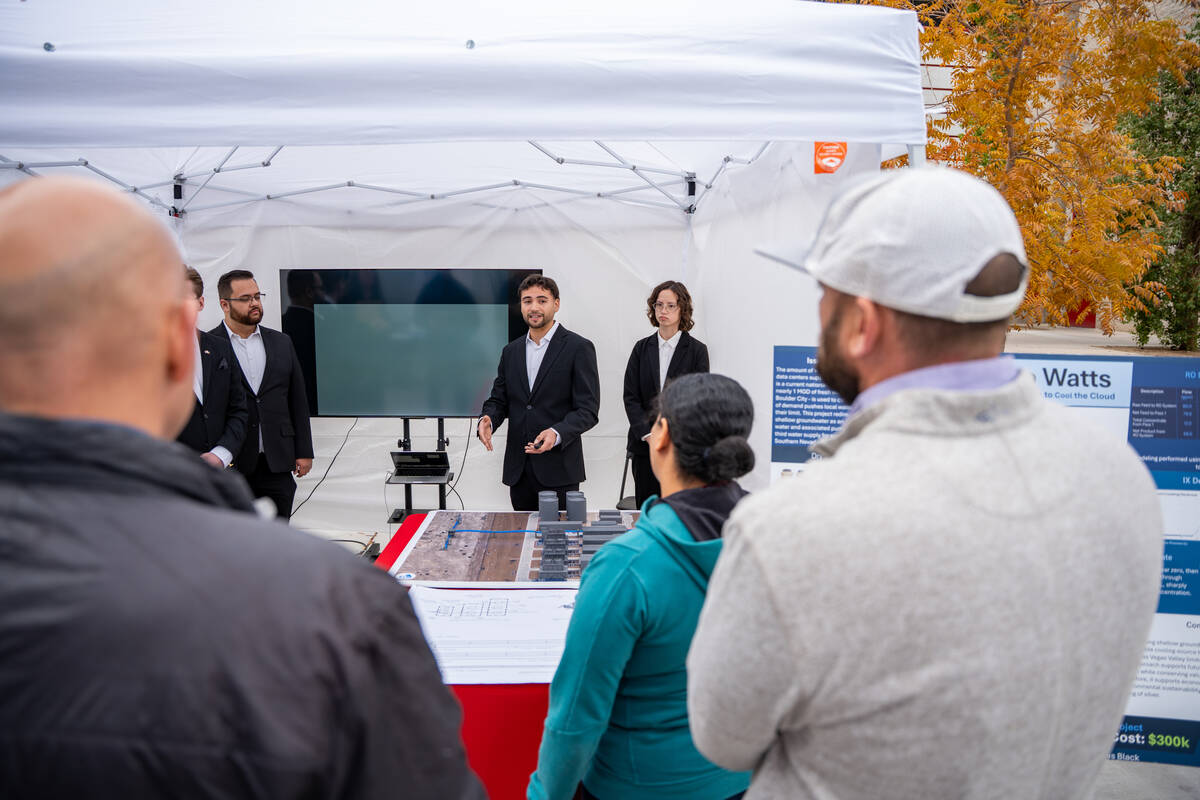
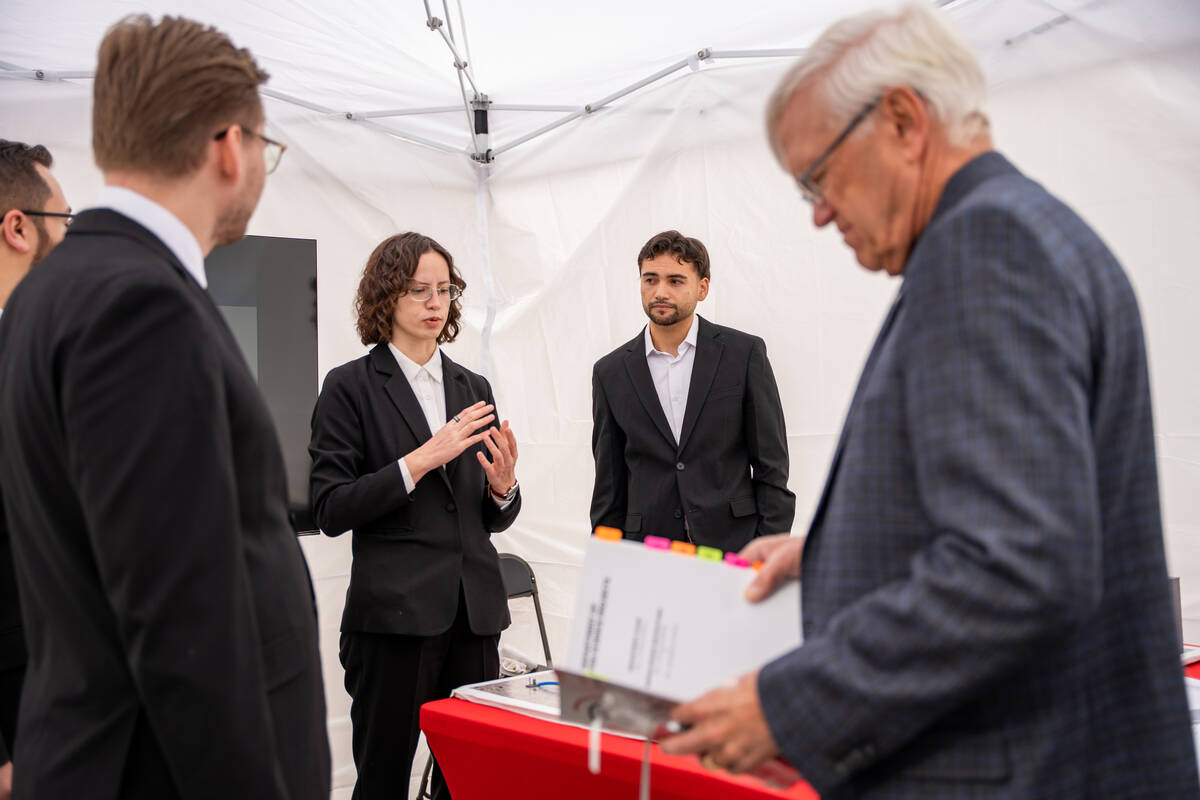




Adrian Montenegro knows that all data centers aren’t created equal.
At an internship this summer, Montenegro became familiar with the shift toward “dry cooling” for data centers popping up in water-stressed places — the result of a natural shift toward innovation after Southern Nevada officials passed ordinances preventing Colorado River water from being used for new cooling systems.
With Lake Mead facing historic shortages that hydrologists only expect to worsen, he and three other UNLV engineering seniors — Alyssa Surette, Daniel Nevarez and Elias Black — zeroed in on how to quell the thirst of Las Vegas Valley’s most water-intensive data center: Google’s facility off Warm Springs Road in eastern Henderson.
The data center broke ground in 2019, years before the moratorium took effect on Feb. 1, 2024, making it so no new building permits for a development with evaporative cooling systems could be issued.
Experts say energy generation capacity dictates where tech companies site their data centers across the nation, but water is perhaps the single most critical consideration for new development in Southern Nevada, as the regional water authority works toward aggressive conservation goals to stretch out a shrinking supply.
“People are attracted by the financial gain. We’re bringing in jobs with data centers,” Montenegro said. “But what they’re forgetting is that people still live in this city. What about our water source? What’s going to happen in the next 30 years to the people living here?”
A fitting solution for this particular data center might just lie beneath the desert floor.
Repurposing shallow groundwater
In 2024 alone, Google’s data center withdrew more than 352 million gallons of water, according to data obtained from the city of Henderson through a public records request.
That’s nearly 1,081 acre-feet, or roughly enough water to serve 540 single-family households for an entire year. A facility like it would not be built today in Southern Nevada under evaporative cooling bans for new buildings.
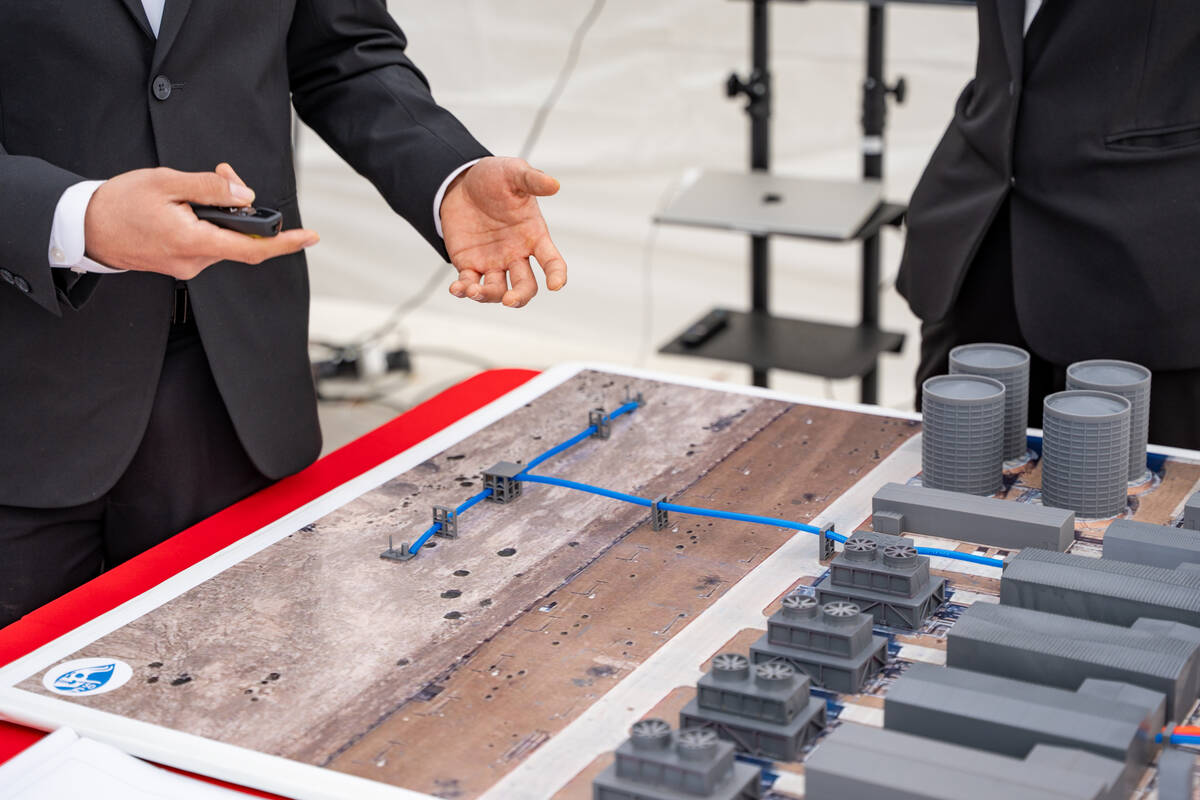
To offset about 22 percent of the facility’s total water use, the UNLV team says, the groundwater aquifer below it could be tapped as a renewable source. The water, full of sulfate and hard chemicals such as magnesium, currently sits unused.
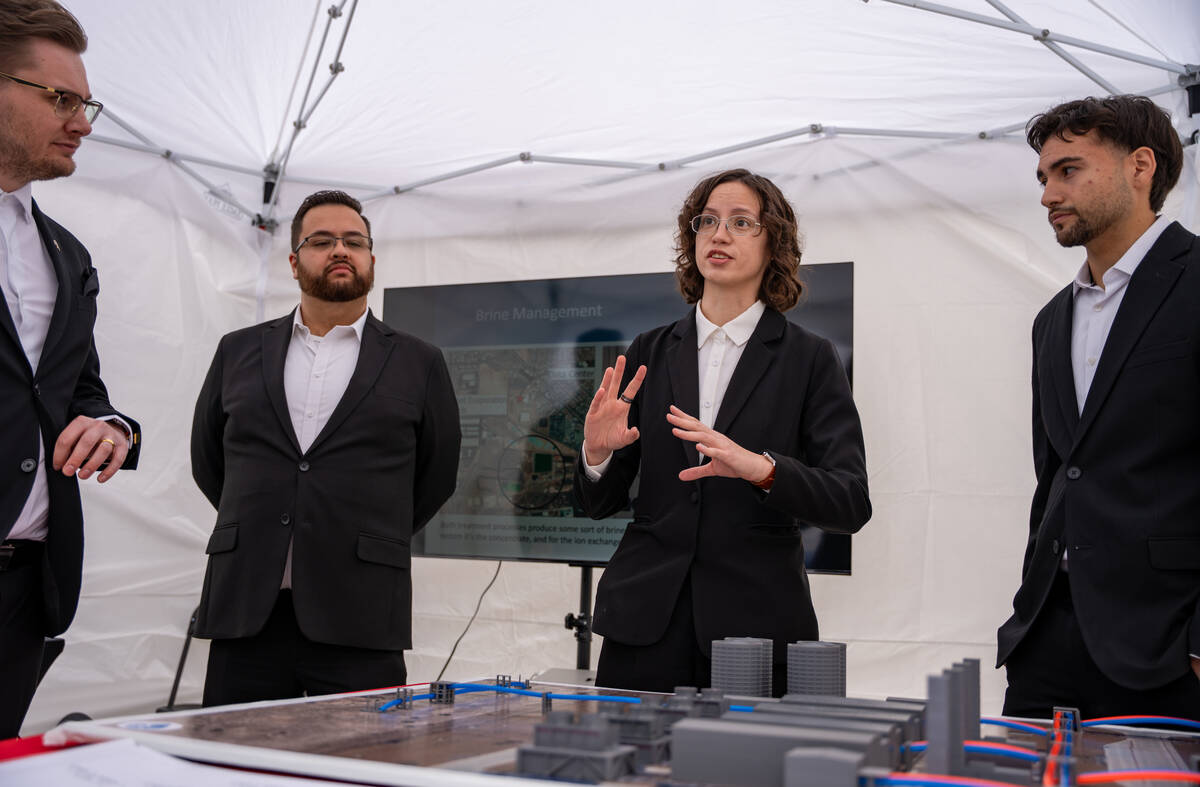
“It’s nuisance groundwater that’s not dealt with because it has such a high amount of solids,” Surette said. “Usually, it’s sitting there, or it’s dewatered for construction projects and thrown into a runoff storm drain.”
Looking at a life span of 50 years, Surette said the aquifer is recharged at a rate of about 120 gallons per minute, and the team is proposing using about 80 gallons per minute to ensure it wouldn’t deplete it.
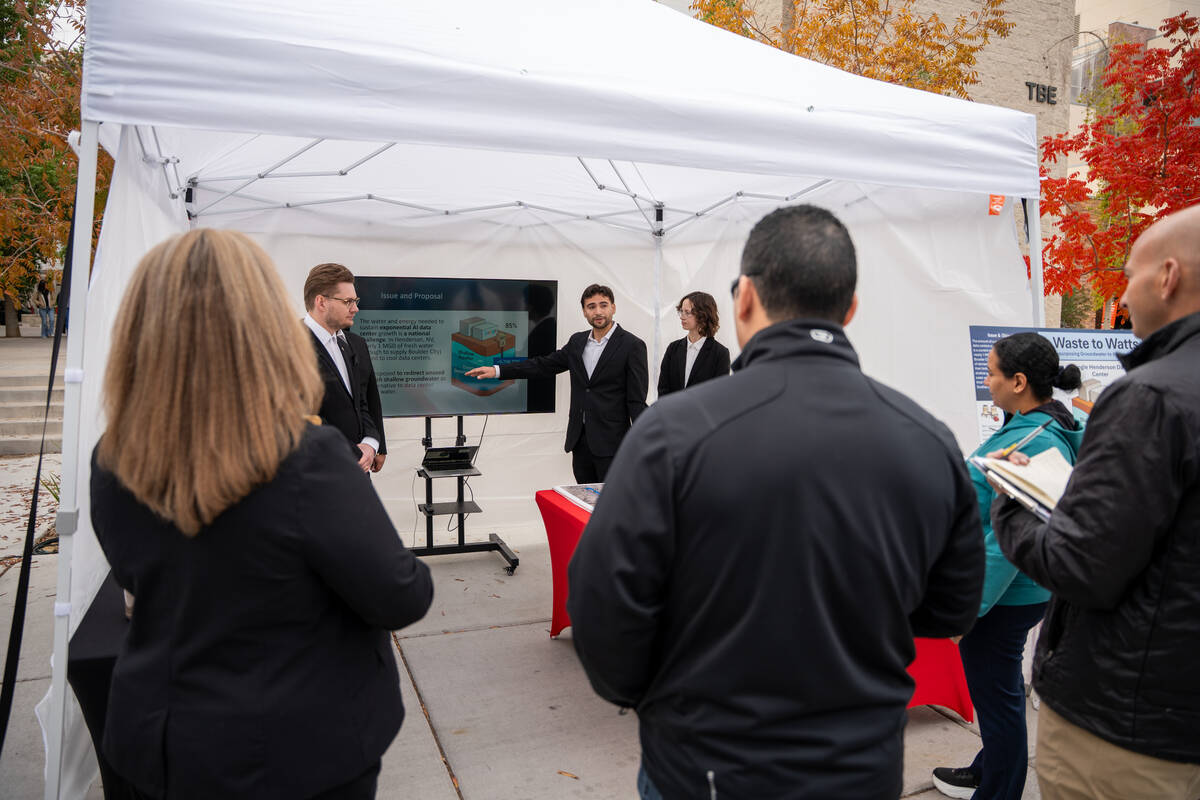
The proposal was the students’ senior capstone project presented at the UNLV College of Engineering’s fall senior design fair on Tuesday. Prior to settling on the Henderson data center, Montenegro said, the team brainstormed other uses for the water, such as irrigation or dust suppression.
“Two weeks before our proposal was done, we’re like, ‘Hey, what if we use it for a data center?’ That whole day, we’re just bringing up the idea, and we just kept adding more pieces,” Montenegro said. “Everything kind of came together.”
Could Google take on the idea?
This isn’t water an average person would want to be near. It’s dirty, hard and full of sulfates — something the students propose could be remedied through either ion-exchange or reverse-osmosis filtration.
The team sampled the water from channels near two Henderson wells to come up with data about how to best treat it.
It was a stinky affair.
“We couldn’t even run it through the lab without diluting it,” Nevarez said, with a laugh.
All told, the students say the construction project would run Google about $300,000, though maintenance of the new infrastructure could up those costs over time.
Chris Mussett, a spokesperson for Google focused on technical infrastructure, said he wasn’t aware of the UNLV team’s outreach. Surette said she reached out to the data center’s team but didn’t have any updates to share about whether its proposal was under consideration.
The students are hopeful that the legwork they’ve done for their project could be useful to the tech giant. All 40 or so teams will find out the results of the judging from a panel of industry experts at an awards dinner on Dec. 15.
“Google is investing a ton of money into infrastructure,” Black said. “There could be potential there where they might want to invest a little bit of money to offset its water use. You never know.”
Contact Alan Halaly at ahalaly@reviewjournal.com. Follow @AlanHalaly on X.


