



Reno-Tahoe group plans Olympics bid
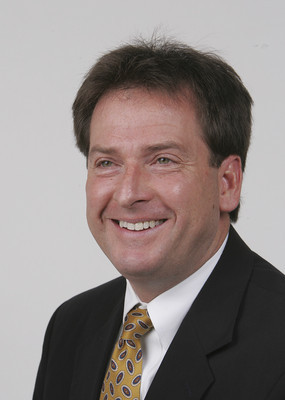


RENO -- Lt. Gov. Brian Krolicki announced Thursday that a committee of Northern Nevada and Northern California civic leaders will make a concerted effort to win the 2018 Winter Olympics for the Reno-Lake Tahoe area.
Krolicki estimated it would cost $1.5 billion to construct infrastructure for the Olympics, but most of that money could be recovered through licensing rights, ticket and TV sales, and federal grants.
While he did not rule out the possibility that some local or state taxes would be assessed, Krolicki said that is not a current option.
He said Los Angeles hosted the 1984 Summer Olympics without having to impose any taxes.
"We can make money from the Olympics," Krolicki said. "We will not make a bid unless we can make a profit. We know it can be done without taxpayer dollars because Los Angeles did it."
"I do not favor a tax," added California Assemblyman Ted Gaines, who represents counties on the California side of Lake Tahoe.
Reno has made five previous attempts to host the Winter Olympics. Squaw Valley, Calif., just north of Lake Tahoe, hosted the 1960 Winter Games.
Salt Lake City secured a $100 million profit for hosting the 2002 Winter Games, according to Krolicki, although 18 percent of its funds came from tax sources.
Vancouver, British Columbia, is hosting the 2010 Winter Olympics and more than $500 million of its revenue is coming from taxes.
More than a profit, Krolicki said hosting an Olympics brings lasting tourism benefits for the region and the entire state.
He said tourism in Salt Lake City and Park City, Utah, the scene of many outdoor events, has increased at an average annual rate of 20 percent since the 2002 Olympics.
While the Reno-Tahoe area would not submit a bid until late 2009 or early 2010, plans already call for the opening ceremonies to be held in the 30,000-seat Mackay Stadium on the University of Nevada, Reno campus.
Skiing and outdoor events would be conducted at Lake Tahoe ski resorts, including Mount Rose, just southwest of Reno, Heavenly Valley at South Lake Tahoe, Calif., and Squaw Valley.
As lieutenant governor, Krolicki chairs the state Economic Development and Tourism commissions and also the 91-member Reno-Tahoe Winter Games Coalition.
The Nevada Legislature has been appropriating $125,000 a year to the Olympics effort.
Jim Vanden Heuvel served as executive director of the Olympic effort until his death in March. Jon Killoran, a longtime Reno television newsman, is taking over the job.
During Thursday's briefing, Krolicki was joined by Tamara McKinney, a Squaw Valley resident who was a three-time Olympian and the first American woman to win skiing's World Cup.
"The logistics here are above and beyond any Olympics Game I have gone to," McKinney said.
McKinney told of how she decided while watching the Olympics on TV in 1972 at age 9 that she would be a future Olympian. At 17, she made the team.
"This is about making money and enjoying the competitive spirit of human sport," Krolicki said.
Reno is closer to the mountains than Salt Lake City and has more than twice the number of hotel rooms as the Utah city, according to Krolicki.
But Reno-Tahoe will not win the Winter Olympics in 2018 if the International Olympics Committee awards the 2016 Summer Olympics to Chicago, he said.
The committee traditionally has wanted to move the games to different continents so it would be unlikely that back-to-back games in the United States would be approved, he said.
The decision on the 2016 Summer Games will be made in fall 2009.
Krolicki and Killoran released a poll taken in January that shows 51 percent of 600 residents in the Reno-Tahoe area support efforts to win the Winter Olympics. Another 31 percent oppose the effort, while 18 percent are undecided.
The poll of 600 residents by Research 2000 has a 4 percentage point margin of error.
Contact Capital Bureau Chief Ed Vogel at evogel@reviewjournal.com or 775-687-3901.


