|
Click for printable version
Click to send to a friend
 Cherrell Tarantino wipes a tear from her eye as her 16-year-old son, Anthony, talks about his addiction to the drug Ecstasy. Anthony returned home three weeks ago from a residential treatment center for drug abuse in Utah. Photo by Clint Karlsen.
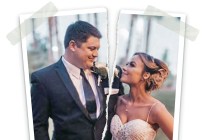
 Danielle Heird, left, shown with her mother, Elsa, died after an accidental Ecstasy overdose in July. SPECIAL TO THE REVIEW-JOURNAL
Is your teen using drugs?
Signs of drug use:
-- neglected appearance and hygiene
-- poor self-image
-- dropping grades
-- violent outbursts at home
-- frequent use of eyewash/drops
-- drug paraphernalia (in the case of Ectasy, this can include pacifiers, Blow Pops, glow sticks, dust masks and vaporizer rub)
-- curfew violations
-- running away
-- glassy eyes
-- valuable/money missing
-- hostility towards family members
-- change in friends
-- depression, withdrawal, apathy
-- disrespectful to parents, verbally abusive
-- lack of motivation
-- truancy
-- loss of interest in healty activities
SOURCE: Cross Creek Rehabilitation Center in Utah and the Las Vegas Metropolitan Police Department
|
Sunday, September 10, 2000
Copyright © Las Vegas Review-Journal
ECSTASY DANGERS: Addiction costs teen
Boy left with blurry vision, brain damage and memory loss after heavy Ecstasy use
By JOELLE BABULA REVIEW-JOURNAL
Anthony Tarantino's eyes hurt when his mother gestures as she speaks. Trails of light seem to follow her arms as she punctuates the conversation with movement. Eight months of Ecstasy use have left this 16-year-old Las Vegan with blurry vision, brain damage and memory loss, according to a psychological evaluation. He also has dropped out of high school and now has a criminal drug record. This pink-cheeked, dark-haired boy is soft-spoken and sweet, quiet as he contemplates words in his head and fits them together like pieces of a puzzle when he speaks. "I get confused when people talk. I hear different things," Anthony said, three weeks after returning home from a drug rehabilitation center in Utah. "It takes me 10 minutes to remember what I did yesterday." As Ecstasy use increases nationwide, more young adults and families are discovering what medical professionals have been saying all along -- Ecstasy is not a harmless party drug. It can debilitate and kill. Local residents Elsa and James Heird know it. Their daughter Danielle, 21, died of an accidental Ecstasy overdose in July. Although a Metropolitan Police Department narcotics officer associated with the case said Danielle's death was the first because of Ecstasy in Clark County, further investi- gation by the coroner into past cases determined that there have been four other deaths associated with Ecstasy in the past two years. Three of those deaths, including Danielle's, were attributed directly to the drug, said Clark County Coroner Ron Flud. The trend for young adults to party with Ecstasy scares health professionals because the effects of the drug are largely unknown and vary widely from person to person. Although recent studies suggest Ecstasy use can cause permanent brain damage, the research is still preliminary. "The biggest danger of Ecstasy is it can kill you," said Dr. Paul Fischer, the medical director of the emergency department at Sunrise Hospital and Medical Center. "It can raise the heart rate and blood pressure, you can go crazy and psychotic, have a cranial hemorrhage or cardiac arrest. It's rare, but you just don't know what you're dealing with." Anthony abused the drug for eight months, taking pills three times a week, up to five pills at a time. Danielle Heird took approximately two Ecstasy pills on July 19 and died, according to the coroner's investigative report. It was the third time she had taken the drug. "She was my best friend. We had made a promise to each other to do Ecstasy together for the first time at the same club," said Jennifer Landaz, Heird's friend since high school. "But she called me four hours after she had done it for the first time and I couldn't believe she did it without me. She did it about two more times after that and the third time, she died. I will never try Ecstasy now. Never." Anthony wishes he never started. "I had to go get the drug every day," he said. "I was on a mission every day to just get money and go buy it. Every single day." In November 1999, Anthony took the drug for the first time at a friend's house.
"I enjoyed it. I then started doing it once or twice a week." His mom, Cherrell Tarantino, began noticing behavior changes shortly afterward. "I saw total anger," she said. "He was punching walls and he'd yell right up in my face in a threatening manner. This was a kid who had always been quiet, gentle and shy." His grades also slipped. He shut himself up in his room. He stopped skateboarding and he never smiled. He wouldn't hug his mom. "I was angry at the things I was doing, but I couldn't control it," Anthony said. "You don't think about the consequences at all. I just needed to do it to be happy." But in order to get those $20 Ecstasy pills, Anthony had to steal money. "He watched me at an ATM, watched for my pin number and then stole my card," said Anthony's older sister, Jennifer Ritchie. "He would set off my mom's pager just to find her purse." Cherrell Tarantino said she went to teachers, principals and friends to discuss Anthony's aggressive behavior, slipping grades and isolation. "I went to everybody and they said he's an adolescent. He's a male. You're a single mom and you just don't know what you're dealing with," she said. "Nobody mentioned drugs to me once." It wasn't until Anthony was arrested for possession of marijuana at school, that his mother began suspecting drug use. Subsequent drug tests turned up the hallucinogen Ecstasy or MDMA, methylenedioxymethamphetamine, in his system. After a local substance abuse therapist told Cherrell Tarantino her son would die if he didn't get residential treatment immediately, she sent him to a substance abuse rehabilitation center for boys in LaVerkin, Utah, on June 13. He has been back at home now for three weeks. Tarantino couldn't afford the full 16- to- 18-month program at $3,600 a month, but her son is continuing with therapy sessions locally. She now has in-depth knowledge about the drug, enough hopefully to spot a relapse. "The temptation is still there, but now I think about the consequences, which I didn't do before," Anthony said. "But I hate Ecstasy now, for all it's done to me. I read a book or a paragraph and I don't remember what I just read. My eyesight is totally screwed up. Twenty-four hours a day, permanent vision damage." Doctors say his eyesight might improve, but he has been diagnosed with a permanent, severe learning disability, something he didn't have before, his mother said. According to a psychological evaluation by a learning disability specialist, "The year or more of drug use has further limited his concentration, heightened his insecurity and limited his memory." Anthony had mild problems with concentration before, but now it's much worse, his mother said. "We're all in recovery, and we're all wondering when things will ever be the same again," Cherrell Tarantino said. "But things will never be the same. Because of this drug, my son has a learning disability, impaired vision and has become a high school dropout." But he's smiling again. And skateboarding. And joining the family at the dinner table. "I love you and I'm so proud of you," Cherrell says, embracing her son. "You are so strong." He nods and he doesn't pull away. He hugs back.
|