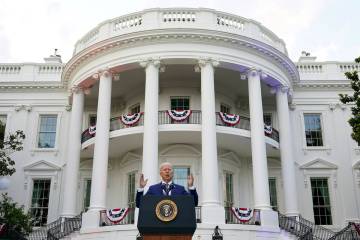
The New York Times/Siena College poll found that if the election were held today, 50 percent would pick Donald Trump and 38 percent would pick Joe Biden.




The New York Times/Siena College poll found that if the election were held today, 50 percent would pick Donald Trump and 38 percent would pick Joe Biden.

Three of the top five Las Vegas Valley communities in new home construction are located in Henderson, according to the data company Zonda.
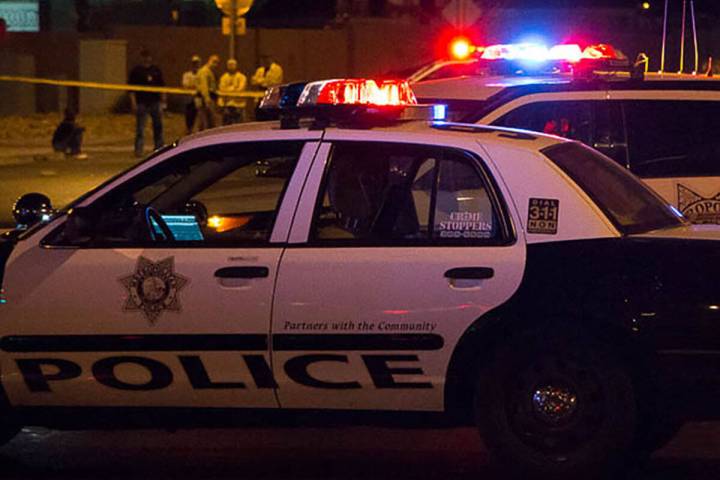
A dispute between two neighbors outside their homes turned deadly when one neighbor allegedly shot the other man, who later died on his driveway, police said.
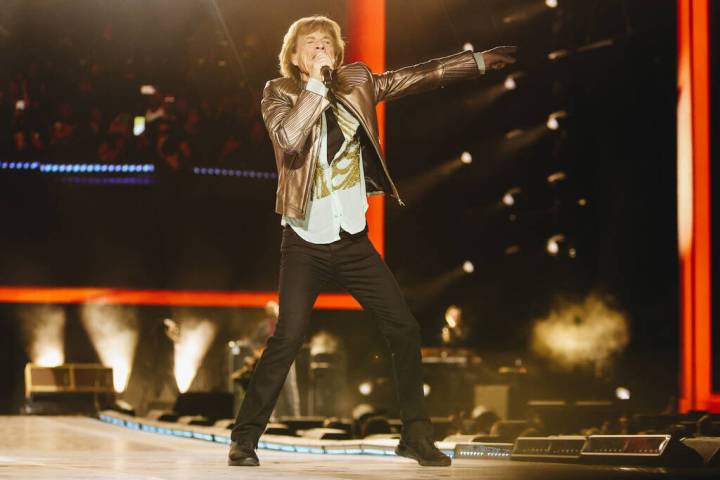
Rolling Stones lead singer Mick Jagger got a healthy sampling of the Las Vegas restaurant scene while in town for a concert at Allegiant Stadium.

The Nevada Supreme Court rejected a teachers union effort to put public funding for the Oakland Athletics’ planned Las Vegas ballpark on November’s ballot.

A class-action lawsuit alleging hotel room price fixing was thrown out, handing a win to the Strip hospitality companies accused of anti-trust behavior.

An Ohio resident visiting Las Vegas last week had his 21st birthday celebration turn into a $362,000 winning.

A proposal asked Boyd Gaming shareholders to study the effects of making casinos smoke-free. It was the first of three proposals across the industry to get a vote.

The Raiders got the final member of their eight-man 2024 draft class under contract Monday.

The goal of wastewater surveillance effort is to determine if any new strain of the constantly evolving disease might pose a problem for humans and the community.

The progressive was established in 2018 and has minted 14 millionaires since inception, the resort said.

The National Park Service wants to know who damaged a 113-year-old salt tram tower at Death Valley National Park.
Out of the 17 counties in the Silver State, this one has the highest average voter participation rate.

Hundreds of unsealed court documents reveal the contentious custody battle between Ashley Prince and Dennis Houston leading up to a fatal shooting in April.

Color psychology is not just a matter of personal preference in your home decor. It’s a powerful tool that can significantly influence your and your staff’s productivity in the workplace. Many businesses choose their brand colors without considering their potential impact on the office environment. While these colors may look great on a business card, […]






The man who sang, “Time is on my side,” proved it is, and “What a drag it is, getting old,” proved it doesn’t need to be.

The developer said it would take $310 million to build a launching pad, a runway for spaceplanes, a control tower, a flight school and a 200-room casino resort.

While barbecue connoisseurs may not consider Southern Nevada as a spot to compete with famed BBQ hot spots like Kansas City or St. Louis, a new list may make you think again.
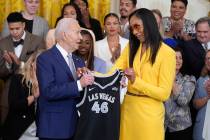
President Joe Biden and Vice President Kamala Harris welcomed the back-to-back WNBA champion Aces to the White House to celebrate their achievement.