Sunday, July 13, 2003
Copyright © Las Vegas Review-Journal
Stepping up
Survivor of crash that killed two of her friends sets new life goals
By RICHARD LAKE
REVIEW-JOURNAL
All photos, unless otherwise noted, by John Gurzinski.

Ashley Biersach's mother, Cindy Aaron, holds one of her daughter's X-rays up to a skylight in her home. "Every bone from my belly button down was completely crushed. The only thing holding me together was my skin," Ashley says. Doctors had to use screws, plates, rods and pins to hold her bones together.

Family and friends gather around an emotional Ashley Biersach last year as the teenager struggled to walk again. Ashley lost her leg in a May 2002 car accident. Two other Las Vegas High School students died and two more were injured. Here, fellow survivor Kiley Quinn hugs Ashley and offers words of encouragement during a physical therapy session.

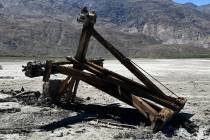
The aftermath of the May 9, 2002, crash on East Sahara Avenue. The 1987 Ford Thunderbird Ashley Biersach was riding in hit a light pole in the median so hard the car split in two. REVIEW-JOURNAL FILE PHOTO

Surgeons were forced to amputate Ashley's right leg below her knee the day of the car accident. She has spent the past year trying to walk again.

Ashley rests her head on boyfriend Kris Totman's shoulder on Sept. 3, 2002, the day she first walked with a prosthetic leg at a physical therapy center. The two were engaged this past Christmas.

Ashley's mom, Cindy Aaron, and boyfriend, Kris Totman, wait outside University Medical Center on May 9, 2002. Ashley lost half her right leg and underwent five surgeries during her near monthlong stay at the hospital. REVIEW-JOURNAL FILE PHOTO

Ashley sits alone at a physical therapy center after walking with a prosthetic leg in September. Though her walking was celebrated at first, doctors later told her it was a mistake.

Las Vegas police Sgt. Frank Weigand joins Ashley at Bob Baskin Park in June to film a commercial for the local Courtesy auto dealerships that encourages safe driving.

Ashley pulls a plastic socket over her amputated leg at a physical therapy center last summer. The scar on her thigh is the result of a skin graft surgeons performed when her leg was amputated.

Ashley, with her mom, Cindy Aaron, behind her, speaks to a Driver's Edge class. She believes that recounting the story of how two of her friends died and she lost her leg in a car accident can help other teens become safe drivers.

Ashley wipes away a tear on the April day her doctor tells her it is almost time for her to try walking again. "We've got to push this now," he said.
 Ashley wipes away a tear on the April day her doctor tells her it is almost time for her to try walking again."WeÕve got to push this now," he said.
 Ashley and her mom, Cindy Aaron, hold hands as Ashley tells Dr. Armando Miciano in April what her goals are: "I want my life back. I want to walk. I want to get back out there and have some fun."
 Ashley uses a TV camera to watch video of herself after filming a commercial for the local Courtesy auto dealerships. Las Vegas police traffic officer Greg Rundell stands behind her.
 With doctors and family members watching, Ashley takes about 100 steps last month between a set of parallel bars in her physical therapist's office.
|
She rolls her wheelchair into the corner of the room, head hung low, hair covering her face. She takes a deep breath and exhales slowly.
Her mother reaches out and pats her shoulders. "It's OK, baby," she whispers, crying softly. She gives her daughter's hand a gentle squeeze.
Around her, a crowd watches a documentary that ends with a message from a paramedic: "In the blink of an eye, everything can change."
The girl in the wheelchair buries her face in her hands.
From across the room, a cameraman from "Good Morning America" focuses on her.
Though the nightmares about what happened more than a year ago have not gone away, she has chosen to relive her story on this day in early June before a group of strangers.
She believes it will help.
She takes her place at the front of a conference room at the Las Vegas Motor Speedway. She has shoulder-length blond hair, bright blue-green eyes and, on good days, the kind of smile that draws people to her.
There's no smile today.
"I'm here today because on May 9th I lost two of my best friends and I lost part of my life," she begins. "My life is very hard to explain and it's very hard to talk about all of this."
She pauses for a moment. She does not want to lecture this group of teenage drivers, but she has a point to make.
"Cars are not toys," she says, her voice rising. "They're not things to mess around with. They're dangerous."
She is 17 years old, she tells them. She was 16 at the time of the crash. She was supposed to graduate from high school in less than a week, but now, she's not sure how she'll ever get her diploma.
"I was just like all of you at one time. But one day all of it changed. We were having a good time. We weren't doing anything wrong."
The car hit the pole so hard the impact killed the two girls in the front seats. The wreck left her crushed and broken so badly that doctors had to put her back together with screws, plates and pins. They removed half of her right leg.
"I woke up and all I felt was pain. I had to go through some things that nobody should have to go through. I had to see things that nobody should have to see."
Since then, she has wrestled with her healing body in her struggle to walk again. She has endured the death of some relationships and seen others bloom. And, through it all, she discovered a part of herself she never knew was there. "Hundreds of people have come up to me and said, 'You helped me. You changed my life.' "
Spinning out of control
The cause of the wreck that changed Ashley Biersach's life was easy enough to figure out: too much speed, a curve in the road, a teenager who had no business driving a car. Ashley Troester was 16 and didn't have her driver's license or even her learner's permit. She drove to school anyway on May 9, 2002.
She and a group of friends decided on Burger King for lunch, just a two-mile drive from Las Vegas High School. Along for the ride were Natasha Keeter, 17, Ashley Biersach, 16, Aleisa Valdez, 15, and Kiley Quinn, also 15.
After a good time tossing fries at each other, the girls hurried back to school, afraid they would be late. Keeter won a brief argument with Biersach about who would get the front seat. Biersach sandwiched herself between Quinn and Valdez in the back.
Biersach waved as the car passed her house, where her mother recently arrived home from working the graveyard shift at the Stardust.
Witnesses said the car was traveling between 60 and 70 mph as it crested a small hill and approached the curve. The rear-end began to slide. Troester overcorrected, sending the car into a spin.
"Oh shit, you guys," Biersach yelled. She put her arms out to protect the other two girls in the back.
The car slammed broadside into a light pole in the median and split in two. Its front half traveled 50 feet before coming to rest.
Students passing the scene called 911.
Police arrived in four minutes, but Keeter, who bore the brunt of the impact, was already dead.
Troester was unconscious and bleeding from her head.
Biersach and Valdez screamed. Quinn, who had been sitting on the side of the car that hit the pole, was slumped face-first into the seat. Biersach woke her up.
"You gotta stay awake," she said. "Please don't close your eyes."
Biersach's feet were pinned under the front seats, and her blood was squirting all over the car.
Ambulances carried Valdez, Quinn and Troester to University Medical Center's Trauma Center. Biersach went by helicopter.
Her mother saw the helicopter fly over their house, just blocks from the accident scene.
"I had no idea my daughter was in it," Cindy Aaron later told police.
A lifetime of pain
When Ashley Biersach arrived at the hospital, doctors found nearly every bone in her body from the waist down had been crushed.
Both feet nearly were severed. The accident broke her vertebrae and destroyed disks in her lower back.
To hold her bones together, the doctors bolted Ashley's spine to her pelvis. They secured her tailbone with a metal plate, and affixed titanium rods to the long bones in each leg.
They amputated her right leg between her knee and her ankle and took a skin graft from her thigh to cover the end of the stump.
The doctors saved her left leg, though her foot was in such bad shape that it would take months of painful wound care before it could support her body weight.
Ashley underwent five major surgeries, needed five blood transfusions, and stayed in the intensive care unit for more than a week.
"Mom," she said when she woke up, "what's going on?"
Aaron, 41, who had been by her side since the accident, told her what happened.
"You've been on life support for five days."
"Mom, how did you handle this?"
Relatives from across the country visited Ashley in the hospital, and her boyfriend, 17-year-old Kris Totman, was a near-constant presence.
By the time Ashley woke up, Troester had died. Valdez, who broke her femur, had been released from the hospital. Valdez spent her 16th birthday at funerals for Troester and Keeter. Quinn, who broke her legs, hips and clavicle, had been transferred to a rehabilitation facility.
After nearly a month in the hospital, Ashley joined her.
While there, she learned how to shower by herself, how to use the bathroom, how to get dressed without help. She was in so much pain that medication seemed useless. Especially troublesome were pains she felt in her right leg, the one that was no longer there. Her doctors called them "phantom pains" and said they would decrease over time.
On June 20, six weeks after the accident, Ashley went home, where she lived with her single mother and her 8-year-old sister, Amy.
Because her pain was at its worst when she moved around the house, she slept on the living room sofa. When she had to use the bathroom, she was forced to pull herself onto the floor and climb the stairs on her rear-end, one step at a time.
She started physical therapy sessions at an outpatient facility. Mostly, though, she simply lay around the house and soaked up daytime talk shows: Maury Povich, Jerry Springer, Oprah Winfrey.
Her mother, a casino floor supervisor at the Stardust for nearly a dozen years, took an extended leave of absence from work. Co-workers pitched in vacation and sick time so she would not lose her job.
Ashley's father, who never married her mother but still lived nearby, helped cover Ashley's medical expenses, but the family was in dire financial straits. The money was running out.
Friends held car washes, garage sales and benefit dinners to help. The family could not keep up with mortgage payments and had to fight off several foreclosure notices. Ashley's medical bills already had run into the tens of thousands of dollars. And the family still had not received any insurance money from the accident.
Friends stopped by often, and even plastered the house's windows with get well messages written in white shoe polish.
In July, they conspired to celebrate her 17th birthday with a surprise party at a friend's house.
Ashley thought she would be stopping by for just a moment. But when she arrived, dozens of her friends from school were there, joined by police officers and firefighters who responded to the wreck.
"Surprise!" everyone yelled when Ashley's mom wheeled her in through the back door.
State Assemblywoman Barbara Cegavske was there, too. Ashley and Cegavske had become close because the assemblywoman was pushing a bill that would place safety restrictions on young drivers.
"She's got so much enthusiasm. She's such a happy girl," said Cegavske, who soon would be elected to the state Senate. "She's incredible. She's been through so much."
Ashley had become a celebrity. As if to confirm it, a television camera crew showed up to record the birthday celebration for the 11 o'clock news.
The cameras showed up again a month later, when it was decided that Ashley would walk with a prosthetic leg. She had been doing well in physical therapy sessions, and her therapist told her it was time to walk. Because she believed the therapist knew what was best, she did not consult with her doctor.
Excitedly, Ashley and her mother notified family and friends, a large gathering of whom crowded between the cameras at the physical therapy center in early September.
To rousing applause, Ashley took several laps around the room with her walker and her new leg. The event was reported as a triumph on the local news. But it turned out to be far from a victory.
The weight she put on her still-healing bones caused stress fractures in her pelvis and legs.
Days later, she fell while trying to negotiate a set of steps during therapy. The fall refractured her lower back.
Her doctor told her the walking and the fall set her back months. She would have to stay in her wheelchair until the new fractures healed.
She stuffed the prosthetic leg in a closet.
Ashley made little progress over the next few months. She left the house only when she had to, such as for doctor's appointments. On some days, she did not even venture from her bedroom.
At 17 years old, she could sum up her life like this: Doctors told her to expect pain the rest of her life. Her pelvis and tailbone were permanently crooked. She was unsure if she ever would be able to have children. Doctors were concerned that a partial memory loss she had after the accident could be a sign of brain damage. She could expect, over the course of her life, to see her medical bills reach $1 million.
She tumbled into depression.
As in the weeks after the accident, she watched television all day. Most of her friends had abandoned her. Months went by without visits from Kiley Quinn or Aleisa Valdez, the other two survivors of the crash.
"She is alone," her mother told her doctor one day.
"It's hard for me to get out there and just find friends," Ashley said.
"It's a common problem," responded Dr. Armando Miciano. "It's very, very common in patients with a disability like you. I'm not trying to say it's positive, but I want you to understand: I see this in every single patient."
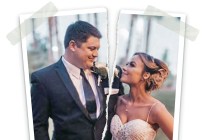
There were a few bright spots. Kris Totman, Ashley's boyfriend, proposed marriage a few days after Christmas. Ashley and Totman had begun dating while they were students at Las Vegas High School more than a year before. Totman worked as an electrician and pitched for a AA minor league baseball team. Ashley accepted the proposal, but declared that she would not set a date until she could walk down the aisle.
Her father's girlfriend had a baby, and so Ashley gained a new brother.
Fearing that she would lose her job, her mother had to return to work. Ashley's 21-year-old cousin, Tony Ward, moved in to help around the house.
Ashley's pain rarely let up during those months. She worried about becoming addicted to her painkillers.
Because she had been unable to move much for months, her muscles were in danger of becoming atrophied. Her back, in particular, hurt badly after only a few minutes of inactivity.
Ashley convinced herself that the only way she would be able to walk again was to undergo another painful surgery.
Anyone who will listen
While she waited to hear from her doctor about the surgery, Ashley focused her attention on another mission, one that had been developing over the course of several months.
Shortly after her release from the hospital in June of last year, she had become involved in a driver safety program called Driver's Edge.
She believed that telling her story to other teenagers could help prevent car accidents. Jeff Payne, the program's founder, believed it too.
Payne, a Las Vegas resident and a former race car driver, had begun Driver's Edge around the time of Ashley's accident because he thought that, too often, teenagers were taught only how to pass the state's mandatory test, not how to avoid car crashes.
Ashley fit perfectly into his plans.
He brought her in to tell her story. The telling seemed to make a difference, to Ashley and to her teenage audience. People listened when she sat in her wheelchair and told them she used to be just like them.
Many of them enthusiastically offered feedback.
"I just want to say this really meant something to me," one teenage boy breathlessly said to her after a speech at a local high school. "I will remember it."
His buddy approached.
"I admire you for being so strong," he told Ashley.
A man who said he had been a police officer for 20 years brought his teenage son to another presentation.
"Thank you," he told Ashley afterward. "You really touched my heart."
Soon, Ashley found herself traveling out of state to speak to teens about safe driving. Newspapers in Southern California, Tennessee and Minnesota carried accounts of her story.
National media outlets latched onto Ashley. "Good Morning America" called, and the ABC News show aired a piece on her in June. Representatives from the Discovery Channel and "Dateline NBC" called, too. Even Oprah Winfrey's people contacted her.
Ashley told anyone who would listen that her friends died because Troester made a mistake: She drove a car without learning how to do it right.
"If she would have taken this class," Ashley would advise the teenagers, "she would have learned how to control that car and it wouldn't have crashed into that pole."
Establishing her goals
Despite her success as a safe-driving advocate, Ashley still had not walked by April, nearly a year after the accident. On her doctor's order, she had gotten off the couch and started exercising. She stretched her legs, walked with her walker and worked the muscles in her lower back.
Her pain was subsiding, but her frustration was mounting. She told her doctor as much.
"We need to move on," agreed Miciano, a pain and trauma rehabilitation specialist. He was concerned not only about her physical recovery, but about her emotional well-being, too.
Ashley still had not returned to school, though the other two survivors of the crash had. She hadn't even begun home schooling.
"I'm just scared," she told Miciano. "I'm really scared."
He asked what her goal was.
"To get my life back," she said, holding her mother's hand. "I want my life back. I want to walk. I want to get back out there and have some fun.
"I want to be able to take a shower standing up. I want to be able to swim. I want to be able to run. I want to do all the things that I did before.
"But I want to be able to go to the mall, too. I want to wear a miniskirt. I want to be able to wear flip-flops."
Above everything else, she wanted to walk by her 18th birthday, July 17, which was less than three months away.
It was time, she said, to start worrying about herself.
Miciano smiled after her impromptu speech. He said he recently talked to Ashley's orthopedic surgeon. The two agreed that the surgery Ashley had convinced herself she would need might not be necessary after all.
Miciano said he wanted her to begin walking as soon as possible. "We've got to push this now."
Ashley and her mother cried uncontrollably.
"So," the doctor said, "that's the good news I've got for you today."
Ashley began intense physical therapy with a new therapist at once.
Because she had been following her exercise regimen, she was in great shape.
"You're very strong. That's good," noted Spring Mountain Rehab therapist Aaron Martin. "That's half the battle right there."
"I'll arm wrestle you and I'll win," Ashley replied, laughing.
On the day she would have graduated from high school, Ashley instead learned how to use crutches. She climbed stairs with them on her second try and did laps around the office without breaking a sweat. Doctors told her she would be walking within weeks, as soon as a new prosthetic leg was built.
It was almost time to ditch the walker and wheelchair for good.
But first, she had an appointment with a TV camera.
Dreaming a new dream
A week later, Ashley showed up at Bob Baskin Park, where she was set to film a public service announcement for the local Courtesy auto dealerships. She had rehearsed her half-page script all morning and was a little late for the shoot, but she was confident.
Again and again, though, she flubbed her line.
She was supposed to say, "Please, when you're on the road, use a little courtesy. When you give someone a break, it not only makes it easier for them, you feel better about getting around town."
But what she actually said was, "Please, when you're on the road, use a little courtesy. When ... what is it again?"
"I can say it when I'm just sitting here," she explained. "But when I'm on camera I forget."
"OK," declared Mark Fierro, a public relations rep who was acting as the commercial's director. "We'll try two more. If they work, they work. If they don't, they don't."
If Ashley failed again, it would take some creative splicing to salvage the commercial.
"I got about a minute's worth of tape left," the cameraman cautioned.
But on the next take, she got the line down perfectly.
"That was beautiful," the relieved cameraman said. "Just beautiful."
She was more in her element in front of a live audience, where she'd had plenty of practice.
Such was the case last month before a group of teenage drivers at the Las Vegas Motor Speedway.
She arrived in a solemn mood. The cousin who had been staying with the family had died a few days earlier of an accidental drug overdose. Ashley had discovered his body.
Though Ward's death devastated her, Ashley still had a job to do, and so she rolled her wheelchair into the corner of the conference room and waited. The cameraman from "Good Morning America" zoomed in.
Payne, the Driver's Edge founder, played a videotape called "In the Blink of an Eye," a 10-minute documentary police had put together about Ashley's wreck.
Then Ashley took the stage.
"I used to go to parties. I used to have friends. Now I'm stuck in this wheelchair with no friends. Nobody comes around anymore. It's too much reality for them."
She turned toward her mom, who all those months ago nearly lost her job and her home while caring for her daughter.
"You don't just hurt yourself when something like this happens," Ashley said. "It hurts your parents and your family too."
She told them that the accident shattered her dreams. She said she wasn't sure she would ever be able to have what she always wanted: a college education, marriage, six children, a perfect suburban life. That's not easy to accept, Ashley said, but she will adapt.
"My dream now is to save lives and help teenagers like you."
She received a standing ovation.
Stepping toward a future
Ashley is standing on two legs now, an afternoon in late June, nearly 14 months after the accident. Prostheticist Dr. Evan Bader pushes against her shoulder as if he's trying to knock her over.
"Do you feel level?" he asks. "Nice and straight?"
She nods, too nervous to speak. She stands between a set of parallel bars in her physical therapist's office.
She is wearing a new temporary prosthetic leg. It's a flesh-colored plastic sleeve connected to a metal post that leads to a foam rubber foot.
Ashley flashes the doctor a thumbs-up sign and a smile. This time, there is no crowd of friends to cheer her on, no TV camera to record the moment.
"Well, let's see if you can walk," says her mom, clutching her new camera so she can record it for herself.
Silently, Ashley takes a tentative step, and then another.
She reaches the end of the walkway between the bars, gives her mom a kiss, turns around, and walks in the other direction. She repeats the process eight or nine times. In all, she probably takes 100 steps -- with no walker, no crutches, no wheelchair.
"I'm impressed," the doctor says.
Ashley beams.
Her doctors and physical therapist say that within a week, she probably will be able to walk 150 feet with her new leg. If she keeps at it, she should be climbing stairs by her 18th birthday, this Thursday.
She vows to work hard. She has a wedding to plan now.
But first, she has something more pressing to take care of.
Later this week, instead of celebrating her birthday with friends, she will board a plane to Detroit with Driver's Edge officials. There, she plans on telling her story to yet another group of teenagers, in yet another speedway conference room, hoping to save lives.
This time, she says, she will walk to the front of the room.