Sunday, December 12, 2004
Copyright © Las Vegas Review-Journal
POLICE IMMUNITY: End special protections
Gaming Control Board agents fabricated crimes to aid casino
By BOB NERSESIAN
SPECIAL TO THE REVIEW-JOURNAL
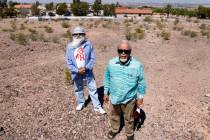
On Nov. 15, the Nevada Supreme Court issued a three-page Order of Affirmance on a case involving alleged police abuse. The decision arose on the appeal of an order dismissing claims by Michael Russo and James Grosjean against the Gaming Control Board and its enforcement agents.
Under Nevada law, police officers -- the Gaming Control Board agents -- possess qualified immunity from suit and liability if they are undertaking "discretionary" acts. Conversely, if the acts are not discretionary, no immunity attaches. Therefore, concerning police immunity, the question is obviously whether police have discretion to undertake their activity.
In the case involving Russo and Grosjean, the officers lacked probable cause to arrest Russo and Grosjean on suspicion of cheating, yet arrested them anyway. The complaint stated that the gaming agents:
-- Knew that the alleged crime did not occur and arrested Russo and Grosjean regardless.
-- Fabricated charges in order to validate an illegal detention by Caesars Palace.
-- Fabricated charges in order to extort the return of legal winnings to Caesars Palace.
-- Drafted false reports to support an arrest on fabricated charges.
Russo and Grosjean were never allowed to provide the supporting evidence to a jury. According to the Supreme Court, the lawsuit itself was incompetent because there was no right to relief against the police officers under the assertions made.
Indeed, the Supreme Court assumed these facts were true and found that this conduct was "not so sufficiently egregious as to strip (the officers) of the qualified immunity that they are entitled to under statute." The assertions made against the police officers were that they knowingly fabricated and concocted facts to support an illegal arrest of the plaintiffs.
The effect of this ruling is that police officers are given carte blanche to make up reasons to arrest people in Nevada with impunity. Simply, police officers now have the discretion to knowingly lie in police reports, knowingly lie in bringing charges against citizens and force imprisonment without legal cause. Then, when the victim seeks justice, the police officers in Nevada can claim and receive immunity from the lawsuit.
All of this occurs at the earliest stages of the litigation with no opportunity to present evidence. Under the ruling of the Supreme Court, evidence is irrelevant because the police have the authority to make these fabrications and imprison people they know did not commit a crime. Thus, the victims of this police overreaching would never be able to even present what evidence they have in support of the assertions.
With respect to Grosjean and Russo, the evidence is broad and deep concerning the fabrication of the charges by the agents. In the midst of a winning session at Caesars Palace, Russo and Grosjean were arrested by the agents for cheating at gambling in the form of bending cards.
When one of the agents was shown the video of the alleged bending, he acknowledged that he could not identify any card bending. He did this even though his earlier police report stated that this video he had already viewed did show card bending.
Other evidence that the charges and claims were fabricated include the fact that Russo and Grosjean swore that they never bent cards. The four persons who allegedly examined the cards, including the agents, each stated that the cards were bent in a different fashion: corner bend, center bend, lengthwise bend, and wave bend).
The Clark County prosecutor, in reviewing the evidence, refused to prosecute. The Gaming Control Board illegally destroyed the cards; the best evidence of no card bending. The cards that were allegedly bent did not even relate to the game that was being played.
And it doesn't end there. Perhaps the most dastardly action by the police was in the form of a memorandum to the prosecutor from one of the agents seeking the prosecution of Russo and Grosjean. After expressly acknowledging in this memo that there was insufficient evidence to successfully prosecute Russo and Grosjean, this agent requested that the prosecutor continue the prosecution anyway.
Why would the agent request prosecution despite his acknowledgment of lack of evidence? He stated his reasons in the letter. He wanted the prosecutor to use the threat of prosecution and imprisonment on the unsupportable charges of card bending in order to get Russo and Grosjean to return their legitimate winnings to gaming so gaming could return the money to Caesars Palace.
This reason was expressly stated in the correspondence together with an acknowledgment that this incorporated a "pretense." That is, as Webster's tells us, "a false show." There is direct evidence from the agent himself that the basis of going after Russo and Grosjean was to get the casino's money back regardless of a lack of demonstrable criminal activity.
When this litigation began, I did not believe, and I would suspect that most people did not believe, that police officers held discretion to knowingly falsify charges, fabricate evidence and attempt to extort tribute from one citizen for payment to another. Following the Nevada Supreme Court's affirmance of the dismissal, it appears that this assumption was in error.
As matters now stand, while investigating a drug deal, police can plant drugs and arrest the suspect. In investigating an armed robbery, a police officer who falsifies fingerprint evidence is acting with discretion and immune from liability. Simply, in Nevada, "These acts are not so sufficiently egregious to strip (the officers) of ... qualified immunity."
This puts every one of us at risk of a falsified arrest without the police having to fear reprisal in any fashion. If they don't like our color, our religion or our business, they are free to harass and even arrest under Nevada law on trumped up false charges. I trust that the scary nature of this circumstance is evident.
And I believe it must be changed. If nothing else, the police immunity statute needs to be amended by the Nevada Legislature. Although legislative Band-Aids tend to mess up statutes, discretionary immunity for police officers now needs to be legislatively clarified.
A simple passage that would do the trick could read: "Notwithstanding anything to the contrary, the police have no discretion to knowingly fabricate evidence, knowingly falsify reports to support an arrest, or use the criminal process for purposes of extortion." I didn't think they did, but apparently they do.
Hopefully, some member of the Assembly or Senate will see this article and fix this circumstance. The citizens of our state deserve to know that they cannot be thrown in jail on false charges concocted by the government or its agents. More importantly, the police need to know that they are not free to fabricate charges or evidence with impunity.
Nevada should not be the only place in the United States where the laws grant police free license to imprison people on their own fabricated evidence and charges. Although it may happen often, but in secret, the law should provide recourse to the victim when such actions are uncovered. If for no other reason, this is necessary to stop the next incidence of fabrication of evidence and imprisonment of an innocent person.
Bob Nersesian is a Las Vegas attorney.