Sunday, February 22, 2004
Copyright © Las Vegas Review-Journal
ILLEGAL CAB PRACTICE: Tourists taken for ride
Long-hauling likely more prevalent than statistics show
By J.M. KALIL
REVIEW-JOURNAL
Photos by John Gurzinski.
 Tourists Carol Brosnan, left, and Carmelinda Morra react when informed their cabdriver was taking a longer route than necessary from McCarran International Airport to the Rio. At right is Sgt. Rick Piert, who supervises airport Taxicab Authority officers. Checker cabdriver Borislav Glavas, seen in background, was cited.
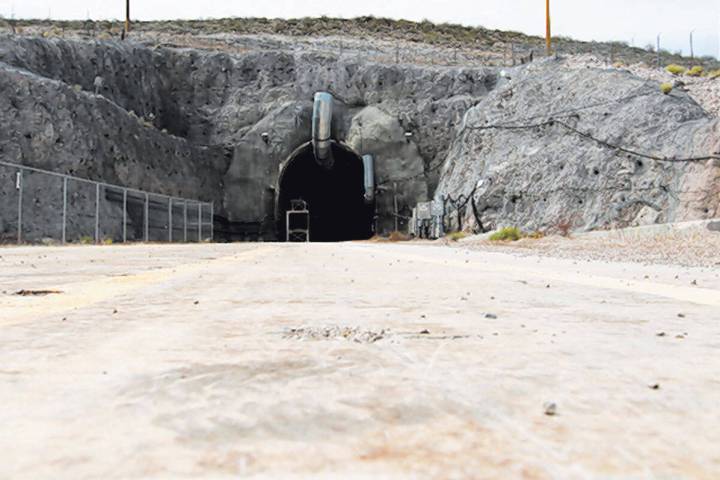
 While airport investigator Ivan Williams, left, writes a cabby a citation, fellow Taxicab Authority officer Rick Jones flags down another cabdriver headed into the Interstate 215 tunnel just south of McCarran International Airport. State regulators said most cabdrivers using the tunnel are long-hauling passengers.
 Ace cabdriver Ruben Grigorin, left, discusses his long-hauling citation with Taxicab Authority officer Rick Jones, while Ivan Williams fills out a report. Grigorin, a 25-year cabby, said this was his first citation for taking passengers on longer routes than necessary.
 Airport investigator Ivan Williams, right, gathers information from taxi passenger Bob Grich in preparation for writing a citation for long-hauling. Grich, a businessman from Orange County, Calif., asked the driver to take him to Caesars Palace. Rather than take the shortest and cheapest route, Ace cabdriver Ruben Grigorin headed for the Interstate 215 tunnel outside the airport.
|
Margaret Mentecki might be from the Dairy State, but she didn't take well to getting milked.
Mentecki became suspicious when a cab ride from the airport to her off-Strip hotel took longer than in past visits. And when the scenery changed to scrub brush and dirt, her fears were confirmed: She was being long-hauled.
"We kept going and going, and all of a sudden, we're out in Henderson somewhere," said Mentecki about a trip in May from McCarran International Airport to Boulder Station.
"We were out in the desert, and there's nothing around," the 66-year-old retiree said earlier this month from her home in Milwaukee. "I'm telling the guy, `I don't think this is the right way.' But he just kept saying, `Hey, trust me, I live here,' and we just kept driving and driving."
When the cab finally arrived at the hotel-casino, her fare was $43.10, about twice what it had cost on other trips.
"I was real mad, but I paid him and told the guy that I was calling his boss," she said. Mentecki then went a step further, filing a complaint with the Nevada Taxicab Authority. Checker cabdriver Adolfo Cairo eventually was fined $50 for turning what should have been a 7 1/2-mile direct trip into a more than 15-mile runaround.
The case is just one of 174 in which Las Vegas cabdrivers were caught ripping off tourists last year by taking them on a nondirect route to boost the cost of a ride, according to a review of Taxicab Authority records conducted by the Review-Journal.
The illegal scheme, called long-hauling, was detected in only a tiny fraction of the nearly 23 million taxi rides given by Clark County's 4,800 cabbies last year.
But those statistics are misleading, according to interviews with cabdrivers and the law enforcement officials who police them.
They say the numbers fail to indicate the widespread nature of long-hauling. The citations issued by the Taxicab Authority represent only the instances in which the agency's officers personally observed the crime during limited enforcement operations or cases in which tourists became suspicious enough to file complaints.
"These are just the tip of the iceberg," said Taxicab Authority Administrator Yvette Moore.
Tunnel vision
Overall, cabbies collected about $230 million in fares last year, up more than 10 percent from 2002.
Although no study has been conducted to determine exactly how much of that money is illegally taken in by long-hauling, state regulators acknowledge the practice probably results in the bilking of untold millions of dollars from unsuspecting tourists each year.
The newspaper's analysis of 2003's long-hauling citations indicates that egregious cases, such as the one that victimized Mentecki by doubling a $22 cab fare, are quite rare.
Far more common is the practice of long-hauling passengers over shorter distances, typically leading to the collection of an extra $3 to $10 in fare each time.
The records show that the most common long-hauling scheme employed by corrupt cabbies is "tunneling," which isn't surprising since the majority of local cab rides involve ferrying passengers between the airport and the Strip.
Although the most direct route from the airport to Strip resorts uses northbound Swenson Street, scores of cabbies instead take a more circuitous path by exiting the airport south via the Interstate 215 tunnel, then going west on I-215, north on Interstate 15, and finally exiting east to the Strip.
According to Taxicab Authority citation records for the past two years, the practice of tunneling is widespread and used by cabbies employed by every taxi company operating in Southern Nevada.
Going through the tunnel to the Strip is typically faster but a longer distance, leading to a higher fare. Cabbies can legally take passengers on such nondirect routes as long as they inform the passenger of the option and let them choose the faster or cheaper route.
"Good cabbies will tell passengers as soon as they get in, `Hey, I can take you on the highway, and it'll cost a little bit more, but you'll get there quicker,' " said Moore, the authority administrator. "Most people coming to Vegas want to get to their hotel as soon as possible and won't care if it's going to cost an extra five bucks. That's the legal way to do it. Bad cabbies will just automatically take the long route to rip off the customer."
Diminished impressions
The hundreds of pages of long-hauling reports for last year, as well as recent interviews with victimized tourists and with cabbies in the moments after they were caught, offer a glimpse of how the practice can diminish visitors' impressions of Las Vegas.
Earlier this month, Taxicab Authority officers pulled over Checker cabdriver Borislav Glavas just outside the I-215 tunnel and ordered him out of his taxi.
Officers confirmed Glavas was long-hauling by interviewing the tourists inside. Upon learning Glavas was taking them on a nondirect route to the Rio, the two passengers inside were furious.
"I hate getting ripped off," Carol Brosnan of Long Island, N.Y., said to a reporter with the officers. "I told him I wanted to go the cheapest way. I'm glad they caught him because I never would have known."
Glavas did not attempt to dispute his guilt.
"It's easier to make money if I go this way," the 33-year-old cabby said in an interview as he was being cited. Glavas admitted to using the scheme daily for the 5 1/2 years he'd been driving a cab but said this was his first citation.
The officers ordered Glavas to charge the women what it would have cost had he taken the most direct route.
In the six minutes it took to write Glavas' ticket, another five cabs passed by the officers on their way into the tunnel but were not pulled over.
"Those are all long-hauls, I guarantee it," said Roger Armstrong, a senior investigator with the authority who was observing the passing taxis. "We can only write tickets so fast."
After Glavas departed with a handshake and a smile for the officers, it was less than one minute before they flagged down another cab headed into the tunnel.
"Like shooting fish in a barrel," investigator Rick Jones added. "It's an epidemic."
Defiant cabdrivers
Cabdrivers remained defiant last month as they paid their fines at the authority's West Las Vegas Avenue office. They said in interviews that the financial windfall of long-hauling outweighs the minimal risk of getting caught and having to pay a fine that can range from $50 to $200.
"A lot of us do it," said Mahan Washington, a 29-year-old cabby who admitted to tunneling passengers daily. "It's adding about five more bucks to your fare."
Washington, who was paying a ticket for speeding, said he has never been cited for long-hauling, despite doing it for the year-and-a-half he has been driving a cab.
The reports show that cabbies sometimes make such admissions to the regulators citing them.
On Jan. 4, 2003, Vegas Western cabby Waldo Yepiz picked up a group of tourists from Lubbock, Texas, at the Golden Nugget. They asked to go to the Paris hotel-casino on the Strip.
A Taxicab Authority officer pulled Yepiz over after watching him circle downtown and then enter the ramp for northbound U.S. Highway 95, which would take the cab the opposite direction of the Paris.
Yepiz admitted he was long-hauling to pull in extra cash, according to the records.
"It's slow. I'm trying to make a living. We all do it," said Yepiz, who paid a $100 fine for the incident.
As Yepiz indicated, scoring a cabby job is no financial bonanza. Moore said in addition to tips, cabbies' pay is typically equal to about 40 percent of "book," the average revenue that their employer expects them to generate daily. In 2003, that amounted to cabbies getting paid an average of about $90 for a 12-hour shift, or about $7.50 an hour. "Obviously, tips become very important," Moore said.
While Glavas and Yepiz immediately copped to their offense and cooperated, other cabbies are less cordial when passengers or police catch them in the act.
A Texas tourist complained in April that the man behind the wheel of her taxi, A-North Las Vegas cabdriver Jaqdeep Badhesha, accosted her when she pointed out that he was taking the long way from Fashion Show Mall to a Paradise Road inn.
"(He) told me to shut the hell up or he will throw me out of the cab," Christina Williams wrote in an affidavit filed with the authority. Williams reported that when she told Badhesha that he had twice passed her destination, the cabby began screaming curses at her before finally taking her to her hotel. Williams reported that he then chased her inside and continued yelling.
Badhesha paid a $200 fine for long-hauling and using profane language.
Many of the cabbies are just as combative with police, according to the reports and interviews.
"Some of them tell us they're the ones driving, they can go whichever way they want to, which isn't true," said Sgt. Rick Piert, a supervisor at the airport. "They'll spit and cuss and yell. And then they'll get a ticket."
Upon being pulled over, a few cabbies tried to get passengers to lie to Taxicab Authority officers about wanting to go on a longer, more expensive route.
Such was the case with Desert cabdriver Ilyas Mohammed Raja, who on Sept. 12, 2003, was caught long-hauling a group of Michigan women to The Mirage through the tunnel.
"When the driver saw our lights behind him and started to pull over, he implored (his passengers) to tell us that they agreed to this quicker route," an officer wrote in a report after interviewing Raja's passengers. "Because of his accent, they didn't really understand him and (the passengers said they) wouldn't have gone along with the scam in any event."
Raja paid an $87.50 fine.
Language barriers
Such language barriers often complicate the job of the cab regulators.
A majority of the cabbies applying for permits in the Taxicab Authority's office on a typical day appear to be foreign-born and struggle to speak and understand English. "Taxicab drivers represent people of origin worldwide," Moore said. "We have most major cultures, most major religions, so the Las Vegas taxicab driver has no one definition."
But regulators say most know exactly what they're doing when they decide to long-haul. A few even lie to passengers in an attempt to ease their suspicions.
California tourist Carolyn Kooker asked her cabdriver why he was taking her on I-15 and through the Bellagio's parking lot during her trip from the airport to the Jockey Club on the Strip.
"This is the route that taxis have to come into Las Vegas by," A-North Las Vegas cabdriver Daniel Suh responded, according to Kooker's complaint.
Suh paid a $150 fine for long-hauling. In the previous seven months, Suh had five other Taxicab Authority tickets: two for illegal U-turns, two for running red lights and one for speeding.
A few cabbies were caught long-hauling while Taxicab Authority officers were investigating them on suspicion of another misdemeanor.
For instance, Lucky cabdriver Sabino Sameli was pulled over on I-15 near Russell Road after an officer observed his cab traveling at 90 mph in a 65 mph zone.
The couple inside, headed from McCarran to the Paris, thanked the officer for stopping the cab because Sameli's driving was scaring them, according to a report.
"They also added that they repeatedly asked (Sameli) why he was taking them through the airport tunnel and onto the interstate highway, and they stated that (Sameli) indicated to them (that) he did not understand English," the officer wrote. "His speeding had terrified them and they were highly insulted that they were being taken advantage of."
Sameli was cited for speeding and long-hauling.
Repeat offenders
In Nevada, cabbies must be caught long-hauling five times in 12 months to lose their cab permit. No driver lost his permit in this manner in 2003, according to the records.
The person who came closest was Ace cabdriver Daniel Tortorello, who was cited for long-hauling three times between May 2002 and March 2003.
In the most recent case, Tucson resident Paul Consroe complained that Tortorello tunneled him and his wife to the Flamingo. Upon arriving at the Strip resort, Consroe gave the cabby $17 for a $16.50 fare.
"You only gave me a fifty-cent tip," the cabby angrily said, according to Consroe. "Then I said in anger, `What do you expect, you gave us a long haul.' The cabdriver then waived his middle finger at me ... (and) drove away."
Tortorello paid a $100 fine after being cited but remained on the job.
Shifting the blame
When caught long-hauling, some cabbies shift the blame.
"A lot of them blame it on the company," said Ken Smith, the Taxicab Authority's chief of enforcement.
Those cabbies say they are forced to long-haul passengers to generate the revenue expected by their employers.
"There's no way you can make the average without tunneling people," said a Nellis cabdriver who spoke on condition of anonymity.
Managers for numerous taxi companies -- including Western, Lucky, Vegas Western, Desert, ABC Union, Ace, Whittlesea Blue, A-North Las Vegas and Nellis -- did not return calls seeking comment for this story.
Bill Shranko, director of operations for Yellow-Checker-Star Cab, said the company disciplines drivers for long-hauling, whenever they learn of it from customers.
But there is no mechanism in place to notify the cab companies that one of their drivers has been caught and cited.
An understaffed agency
Moore said the understaffed agency she heads can ferret out only a negligible number of the long-haulers. Only nine Taxicab Authority officers are assigned to the airport. Those nine are split up in shifts to cover the airport 24 hours a day, seven days a week. And they have other cabby complaints that take priority for investigating over long-hauling.
"They're dealing with property loss when someone has left something in a cab," Moore said. "We prioritize cases where cabbies are rude, or if people say the cabby was drunk, or where they say, `I wanted to get to the airport, but he drove 80 and I thought my life was in danger.' ... We only have so much time to conduct long-haul stings at the tunnel, and the only way to really catch them all would be to have an army and stop all the cabbies."
She stressed that the vast majority of cabbies regulated by the authority are conscientious, law-abiding and hard-working.
"But this industry, just like others, draws unscrupulous people."