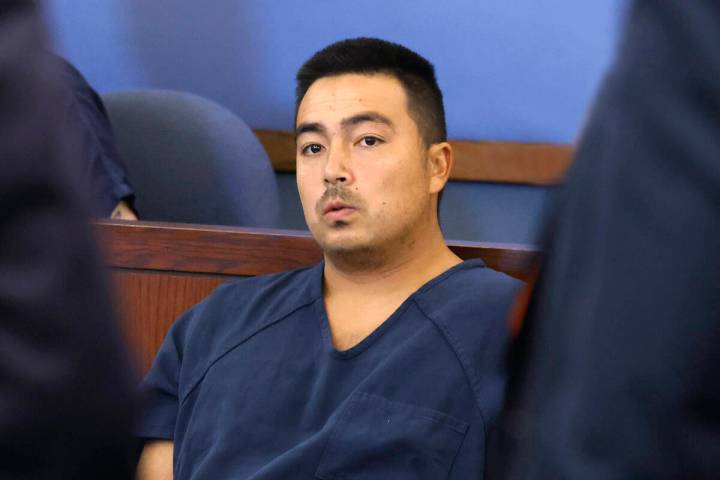
Colin Czech appeared in court on Wednesday morning, days after he told police he ate parts of his alleged murder victim.




Colin Czech appeared in court on Wednesday morning, days after he told police he ate parts of his alleged murder victim.

The trains, designed to go up to 220 mph, will be able to take Brightline West passengers between Las Vegas and Southern California in less than two hours.

Before leaving CCSD this year, then-Superintendent Jesus Jara gave members of his executive cabinet significant raises, including a pay hike of 40 percent to the chief of police.

The Golden Knights, after losing two straight games to the Dallas Stars, are making a goalie switch for Game 5 of their first-round playoff series.
The Nevada Department of Motor Vehicles’ modernization of its computer system could take longer than anticipated and cost the state more than $300 million in additional funding.

A man is facing seven felony charges after using a truck to attack two people at the Las Vegas retail center, according to a Metropolitan Police Department report.

Promoter Live Nation has announced the return of its annual “Concert Week,” which gives fans access to $25 tickets for music and comedy shows across the Las Vegas Strip.

The stained glass above the Tropicana’s former casino pit is being removed while the shuttered casino prepares for a fall demolition.
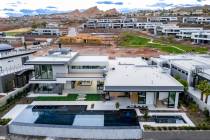
Designed and built by Las Vegas Luxe Design/Build, the 6,653-square-foot North Shore home opens to a dynamic lake and surrounding landscape views through voluminous glass walls.

The public school district that covers the Las Vegas Valley is launching a recruitment campaign that will primarily target teachers in California.

A YouTuber whose videos get thousands of views is calling on his supporters to petition a Las Vegas judge for his release after he was recently jailed by her .

The Golden Knights’ lack of five-on-five offense is a key reason why the Dallas Stars are back in this series. Things need to change in Game 5.

UNLV is proposing to enter into a 99-year ground lease for 42 acres of university-owned land near the Strip that would generate over a billion of dollars of revenue.
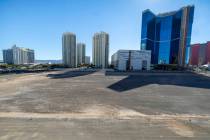
A group of local developers are looking to build a 2,500-room resort with 20,000-seat arena on the former Wet ‘n Wild site once targeted for Jackie Robinson’s All Net Arena.

Today, we stand at a pivotal crossroads, a moment characterized by the stark contrast between the cautious embrace of technology by our parents and grandparents and the seamless integration of digital tools into the lives of younger generations. The older generations approached each new device with a blend of awe and skepticism, some even steadfastly […]


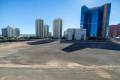


The pizzeria, named among the top 100 in the U.S. by Yelp, cannot reopen until the landlord makes the necessary electrical repairs, the owner says.

An Arizona resident was found guilty on Thursday in connection with a fatal personal watercraft crash nearly two years ago at Lake Mead National Recreation Area.

Two men were killed and a woman was injured after a two-vehicle crash Tuesday northeast of Las Vegas.

Two cities in the valley rank 10th and 11th in the nation for fastest-growing house prices, according to a new study.