A New York Times/Siena College poll published Monday shows Donald Trump leading by 12 points in the Silver State.




A New York Times/Siena College poll published Monday shows Donald Trump leading by 12 points in the Silver State.
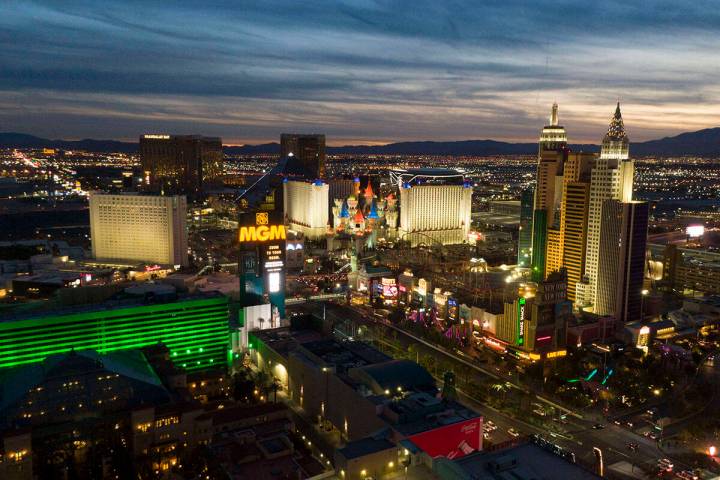
A class-action lawsuit alleging hotel room price fixing was thrown out, handing a win to the Strip hospitality companies accused of anti-trust behavior.

A proposal asked Boyd Gaming shareholders to study the effects of making casinos smoke-free. It was the first of three proposals across the industry to get a vote.

The Nevada Supreme court sided with a district court judge’s ruling in favor of the Oakland Athletics regarding an effort to put the team’s Las Vegas ballpark public financing on November’s ballot.

Rolling Stones lead singer Mick Jagger got a healthy sampling of the Las Vegas restaurant scene while in town for a concert at Allegiant Stadium.
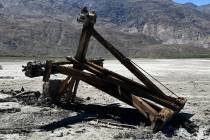
The National Park Service wants to know who damaged a 113-year-old salt tram tower at Death Valley National Park.

The far-right Georgia congresswoman believes that results don’t matter as long as you fight for the sake of fighting. It has made her a cable news star.

How Nevada votes could decide who the next president is. Its history as a swing state goes way back, arguably since its statehood.
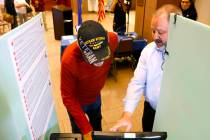
Out of the 17 counties in the Silver State, this one has the highest average voter participation rate.
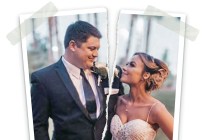
Hundreds of unsealed court documents reveal the contentious custody battle between Ashley Prince and Dennis Houston leading up to a fatal shooting in April.

As Las Vegas continues to grow, Sheriff Kevin McMahill wants to make sure the valley doesn’t become a hotbed for crime like some other American metropolitan areas.

Three people died on Las Vegas roads this weekend, with two killed after striking objects.

The Clark County coroner’s office has identified a 16-year-old boy who was shot and killed outside his home in the central Las Vegas Valley on Saturday morning.

The Regional Transportation Commission of Southern Nevada wears many hats when it comes to infrastructure.

Color psychology is not just a matter of personal preference in your home decor. It’s a powerful tool that can significantly influence your and your staff’s productivity in the workplace. Many businesses choose their brand colors without considering their potential impact on the office environment. While these colors may look great on a business card, […]






The man who sang, “Time is on my side,” proved it is, and “What a drag it is, getting old,” proved it doesn’t need to be.

The developer said it would take $310 million to build a launching pad, a runway for spaceplanes, a control tower, a flight school and a 200-room casino resort.

While barbecue connoisseurs may not consider Southern Nevada as a spot to compete with famed BBQ hot spots like Kansas City or St. Louis, a new list may make you think again.
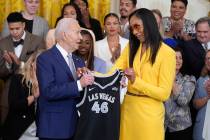
President Joe Biden and Vice President Kamala Harris welcomed the back-to-back WNBA champion Aces to the White House to celebrate their achievement.