Home Subscribe
Jobs Cars Homes Shopping Travel Weddings Golf Best of Las Vegas Photo
.
Member Center

Recent Editions
TWThFSSuM
>> Search the site
.
.
.
.
NEWS
.
.
.
.
.
.
.
Aug. 20, 2006
Copyright © Las Vegas Review-Journal


Ballot questions go beyond well-known TASC, PISTOL

By ED VOGEL
Review-Journal Capital Bureau

Advertisement

CARSON CITY -- A lot of words will be spent explaining ballot questions known by the abbreviations TASC and PISTOL and on smoking restrictions in the coming months, but come Election Night Nov. 7, legislators will steal a glance at the results of several lesser-known questions, including one that gives them a pay raise.

If voters approve Question 11, the salary legislators now receive for serving in Carson City every other year would double to $15,600, from $7,800. Legislators have backed down virtually every session since 1987 from increasing the $130-per-day pay they now receive during the first 60 days of their 120-day sessions.

Each session someone introduces a pay bill, but it always dies without a vote. Legislators fear if they vote to raise their salaries, future opponents will pounce on them when they run for re-election.

Senate Majority Leader Bill Raggio, R-Reno, finally decided 21 years without a pay increase was long enough. He engineered legislation through the 2003 and 2005 sessions that led to placing the issue before voters.

"This is not some munificent sum," Raggio said during hearings last year. "It is reasonable."

If legislators explain to citizens why a salary increase is merited, he predicted, voters will back the raise. The pay increase proposal is one of four ballot questions that have been placed before voters by legislators themselves.

Three of the four would amend the state constitution if approved. The other would change a state law and give residents a break on sales taxes when they trade in their current vehicle to buy another car.

Here are explanations of the four questions:

QUESTION 8: "Shall the sales and use tax act of 1955 be amended to exempt from the tax the value of any used vehicle taken in trade on the purchase of another vehicle and the value of farm machinery and equipment?"

This question should look familiar. Two years ago voters soundly defeated a similar question that would have removed sales taxes now collected on trade-in cars and farm equipment purchases.

But John Sande, a lobbyist for car dealers, attributed that defeat to the fact the 2004 question also would have exempted fine art purchases from sales taxes. He believes voters saw the question as a way to help gaming executive Steve Wynn, a fine art collector. He secured legislative approval to get the question before voters again, this time without the art exemption.

Sales tax rates now vary by county, from 6.75 percent to 7.75 percent. With passage of the question, motor vehicle buyers can deduct the value of their trade-in vehicle from the value of the vehicle they want to purchase when calculating sales taxes.

In other words, if your trade-in is worth $2,000, you deduct that from the value of the new vehicle you are buying.

"Other states are doing it," Sande said. "It puts us at a disadvantage if we don't."

Car buyers already paid sales taxes when they bought their trade-ins when they were new, according to Sande.

"It makes a huge difference in the sales taxes you pay on a new car," he said. "Why should you get hit with a double whammy?"

The farm equipment portion of the question would benefit the state's farmers and farm implement dealerships.

Many farmers and ranchers now buy tractors and other equipment in Oregon or Utah because those states do not charge sales taxes on such purchases.

Tractors can sell for upward of $50,000, making the savings considerable.

But voters have balked twice at giving farmers the tax break. They not only defeated the 2004 question, but a similar one to help farmers in 2002.

If Question 8 passes, state government will lose about $20 million a year in tax revenues.

QUESTION 9: "Shall the Nevada Constitution be amended to provide for the election of certain members of the Board of Regents of the Nevada System of Higher Education and for the gubernatorial appointment of certain members, and to specify the number and terms of members?"

The Board of Regents now has 13 members. Assemblywoman Chris Giunchigliani, D-Las Vegas, figured that was just too many. She also complained that the regents frequently have engaged in infighting and regularly violated the state's open meeting law.

Giunchigliani, who just defeated Myrna Williams for a Clark County Commission seat, won legislative approval in 2003 and 2005 to place before voters a question that would reduce the number of regents to nine. But the vote approving the regents' question was close, winning by an 11-10 margin in the state Senate in 2003.

"If a board becomes too large, what happens is it becomes more about the people on the board than serving the people they should be serving," Giunchigliani said.

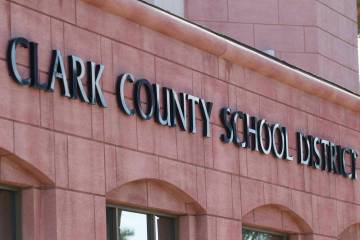
She pointed out the Clark County School Board, with seven members, oversees a system with far more students than those in the system overseen by regents.

"Managementwise it just makes sense," she said. "Most states have smaller boards of regents. There still would be turf battles, but fewer."

Under the proposal, three regents would be elected from the same districts as the state's three members of the House of Representatives. The other six would be appointed by the governor, but no more than two-thirds of those appointees could be from the same political party.

In coming decades, if Nevada continues to grow and receives additional seats in Congress, then the number of regents elected from congressional districts also would increase.

During hearings, Regent Jill Derby, now a Democratic candidate for the 2nd Congressional District seat, spoke out against the "radical change." She said the system of electing regents has worked well since 1887.

"What hasn't worked is a few members have not behaved well and have affected the public perception of the board," Derby said.

She added citizens want an elected board because they have greater ability to influence elected regents than they would regents appointed by a governor.

QUESTION 10: "Shall the Nevada Constitution be amended to change the provisions regarding special sessions of the Legislature to provide that a special session may be convened by a petition signed by two-thirds of the Legislature of each house; to limit the duration of special sessions of the Legislature to 20 calendar days; and to limit the matters which may be considered during a special session?"

The Nevada Constitution now allows only the governor to call the Legislature into a special session. Governors have called legislators back to Carson City to consider special or emergency matters 22 times in state history. Gov. Kenny Guinn has done so six times in his eight years in office.

Guinn said most of those special sessions weren't his fault. He had to keep legislators working in 2001, 2003 and 2005 because they failed to pass budgets and other bills within the 120-day time limit.

He supports the ballot question.

"It will allow them to correct their own mistakes," Guinn said.

A prime example occurred in 1989 when lawmakers voted to increase their pensions by 300 percent. Gov. Bob Miller vetoed the bill, but legislators overrode his veto.

In the following months, citizens and political commentators blasted legislators. Lawmakers then begged Miller to call them back. They then repealed the pension increase in a one-day special session.

With the power to call themselves into special session, legislators would not have needed Miller's assistance, Guinn said.

Assemblyman Harry Mortenson, D-Las Vegas, introduced the legislation in 2003 that led to the ballot question. He noted the Legislature is one of the three equal branches of government, but only the governor can call the Legislature into special session.

"It only makes sense that we should be able to call ourselves into session," Mortenson said. "We are not supposed to be run by the others."

Mortenson found out that 34 state Legislatures have such powers. And nothing would be taken away from the governor, who still would have the authority to call the Legislature into session when appropriate, he said.

QUESTION 11: "Shall the Nevada Constitution be amended to provide for the payment of compensation of members of the Nevada Legislature for each day of service during regular and special sessions and to provide for the payments of reasonable allowances to legislators for postage, newspapers, telecommunications and stationery?"

In short, approval of this question would double the current pay of legislators, and knock out a provision of the state Constitution, enacted in 1864, that gives legislators just $60 for stamps, newspapers and other incidentals.

The constitution permits legislators to receive pay for only 60 days of each regular session. That was plenty back in the day when legislators arrived by horseback, took $8 a day pay and adjourned in time for the spring planting.

In 1958 voters approved a constitutional amendment that allowed the Legislature to stay in session longer than 60 days. But nothing was included in the language concerning additional pay to lawmakers.

In the 1990s, most sessions ran past 160 days. A constitutional amendment in 1998 limited sessions to 120 days.

There are other forms of remuneration not listed in the Question 11 explanation. Each legislator also receives a $99-per-day living allowance for as long as the Legislature remains in session.

Legislators whose residences are not in the Carson City area also are given a $616 monthly stipend to help cover the cost of renting an apartment or home during the session. Everyone gets $2,000 for telephone and periodical costs. And they receive as much as $10,000 in reimbursement for travel costs.

Every lobbyist backed the Raggio pay proposal during hearings in 2003 and 2005, and most legislators supported the plan. State Sen. Dina Titus, now the Democratic gubernatorial candidate, voted against it both years. State Sen. Bob Beers, who unsuccessfully sought the Republican nomination for governor, supported it twice.

During hearings last year, Raggio said there are many reasons why qualified people do not run for the Legislature and the low pay should not be one of them.

SPONSORED LINKS

 2006 Election
2006 Election
News & voter info

STATE BALLOT QUESTIONS

Here are capsule summaries of the first seven state ballot questions.

QUESTION 1: Education First Initiative. This proposed constitutional amendment would require the Legislature to approve spending for public schools before any other part of the state budget. The initiative was placed on the ballot through a petition drive organized by Rep. Jim Gibbons, R-Nev., and his wife, Dawn. Fifty-seven percent of the voters approved the plan in 2004. It needs approval again in November before it goes into effect.

QUESTION 2: The Peoples' Initiative to Stop Taking of Our Land (PISTOL). This proposed constitutional amendment would make it tougher for governments to seize private land through eminent domain legal proceedings. Former District Judge Don Chairez, an attorney general candidate, and Las Vegas lawyer Kermitt Waters circulated petitions to place the measure on the ballot following a U.S. Supreme Court decision that allowed New London, Conn., to take homes for a private housing and office development. A group of business organizations wants to remove the question from the ballot. The Nevada Supreme Court will hear its challenge Wednesday.

QUESTION 3: Tax and Spending Control (TASC) for Nevada. This proposed constitutional amendment would limit spending increases by state and local governments to the combined rate of inflation and population growth. Excess revenue would be placed in an emergency fund and rebated to taxpayers. A vote of the people would be required to increase taxes and exceed the spending limits. The proposal was placed on the ballot through a petition drive led by state Sen. Bob Beers, R-Las Vegas. It needs approval this November and again in 2008 before going into effect in 2009. The AFL-CIO has challenged the constitutionality of the petition and a Wednesday Supreme Court hearing has been scheduled.

QUESTION 4: Responsibly Protect Nevadans from Second-Hand Smoke. This proposal largely maintains current state smoking laws and was meant to counter the more restrictive Clean Indoor Air Act. If both questions remain on the ballot, then the one that receives the most votes becomes law. The less restrictive smoking proposal was placed on the ballot through a petition drive by convenience stores, restaurants, bars and gaming businesses. They propose to continue to allow smoking in slot machine areas of grocery and convenience stores and in designated area of bars and restaurants restricted to adults 21 and older.

QUESTION 5: Clean Indoor Air Act. This proposal would change state law and outlaw smoking in restaurants, supermarkets, convenience stores, hotel and motel rooms and most bars. A group called Nevadans for Tobacco-Free Kids circulated petitions to place the measure before voters. Its members include the American Lung Association, the American Heart Association and American Cancer Society. A coalition of gaming businesses, hotels, restaurant and bar owners has filed litigation to remove the measure from the November ballot. Most of these businesses are supporters of the Responsibly Protect Nevadans from Second-Hand Smoke question. The Nevada Supreme Court will hear the matter Wednesday.

QUESTION 6: Raise the Minimum Wage for Working Nevadans. This proposed constitutional amendment would increase the minimum wage by $1 per hour and establish a procedure where each year the minimum wage would increase at the rate of inflation as determined by the Consumer Price Index. Nevadans now are paid $5.15 per hour minimum wage. Passage would increase their annual income by $2,080. The proposal was placed on the ballot by a petition circulated by the AFL-CIO. In 2004, 68 percent of voters approved the question. It needs approval again in November to go into effect.

QUESTION 7: Regulation of Marijuana. This proposal would change state law and legalize the possession of 1 ounce or less of marijuana by adults. It also would increase penalties for distributing marijuana to youths and for driving under the influence of marijuana. Under the proposal, the state Legislature would regulate who would supply marijuana to state-approved stores. The drug would be taxed by the state. If approved by voters, legal battles are inevitable since marijuana use is illegal under federal law. The proposal was placed on the ballot by the Committee to Control Marijuana, an organization financed by the Marijuana Policy Project of Washington, D.C. Four years ago, voters turned down a proposal to legalize up to 3 ounces of marijuana.

REVIEW-JOURNAL


Advertisement


Contact the R-J | Subscribe | Report a delivery problem | Put the paper on hold | Advertise with us
Report a news tip/press release | Send a letter to the editor | Print the announcement forms | Jobs at the R-J

Copyright © Las Vegas Review-Journal, 1997 -
Stephens Media   Privacy Statement