GEOFF SCHUMACHER:
Former champion disheartened by monorail miscues
Let me begin by saying something that President Bush apparently cannot bring himself to utter, at least in public: I was wrong.
On Sept. 23, 2004, I wrote a column in the Las Vegas Mercury weekly newspaper (now defunct) in which I offered a spirited defense of the $650 million Strip monorail. At the time, the monorail was being widely ridiculed. It had ceased running temporarily because of a series of mechanical mishaps.
Advertisement
My argument then was that while the monorail in its current incarnation may not be useful as mass transit, it was merely "the first leg of a valleywide mass transit system" and represented "the bare beginnings of Las Vegas' version of San Francisco's BART, Chicago's El and Washington, D.C's Metro."
Two years later, I'm not so sure.
The working theory in 2004 was that monorail ridership would steadily increase, building demand for the system to be extended to downtown, to the west side of the Strip and to McCarran International Airport.
But amid the mechanical problems and lackluster ridership figures, Clark County transportation officials decided to put the downtown extension on ice. That, combined with the county's new focus on a commuter transit system coursing from Henderson to North Las Vegas, was a clear sign of waning confidence in the monorail's long-term viability.
As ridership declined, monorail company officials started looking for a quick fix to fend off a financial crisis. They settled on a big fare increase, boosting a one-way ticket from $3 to $5 in January. Naturally, ridership declined further. Earlier this month, monorail officials reported that for the first half of 2006, ridership dropped 30 percent compared with the same period of 2005. In the first half of 2005, the monorail saw an average of 28,000 riders per day. In 2006, the average was down to 20,000.
The original promise was to see 50,000 riders daily.
The problems with the monorail prompt the question: Where to begin?
Start with the route. From the MGM Grand to Sahara hotel-casinos, the monorail takes a circuitous path to, essentially, nowhere. There aren't many reasons for someone at the MGM to go to the Sahara. And the number of people at the Sahara, hardly a megaresort, who want to head toward the MGM doesn't amount to enough to fill the seats.
Of course, a more typical story might be that someone at, say, the Imperial Palace wants to go to the convention center. Fine. The problem is that the task is inconvenient. The monorail is not really anywhere near the Strip. Most of its stations are hidden back behind the resorts. Until you're a veteran monorail rider -- assuming there are any -- it's a bit of a job to figure out where the stations are.
The third strike is that several major resorts don't have monorail stations at all. The Wynn and Venetian, two of the Strip's largest and most popular resorts, aren't part of the monorail route. And obviously none of the resorts on the west side of the Strip is accessible to the monorail.
All this severely limits the number of tourists who see a value in the system. Even if they were prepared to shell out $5 apiece, they probably can't get where they want to go.
As for locals, just forget about it at this point. When the monorail started, I was optimistic that some Strip employees might use it as part of their commute.
But that possibility ended early on when no financial incentives were offered for resort employees to use the monorail and no park-and-ride lots were created to accommodate them.
In one sense, the monorail is a victim of Las Vegas' success. When you think about the Strip, it's difficult to pinpoint the last time it had a high-profile failure. Every major resort that's opened over the past decade and a half has been at least modestly successful, and most have been spectacularly successful. Even the Aladdin's troubles are relative: Its room occupancy and gaming revenue may be dwarfed by some local competitors but they are the envy of just about any other city on the planet.
So, Las Vegas is the kind of place that inspires inflated ambitions. We have grown accustomed to the idea that if we build it, they will come. But our arrogance, mostly deserved, got the best of us with the monorail. We built it and almost nobody came.
What to do?
The monorail company has some sensible plans, such as selling bulk tickets to conventions and getting promotional material into the hands of hotel guests. These efforts make sense, because it's clear that a lot of visitors still don't know the monorail exists.
But to make a giant leap forward, which is badly needed, more dramatic measures are required. Here are some unsolicited ideas:
First, slash the ticket price. Five dollars is cheaper than a taxi but it's still ridiculously high (and a taxi is more likely to take you exactly where you want to go). A monorail ride is not exactly Space Mountain. The thing moves slowly, the view is dominated by the unsightly rears of the Strip resorts and it doesn't even do a loopty-loop. Make up the lost revenue in increased volume.
Second, find ways to entice locals to use the monorail. As a northwest valley resident, I know I'd be interested in a low-cost option to bypass Saturday night traffic to see a show on the Strip. If I could park conveniently behind the Sahara and catch the monorail to the MGM, I just might do it for a dollar or two.
Third, somehow convince Sheldon Adelson (Venetian) and Steve Wynn (Wynn) to build monorail stations at their resorts. The fact that these places, both of which have large convention facilities, aren't part of the route is a killer.
Fourth and most important: If ticket prices are slashed and ridership rises, it should increase the chances of securing the estimated $500 million needed to extend the monorail to the airport. Success breeds Wall Street confidence, which the monorail does not currently enjoy.
Alternately, the privately run monorail could be turned over to the public, and federal transportation dollars could be sought for the extension. The problem, however, is that most Las Vegans aren't like me: They don't want anything to do with what they see as a white elephant.
The airport leg is the single best option to increase and maintain ridership -- and turn the monorail into more than a glorified bus tour. If that's accomplished, it'll be relatively easy to extend the monorail to the Strip's west side, and, eventually, to downtown.
Making all this happen is a very tall order -- and I'm a lot less confident that it can happen than I was back in 2004.
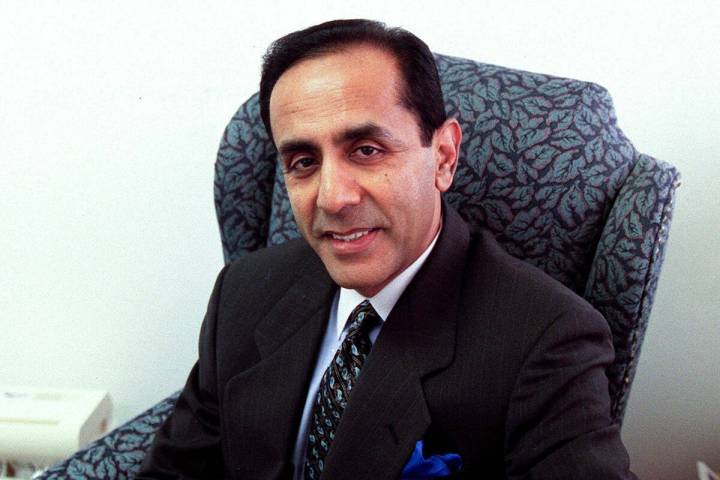
Geoff Schumacher (gschumacher@reviewjournal.com ) is Stephens Media's director of community publications. He is the author of "Sun, Sin & Suburbia: An Essential History of Modern Las Vegas." His column appears Sunday.