Home Subscribe
Jobs Cars Homes Shopping Travel Weddings Golf Best of Las Vegas Photo
.
Member Center

Recent Editions
TWThFSSuM
>> Search the site
.
.
.
.
NEWS
.
.
.
.
.
.
.
Oct. 25, 2006
Copyright © Las Vegas Review-Journal


Young says he would have conducted probe differently

By MOLLY BALL
REVIEW-JOURNAL

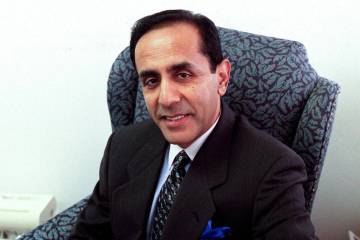
Bill Young
Sheriff was out of touch when Gibbons-Mazzeo incident occured

Clark County Sheriff Bill Young said that had he been the one investigating an assault complaint filed against Republican gubernatorial candidate Jim Gibbons on Oct. 13, he probably would have conducted the probe differently.

"I probably would have done some things differently," Young said, such as not waiting 13 hours to interview Gibbons about a woman's claim that he pinned her against the wall of a parking garage and threatened her.

Advertisement


Police on the scene were told where Gibbons was staying. They traveled to other potential witnesses' houses in the wee hours of the morning to get their accounts. But they didn't go to Gibbons' hotel.

Asked whether Gibbons, as the suspect in the complaint, should have been rousted out of bed so police could take him by surprise and interview him before he had a chance to concoct a story or possibly sober up, Young said, "In my day, I would have done exactly what you said, probably. I agree with you inasmuch as Gibbons needed to be interviewed."

Young was the first to notify Gibbons of the complaint. The sheriff called the 61-year-old Reno congressman's cell phone around 10 a.m. on Oct. 14. Young was in Boston attending a conference at the time.

"As soon as I found out (about the complaint), I said, 'Let's get over there and get his statement and get him to talk,'" Young said. The officers investigating the incident "may have been a little intimidated by the fact that it's a congressman who's running for governor," he said.

Gibbons was interviewed by two detectives around 3 p.m. on Oct. 14, five hours after finding out about the complaint from Young. The sheriff advised him of his right to have a lawyer, but Gibbons, himself a former practicing attorney, chose instead to be interviewed in his hotel room along with a campaign consultant.

But Young said he totally supported his officers' work. He said the investigation had been much more thorough than it would have been had someone unknown been the subject of the complaint. And he said what Gibbons was accused of, even if true, wouldn't have amounted to more than a misdemeanor.

Young also said he didn't intended to downplay the incident when he characterized it to the Review-Journal, which first reported the story.

Young's initial description of the contents of the police reports in the case turned out to be wrong on several key points, in every case with the effect of minimizing the allegations of Gibbons' accuser, Chrissy Mazzeo.

Young said his misstatements were the result of wrong information given to him by his chief of investigations and the fact that Young was out of town when he answered the Review-Journal's questions about the incident.

PROBLEMS WITH PROCEDURE

Several aspects of the Metropolitan Police Department's handling of the probe appear improper, according to an independent expert on police procedure who was not previously familiar with the Gibbons incident.

William T. Gaut, a Florida-based legal consultant with 30 years' experience as a policeman and investigator, said he didn't necessarily see a problem with the delay in interviewing the suspect. Especially in a potentially high-profile case, police want to have collected as much evidence as carefully as possible before they approach the suspect, Gaut said.

But Gaut said other aspects of the investigation posed clear problems, chiefly that Young called Gibbons personally and was first to inform him of the complaint.

"That's absolutely improper," Gaut said. "The sheriff or elected official who is chief of police doesn't need to be calling a suspect in a criminal case and telling him, 'Here's what the accusation is. Here's what we've got.'"

Young has also acknowledged that when he called Gibbons, Gibbons started to tell his side of the story, but Young cut him off and told him he might want a lawyer -- another clear mistake in Gaut's eyes.

"I hate to be critical, but why would any police officer call a suspect on the telephone, and he's not in custody, he doesn't meet any of the parameters of Miranda -- why would a police officer say, 'Stop talking to me, you're going to need a lawyer'? That's not proper. I hate to be critical, but no way."

Under constitutional standards first established by the Supreme Court's 1966 Miranda v. Arizona decision, criminal suspects must be informed they have a right to a lawyer, but only if they are in police custody, have been charged and are not free to leave.

"Obviously, on the telephone, he's not in custody, he hasn't been charged, he can hang up if he wants to," Gaut said. "If he wants to tell you what happened, you should shut up and listen to what he has to say. That's just good police work."

Young defended his conversation with Gibbons.

"I haven't been near a suspect in many years, but I think it's the right thing to do" to let suspects know they need lawyers, Young said. Under the spirit, if not the letter, of Miranda, "Every person accused of a crime is entitled to a lawyer. I would do it for anybody."

In any case, Young said, Gibbons didn't choose to have a lawyer present when police interviewed him, so the question was moot. Gibbons did have a campaign consultant, Jim Denton, in the room during the interview.

Another mistake, Gaut said, was taking Gibbons' statement in his hotel room.

"Witnesses should always be interviewed on their own territory. They should feel as comfortable as possible, so they'll speak freely," he said. "Suspects, on the other hand, it's just the opposite. I don't want to interview him in his hotel room or his living room. I want him on my turf."

WHAT YOUNG TOLD THE REVIEW-JOURNAL

Young misstated several aspects of the incident when the Review-Journal interviewed him on Oct. 14. While some of his misstatements were trivial, others more substantial, every one had the effect of diminishing the seriousness of the allegations.

For example, Young was quoted at the time as saying, "No crime occurred. It's just a misunderstanding."

As Young related the story to the Review-Journal, Gibbons merely tried and failed to grab the arm of a very drunk woman as the two were leaving the bar at McCormick & Schmick's restaurant, near Paradise and Flamingo roads. The woman misunderstood Gibbons' gesture and called police, but thought better of it the next day.

Young said this week that he was never trying to downplay the incident; he was just repeating the facts that he was given by Deputy Chief Greg McCurdy. As head of the Police Department, Young said he felt he ought to be the one to speak to the media about such a potentially high-profile incident, even though he was out of town and giving information third hand.

"It was told to me exactly as I told it to (Review-Journal reporter) David Kihara," Young said. "But I'm doing this from Boston, secondhand from Chief McCurdy." Young was attending the annual conference of the International Association of Chiefs of Police.

"Greg used the word 'misunderstanding' with me, and I passed that on," Young said. "Where he (McCurdy) got that, I don't know."

Young said that in retrospect, McCurdy, who was in Las Vegas and had seen the evidence, should have been the one to speak to the press. But he said that as a public servant, he was proud of his accessibility to the media, which is well known.

"I have never once dodged or deflected a question, and I'm not starting now," Young said. "I will never not answer a question. I've got a job to do."

He said the police showed openness by releasing the statements, reports and 911 calls to the media as soon as they were available. "There was no manipulation from me whatsoever," Young said. "The statements were all publicly disclosed."

McCurdy said Tuesday that the inaccurate statements were a case of "the sheriff being caught being out of town," as well as the fact that all the statements in question hadn't yet been transcribed. He said "misunderstanding" was Young's choice of language.

"He (Young) made statements in an effort to be responsive to our community," McCurdy said. "It was early on. We were still working it. We would have more information later on."

McCurdy also defended the police work.

"Our officers went and did a good job," McCurdy said. "The only thing they did not do the night of Oct. 13 was contact Jim Gibbons, and they didn't know for certain where he was."

WHAT THE ALLEGATIONS AMOUNT TO

Far from not doing enough in a case that was opened and closed within 24 hours, Las Vegas police actually went above and beyond in the Gibbons incident, Young said this week.

"We way overinvestigated this," Young said. "We spent an inordinate amount of time at a restaurant interviewing people, waking people up at their homes. If this had occurred at another bar or somewhere else in Las Vegas, with someone other than Jim Gibbons, I guarantee you that wouldn't have happened."

Officers from the department's Major Crimes Unit were called to the scene even though only a misdemeanor was alleged, Young noted.

Under Nevada law, even if everything Mazzeo said was true, what happened couldn't have amounted to more than misdemeanor battery, Young said.

"That's battery if that was true, no question," Young said of the accusation that Mazzeo was pushed against the wall of the parking garage. "But it's simple, not felony battery, because there was no substantial bodily harm."

Robert Langford, a Las Vegas criminal defense lawyer and former prosecutor, said Young's assertion was "offensive."

Gibbons could have been charged with multiple felonies if Mazzeo's allegations were believed, Langford said. "He's using force to pin her and stop her from doing what she wants to do, walk away: That's coercion," Langford said. "He's physically preventing her from going somewhere with the intent to commit sexual assault: That's kidnaping. There's battery with attempted sexual assault, in that he grabbed her. There's attempted sexual assault, because he grabbed her with the intent to sexually assault her."

In Mazzeo's statement to police, she claimed Gibbons flirted with her and touched her over drinks, but she rebuffed him. In the garage, "I said, 'Are you really, you know, rape me at this time?' ... And he goes basically you, you have one choice, you can leave or you can do the other choice. And I said, 'No way,'" Mazzeo told police in her initial statement.

It's true that Gibbons' alleged intent to sexually assault isn't explicit, but Langford said there's plenty to infer it from.

"I think there's enough there," he said. "When was the last time you heard of a case of sexual assault where he grabbed her and said, 'I'm going to rape you now. Here it comes'? That's why almost all attempted sexual assault cases are circumstantial."

Langford said that he wasn't suggesting Gibbons actually committed any of the crimes he listed, only that Gibbons could have been charged with them if what Mazzeo said was true.

"I don't want to say he did it. I represent people who've been accused of bogus stuff all the time," Langford said. "But I'm hugely offended that Bill Young would suggest that there couldn't have been a felony. The way this case has been handled reeks of cronyism, good-old-boy, the way it's always been done in Las Vegas."

The Nevada chapter of the National Organization for Women has also cried foul over Young's statements about the case, saying they had the effect of belittling a possible victim.

"Nevada NOW recognizes that this incident is just one more sad example of a serious problem in our state: Too many women are afraid that their stories are not heard fairly," the group said in a statement. "The tragedy of this event is not the impact on Congressman Gibbons' political ambitions; it is the horrific prospect that a human being who believes herself to be the victim of an assault did not believe she could trust the criminal justice system and the media to protect her basic human right of personal security."

Young defended his description of the incident.

"As far as a police perspective goes, this story is not nearly as important as the other crimes we deal with every day -- rapes, murders, armed robberies," he said.

"You guys in the media made this the story of the year, not the Metropolitan Police Department."


RELATED STORY:
ASSAULT ALLEGATION: Waitress to tell her story

KEY ELEMENTS IN THE CASE
Clark County Sheriff Bill Young was interviewed by the Review-Journal on Oct. 14, after the newspaper learned Rep. Jim Gibbons was the subject of a complaint of battery. Several of Young’s statements about what the case consisted of turned out to differ from information police later released to the media — statements from Gibbons and the alleged victim as well as three 911 recordings. In every case, what Young told the Review-Journal had the effect of minimizing the incident or tarnishing the alleged victim’s credibility. The Review-Journal first reported the incident on Oct. 15. This week, Young told the Review-Journal that he was out of town when he first talked about the case and was only repeating information given to him by Metropolitan Police Department Deputy Chief Greg McCurdy.

WHAT YOUNG TOLD THE REVIEW-JOURNAL ON OCT. 14:
Gibbons told police he merely tried unsuccessfully to grab Chrissy Mazzeo’s arm as she was falling down.

WHAT THE EVIDENCE SAYS:
Gibbons’ statement is that he did grab Mazzeo’s arm.

WHAT YOUNG TOLD THE REVIEW-JOURNAL ON OCT. 14:
Mazzeo’s complaint basically consisted of Gibbons trying to grab her by the arm. When the Review-Journal asked Young if there were allegations of unwanted sexual advances, Young said he didn’t know.

WHAT THE EVIDENCE SAYS:
Mazzeo told police Gibbons pinned her against the wall of a parking garage and threatened her after flirting with her and touching her inside the bar.

WHAT YOUNG TOLD THE REVIEW-JOURNAL ON OCT. 14:
Mazzeo wasn’t going forward because she had been extremely drunk. “She said she was way too intoxicated and doesn’t want anything to do with anything.”

WHAT THE EVIDENCE SAYS:
Mazzeo told police that she didn’t want to pursue the matter “‘cause of who he is and I just don’t want to go up against something like that.” In none of Mazzeo’s statements does she refer to herself as drunken or intoxicated, although she acknowledges she has been drinking.

WHAT YOUNG TOLD THE REVIEW-JOURNAL ON OCT. 14:
Gibbons was helping Mazzeo out of the restaurant when the incident occurred.

WHAT THE EVIDENCE SAYS:
Both Gibbons’ and Mazzeo’s statements say Gibbons walked with her some distance, toward a parking structure across the street where she believed her truck was parked

WHAT YOUNG TOLD THE REVIEW-JOURNAL ON OCT. 14:
According to Gibbons, Mazzeo “had a very odd look on her face” when she got up after falling.

WHAT THE EVIDENCE SAYS:
In his police statement and subsequent statements, Gibbons has said that after Mazzeo’s fall, she looked at him and wordlessly walked away. But he never characterized her expression as “odd.”

WHAT YOUNG TOLD THE REVIEW-JOURNAL ON OCT. 14:
Young said he couldn’t account for the fact that the alleged incident occurred about 10 p.m., but a call from the alleged victim to 911 didn’t apparently come until 11:18 p.m.

WHAT THE EVIDENCE SAYS:
The 11:18 p.m. call was actually the last of three calls Mazzeo made to 911. The first 911 call came shortly after 10 p.m.

WHAT YOUNG TOLD THE REVIEW-JOURNAL ON OCT. 14:
Gibbons told police that while he had had two glasses of wine, he was not intoxicated.

WHAT THE EVIDENCE SAYS:
Gibbons was never asked whether or not he was intoxicated, nor did he say he was not intoxicated. In fact, he told police he allowed himself to indulge in a second glass of wine because, since he was on foot, he didn’t have to worry about a DUI.

Advertisement


Contact the R-J | Subscribe | Report a delivery problem | Put the paper on hold | Advertise with us
Report a news tip/press release | Send a letter to the editor | Print the announcement forms | Jobs at the R-J

Copyright © Las Vegas Review-Journal, 1997 -
Stephens Media   Privacy Statement