
A CCSD educator arrested Thursday in connection with a student-teacher fight was ordered released without bail after a Friday afternoon court appearance.




A CCSD educator arrested Thursday in connection with a student-teacher fight was ordered released without bail after a Friday afternoon court appearance.

Clark County School District police have arrested a man connected to a student-teacher fight at Valley High School on Thursday.
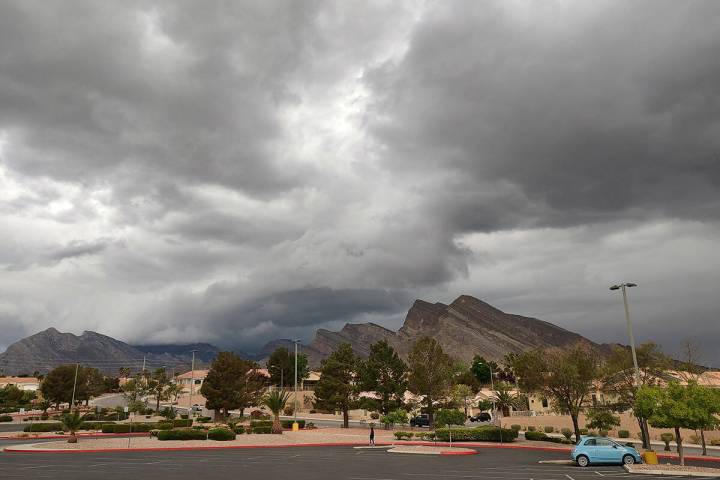
A flood advisory that had been issued until 3:15 p.m. for the Henderson and Boulder City area because of expected runoff was allowed to expire.
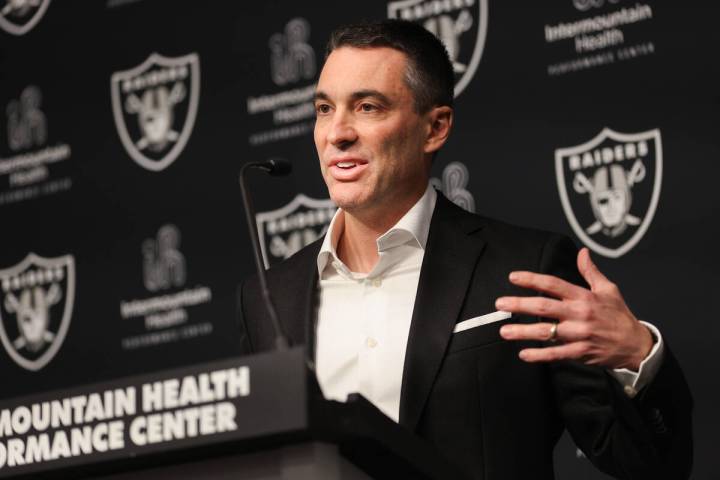
The Raiders should be able to address some of their needs in the second and third rounds of the NFL draft after selecting tight end Brock Bowers with their first pick.

The layoffs come after the electric vehicle company saw dismal sales in the first quarter.

The Raiders introduced tight end Brock Bowers, their first-round pick in the NFL draft, and he discussed growing up in the shadow of the organization’s training camp.

Financial losses are in the millions of dollars, law enforcement officials said during a Friday morning press conference.

The Golden Knights crank up the siren before the first, second and third periods. The folks who crank the siren might seem randomly selected, but there is a strategy.

Executives with Tropicana landlord Gaming & Leisure Properties Inc. said the Las Vegas Strip resort closed April 2 as part of the A’s ballpark construction timeline.

The Las Vegas family attraction, which is aimed at kids ages 5 to 12, features 15,000 square feet of interactive dinosaur exhibits.

President Joe Biden will welcome the Las Vegas Aces to the White House on May 9 to celebrate their championship season, according to the White House.

The Raiders drafted what could be a generational tight end in Georgia’s Brock Bowers, but they had other needs they should have addressed in the first round.

The 6:25 p.m. incident occurred in an apartment complex near West Tropicana Avenue and South Jones Boulevard.

The Clark County School District is looking to make it easier to hire retired employees to fill “critical” vacant teaching, other jobs.

Detergent and deodorant, toothpaste, the entire shampoo aisle. “It’s all locked up,” Corey Potter sighed.

April is World Wish Month! It is a time when the world comes together to make dreams come true for children facing critical illnesses. As long as these brave kids need hope and strength, wish makers like you are essential to their fight. Speaking of wish-making, here’s an exciting opportunity: Walk For Wishes® 2024! Presented […]






The wait is over. Here is who the Raiders picked in the first round of the 2024 NFL draft, and it came as a shock to many observers.

Tropicana owner Bally’s Corp. filed for a commercial demolition permit with Clark County as preparations continue to build a ballpark for the Oakland Athletics.

The March gaming win was strong — but not as strong as a year ago when casinos had all-time-record slot machine revenue due to a stellar lineup of special events.

Neal Schon of Journey says the Sphere was made for jam bands, but his band would crush it, too.