Laser’s blast could destroy space debris



 JAPAN — Scientists hatched a new plan to eliminate space debris with the help of a high-efficiency laser system.
Researchers estimate there are about 3,000 tons of man-made space debris orbiting the Earth. The number of orbiting objects, like rocket parts and defunct satellites, doubled between 2010 and 2014, according to the report.
Space debris poses a threat because the objects can collide with space infrastructure like the International Space Station and satellites, according to researchers. A team of scientists from the Japan-based RIKEN research institute described a plan to tackle the growing problem in the journal Acta Astronautica.
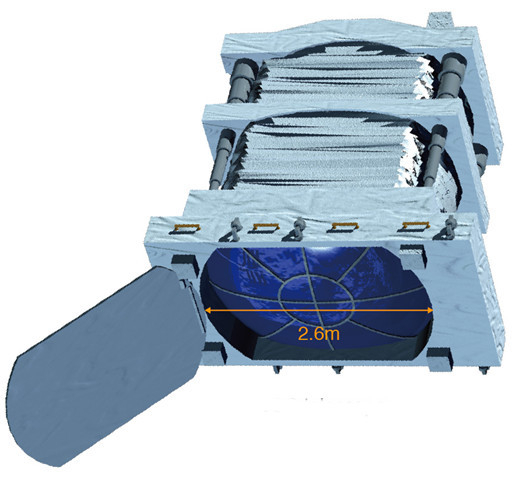
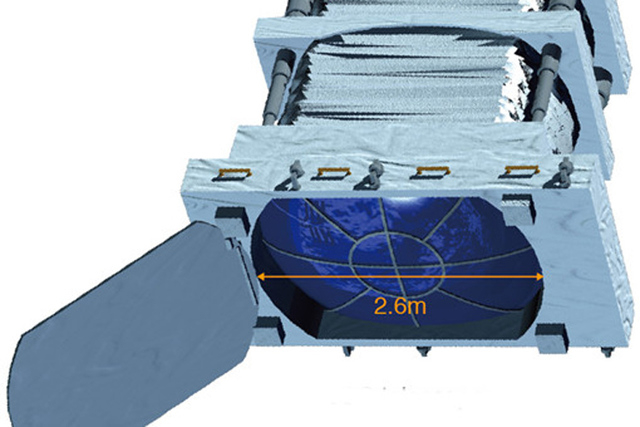
They proposed using their super-wide field-of-view telescope in conjunction with a CAN laser to detect and remove the debris from orbit. The CAN laser beam produces a high-velocity plasma ablation, which would knock the debris out of orbit and cause it to burn up upon reentry into the Earth’s atmosphere, according to the report.
“Our proposal is radically different from the more conventional approach that is ground-based and we believe it is a more manageable approach that will be accurate, fast, and cheap,” team leader Toshikazu Ebisuzaki said in a statement. “We may finally have a way to stop the headache of rapidly growing space debris that endangers space activities. We believe that this dedicated system could remove most of the centimeter-sized debris within five years of operation.”
To test their system, researchers plan to send a small version of their telescope and laser to the ISS. Eventually, they hope to install a 3-meter telescope and laser with 10,000 fibers on the station, which would be able to deorbit debris that comes within 100 kilometers of the device.